
|
|
|
| Home | | | Surfboards | | | Design | | | Surfing & Media | | | Surfcast | | | About NC | | | Custom Orders | | | Contact |
| |
DESIGN TOPICS |
| |
|
| SURFBOARD HISTORY | |
| |
December 15, 2025 |
|
OVERVIEW
The evolution of objects creates, nurtures, and sustains innovation, improvement, and efficiency.Objects such as surfboards evolve to better meet the needs and expectations of surfers. The evolution and progression of wave craft and surfboards is no exception - from the Caballitos de Totora 3000BC in ancient South America to the hardwood Olos, Alaias, and Paipos 300AD in Polynesia and the Hawaiian Islands to the technical sandwich construction boards of 20th and 21st century. Identifying expectations and requirements of a surfboard's performance combined with imagination, creative and analytical thinking, introducing new technologies, and ultimately implementing solutions have been at the core of the evolution of surfboards. |
|
3000BC
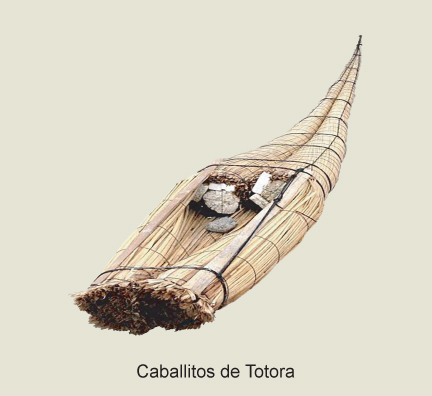
CABALLITOS de TOTORA |
|
 |
|
|
The earliest documented wave riding craft and wave riding is from
archeological sites in Peru that date to 3000BC. Ancient South
American cultures made long, high bowed crafts by binding together a
local totora reed, the California Bullrush, that fishermen could
paddle out to sea through the surf and then ride waves back to shore
on their return. These craft were used for fishing and recreation.
Ranging from 9 to 15 feet in length, 3 feet wide, and weighed up to
90 pounds. The dried reeds were bundled together and bound to make a
shaped raft that would not be swamped by waves and white water. Local
fishermen were documented riding the craft either by lying face down
and paddling with their arms and hands or kneeling or standing using
a stick of bamboo as a paddle. When the Spanish arrived 4500 years
later, they documented the art and skill of the indigenous Chimu and
Moche people riding waves with these craft. These historical and
orginal wave craft were called the Caballitos de Totora or Little Red
Horses.
Although the ancient South Americans were the first to ride waves with their Caballitos de Totora, it was the ancient Polynesians and Hawaiians who were the first to create surfboards specifically to ride waves. The practice of he'e nalu - surfing - has deep roots in Polynesian and Hawaiin culture. |
|
300AD
POLYNESIAN / HAWAIIAN SOLID WOOD BOARDS |
|
 |
|
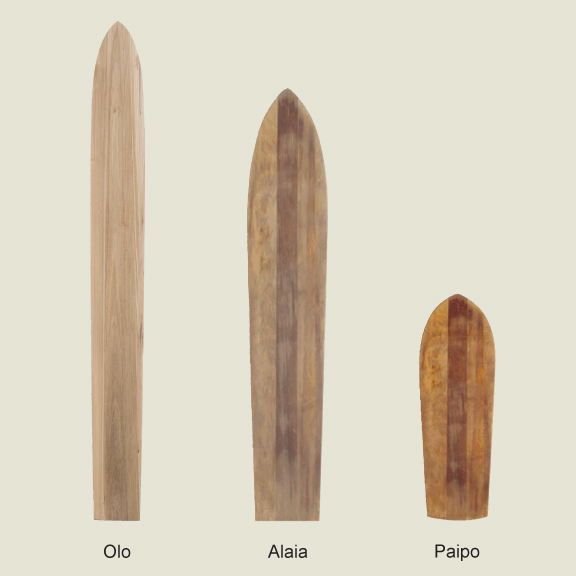
| Around 300AD, Polynesians migrated across the Pacific Ocean and settled in the Hawaiian Islands. They brought the culture of he'e nalu or surfing with them. The Hawaiians practiced surfing on three types of boards, the Olo, the Alaia, and the Paipo. These magnificent and timeless boards were crafted by hand after a ritual ceremony blessing the tree and the wood from Ula, Koa, and Willi Willi trees. These flat, solid planks of wood were part of the code of kapu that structured early Hawaiian society and were used in rituals, recreational activities, training for Hawaiian chiefs, and as a means of conflict resolution. The Olos were the longest of the boards used by the Hawaiians and were surfed exclusively by Hawaiian royalty, chiefs, and kings. Ancient Hawaiian Olos were 16 feet long 18 inches wide and 6 inches thick. The Alaias were the most versatile and widely used surfboard. They were 7 to 12 feet long and 18 inches wide with a round nose and a square tail. The Paipos were the smallest of the Hawaiian's surfboards. They were a flat board with a round nose ridden prone by commoners and children. Paipos varied in length from 3 to 6 feet with an average width of 16 inches and were 1/2 inch thick. When Captain Cook arrived in Hawaii in 1778, he was the first westerner to witness surfing. |
|
1910s to 1930s
SURFING'S REVIVAL - PLANKS, the CIGAR BOX & the HOT CURL |
| DUKE'S PLANK | |
 |
|
In the 1800s Western settlers in the Hawaiian Islands discouraged
surfing as contrary to their Puritan ethic. Recreation and nudity
being the primary issues. Surfing's revival occurred in the early
20th century when the US annexed Hawaii. North American settlers
arrived in the islands and their interest in local culture inspired
some of them to try surfing. This started a resurgence in the
popularity of surfing. Surfboards in this era experimented with the
different types of wood, especially redwood, that was being shipped
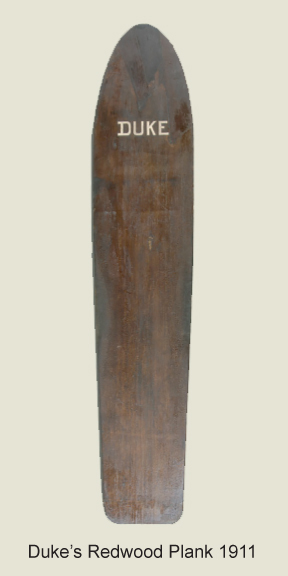
to Hawaii from the mainland US for use in construction. In 1910, Duke
Kahanamoku made his version of a Plank made of redwood, with a blunt
nose and square tail. Duke's board was 10 feet long, 23 inches wide,
3 inches thick. and weighed 70 pounds. His design was the prototype
for the Waikiki model made of pine wood.
HOLLOW LIGHTER BOARDS |
 |
|
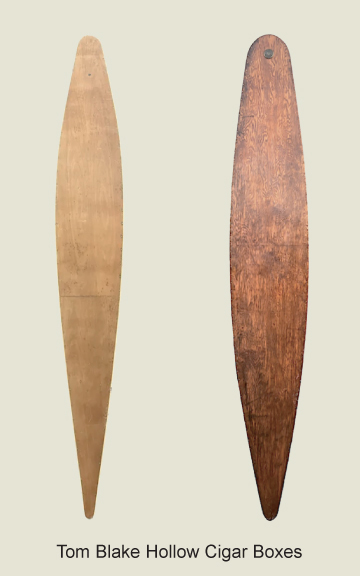
In 1929 Tom Blake revolutionized surfing when he created the
first hollow surfboard, later nicknamed the Cigar Box, by drilling
holes in a solid wood 15 foot long board to reduce weight. He covered
the top and bottom with a thin skin of plywood to seal the board.
Blake's hollow Cigar Box was notably lighter and easier to surf. He
further developed his idea into a skin on frame design and patented
it in 1931. It became the first mass produced surfboard design.
ORIGIN of RAILS and Fins |
 |
|
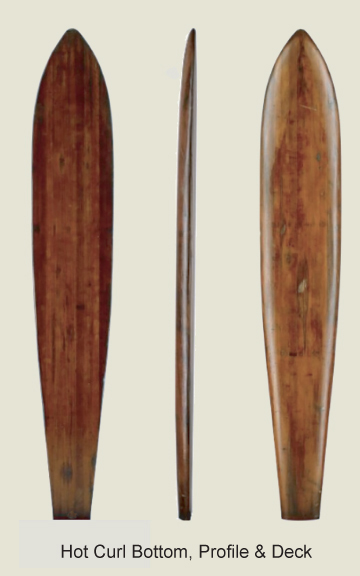
In 1934, inspired specifically by the fact that their boards
weren't holding an edge or engaging the face of waves and slid off
the face of waves too often and too easily, John Kelly and Fran Heath
took a notable step in surfboard design evolution when they shaved
off parts of the rail and tail of one of their plank surfboards
attempting to get more control and make their surfboards more
responsive and predictable. This adaptation was called the Hot Curl
because it allowed the surfers to maneuver in the curl of a wave.
In 1935 Tom Blake placed a small skeg on the bottom of board at the tail. It was 1 foot long by 4 inch deep skeg adapted from a small speedboat. After surfing with a fin or skeg as he referred to it for the first time Blake said, "When I first paddled out the board felt like it was much easier to keep in a straight line. I thought I might be imagining it. My first wave revealed the truth. Never before had I experienced such control and stability. It was remarkable the control you had over the board with this little skeg. I knew from that moment it was a success." Blake is widely credited with inventing the surfboard fin. The introduction of a fin on a surfboard changed surfing and surfboard design forever. |
| 1940s & 1950s | |
|
TRANSITION to NEW MATERIALS & EVOLVING SHAPES
Wood surfboards, often solid and always heavy, were being replaced by boards featuring new technologies that emerged during WWII. Balsa wood, EPS foam, resin, and fiberglass were materials incorporated into surfboard construction. In the '40s Simmons introduced a new concept in surfboard technology featuring a foam core, wrapped in plywood and balsa wood, then sealed with fiberglass and resin. Simmons embraced and applied the science of physics and emerging technologies to surfboard design. With his knowledge of hydrodynamics, Newton's Laws of Motion, and Bernoulli's Law of Lift, Simmons' shapes incorporated nuanced and subtle rocker, a curve from nose to tail, which helped boards fit into the curves of waves, trim, and turn with greater precision, control, and predictability. Additionally, he also incorporated equally nuanced bottom contours from rail to rail, a geometry of surface curves that created lift, stabilized laminar flow, and generated speed. These two design elements - rocker and bottom contours - are so fundamental they could be considered the foundation and basis of modern surfboard design. SANDWICH CONSTRUCTION SURFBOARDS |
 |
|
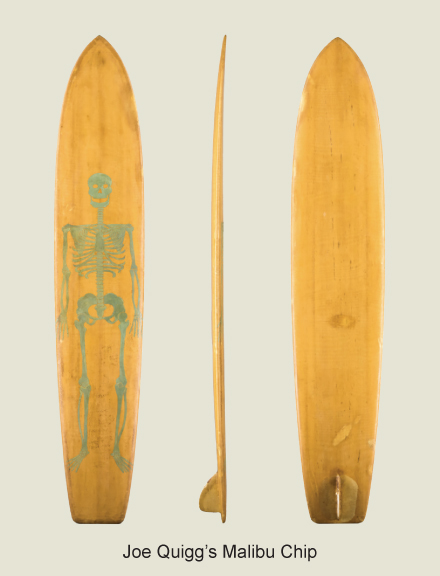
In 1947 Joe Quigg designed, shaped, and built the Malibu Chip
incorporating lightweight sandwich construction and featuring nuanced
rocker, bottom contours, rails, and fins. The board had a balsa wood
core and a fiberglass and resin skin. Quigg's Malibu Chip was
arguably the first lightweight high performance surfboard.
EARLY to MID 1950s |
 |
|
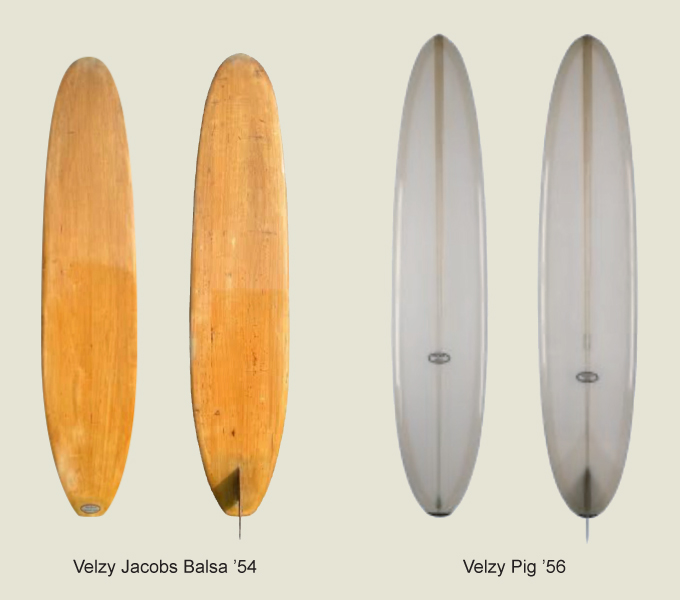
Simmons' and Quigg's genius, their ideas and creativity, and
their identification and exploration of fundamental surfboard design
elements is a constant in the thread of surfboard design. Simmons and
Quigg inspired Dale Velzy, Phil Edwards, Mike Diffenderfer, Mike
Hynson, Skip Frye, and Donald Takayama, shapers that used these
design elements to accelerate surfboard performance from the wood
era, to the foam and fiberglass era, the longboard revolution, and
ultimately to the shortboard revolution, and the very modern and
diverse classes of today's surfboards.
Of note is the transition to surfing more critical waves like Windansea, Rincon, and Malibu compared to the generally mellower waves of Waikiki, San Onofre, and Palos Verdes Cove in the evolution of surfboard design. Surfing these more critical faster waves with steeper faces and long walls inspired Simmons and Quigg and the shapers that followed them to create designs that were complimentary to and in sync with the geometry of waves. |
| 1950s to 1960s | |
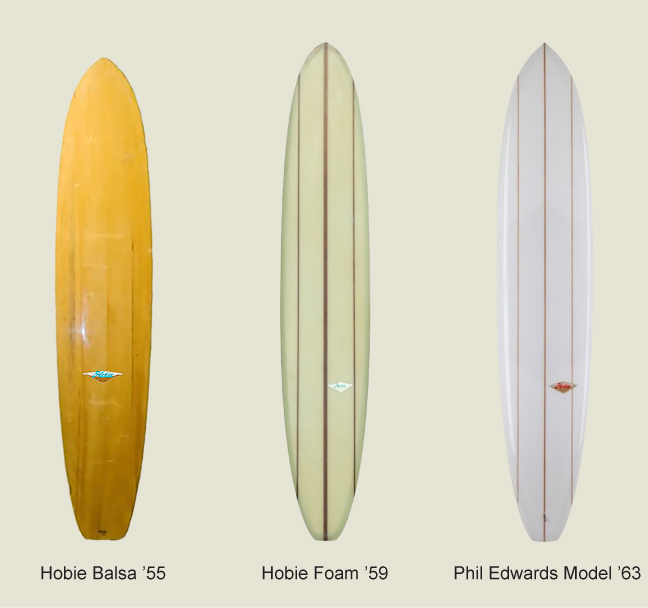 |
| The 1950s was an era of massive transition featuring revolutionary lightweight materials and rapidly evolving designs. Initially these boards were balsa wood core with fiberglass and resin skins. In 1958 Hobie Alter in collaboration with Gordon Clark developed polyurethane foam cores. At the same time Dave Sweet was also developing polyurethane foam cores. PU foam ultimately replaced balsa as it was efficient, readily available, easy to shape, and ultra light compared to balsa. The early 60s saw the first signature models designed and shaped by the premier surfer shapers of the 50s and 60s. These boards were the forerunners of the Longboard Revolution. |
| 1960 to 1967 | |
|
THE LONGBOARD REVOLUTION
The Longboard Revolution was inspired by the performance surfing and the creativity of the premier surfer shapers of the 50s and 60s coupled with the continuing development of the sandwich construction technology with polyurthane foam cores and fiberglass and resin skins. Lightweight polyurethane foam blanks were notably easier to shape than balsa wood. Shapers experimented with all the fundamental variables identified by Simmons and Quigg - rocker, profiles and foils, bottom contours, outlines, and rails. These evolving designs offered exceptional longboard performance. REVOLUTIONARY LONGBOARDS |
|
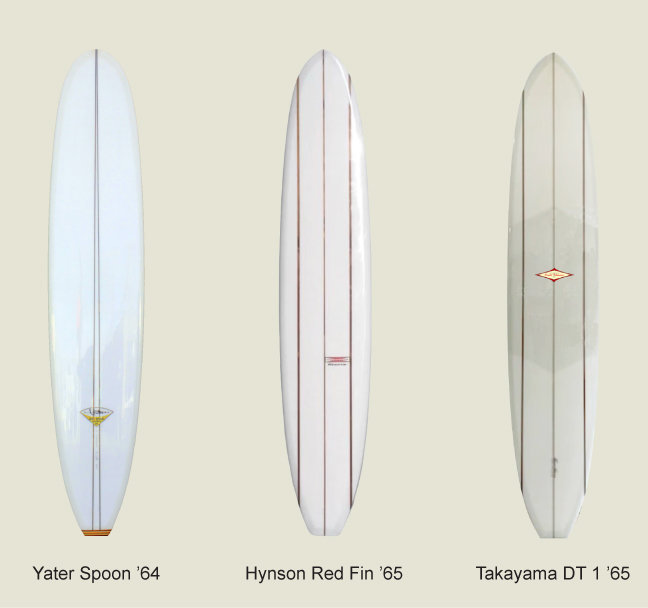 |
|
|
The Longboard Revolution included historically innovative and
creative surfboard designs - the Dale Velzy Pig, the Phil Edwards
Signature Model, the Yater Spoon, the Hynson Red Fin, the G&S Skip
Frye Model, Bing and Jacobs Takayama Models, the Brewer Pipeliner,
and Nat Young's board Sam that he famously rode to a World Title in
1966.
HIGH PERFORMANCE LONGBOARDS |
|
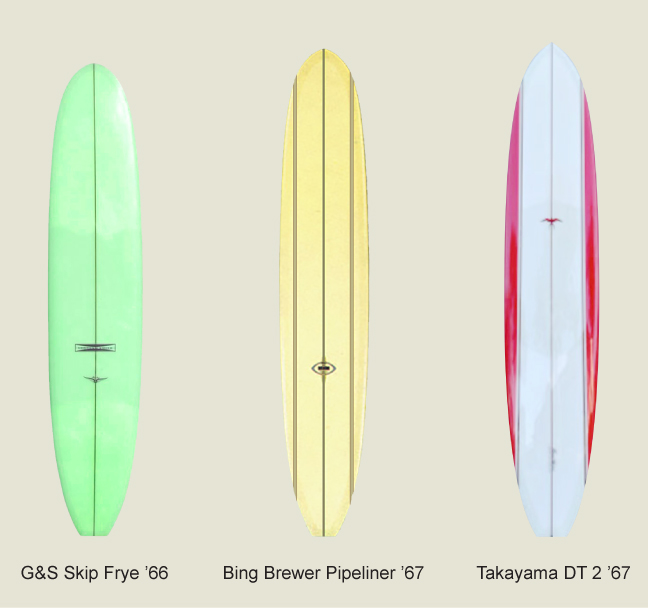 |
| The lightweight foam cores combined with the fiberglass and resin skins introduced the surfboard construction model that continues to be the primary model to this day. |
| 1967 to 1971 | |
|
THE SHORTBOARD REVOLUTION
This epic and monumental era saw a significant reduction in surfboard length and weight and a quantum leap in surfboard design and performance surfing. This era was known as the Shortboard Revolution. Surfer shapers like George Greenough, Bob McTavish, Dick Brewer, and Mike Diffenderfer shortened boards and integrated nuanced design elements to make them faster and more maneuverable, laying the foundation for modern performance surfing. Simmons' and Quigg's influence remained essential and constant. Their ideas and creativity were fundamental to recognizing rocker and bottom contours as essential elements of surfboard design. Rockers, profiles and foils, outlines, bottoms contours, and rails evolved from the imagination, ideas, and the creativity of these surfer shapers. Increasingly evolved shapes and lighter boards had a dynamic effect on surfing and surf culture. TRANSFORMATIVE BOARDS |
|
 |
|
|
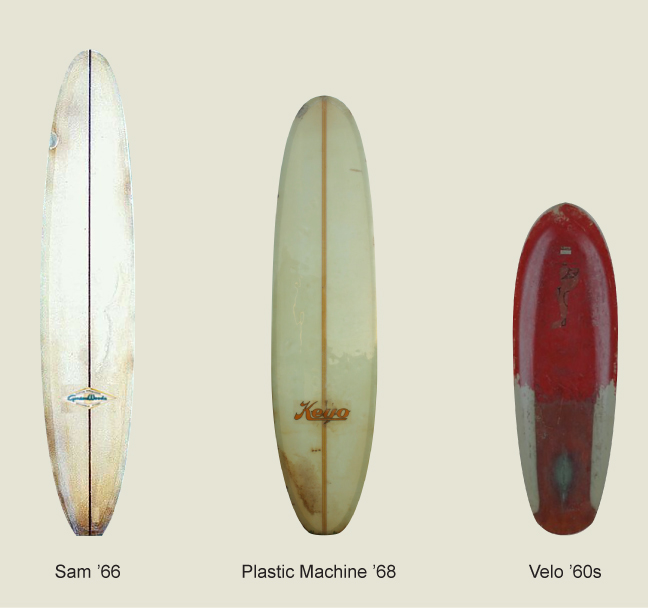
Sam was a single fin longboard, but Nat Young surfed it like a
shortboard. His aggressive carving turns were forerunners of
shortboard surfing and motivated an imaginative and creative
avalanche of revolutionary surfboard designs. McTavish's Plastic
Machine was a pivotal design in the shortboard revolution. His design
radically enhanced the ability to perform aggressive, powerful
vertical turns. George Greenough's surfing on Velo was the prototype
for modern on rail surfing. Notably, his surfing inspired Nat Young
and Bob McTavish as well as numerous surfers and shapers worldwide to
evolve their surfing and their surfboards during the Shortboard
Revolution. In 1967 and 1968 the evolution of surfboard design was
quantum and spectacular.
CREATIVE & REVOLUTIONARY BOTTOM CONTOURS |
|
 |
|
|
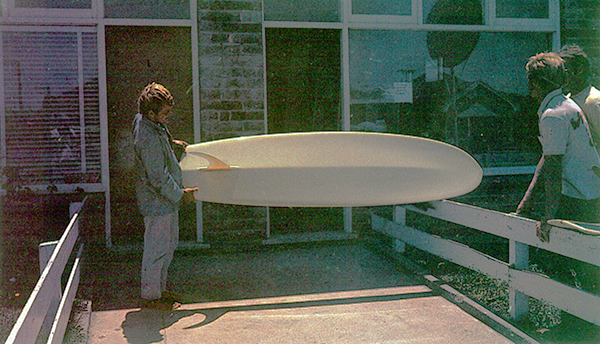
McTavish's early shortboards were very creative. Inspired by
George Greenough's surfing and his own imaginative surfing and
his shortened designs his boards were on the leading edge of the
shortboard revolution. The spiral vee double concave bottom in this
image is an extremely radical example of his imagination and
creativity.
EVOLUTIONARY SHORTBOARDS |
|
 |
|
|
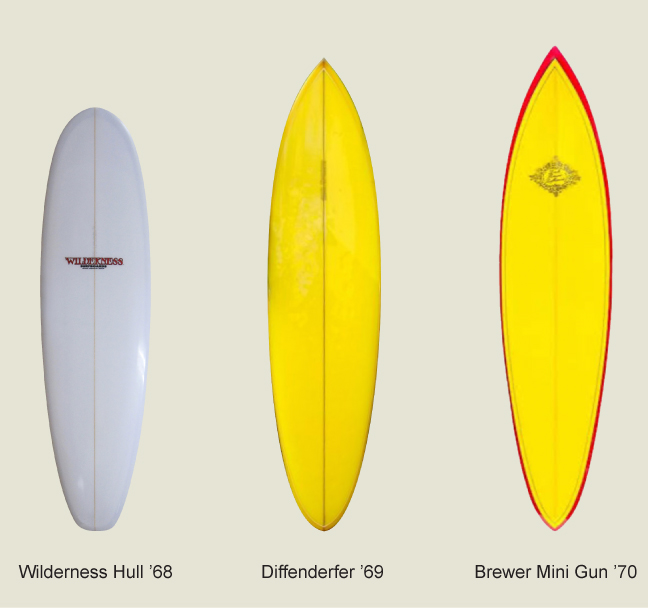
Three revolutionary shortboards from 1968, 1969 and 1970 - the
Wilderness Hull, the Diffenderfer Round Pin, and the Brewer Mini Gun.
By the 1970s the Diffenderfer Round Pin and the Brewer Mini Gun
cemented themselves as the prototypes for the modern high performance
shortboard. Shortboard designs continued to be based on the
fundamental variables identified by Simmons and Quigg. Rocker,
profiles and foils, outlines, bottom contours, and rails continued
their nuanced evolution.
THE FISH |
|
 |
|
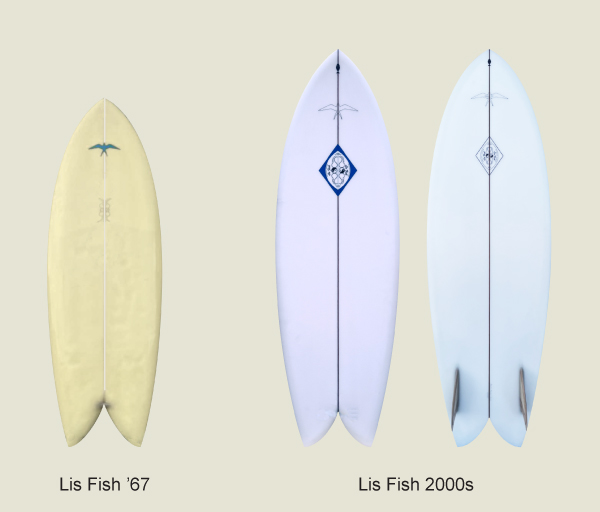
| In 1967 San Diego kneeboarder Steve Lis designed and created the Fish, another pivotal design in the Shortboard Revolution. He shaped and crafted this twin fin board from a broken longboard, designing it for more speed and maneuverability in the critical and often hollow waves he surfed. Lis' Fish design featured a short wide twin pin outline, low rocker, and two keel fins. Originally designed as a kneeboard, the Fish became popular with standup surfers for its speed and maneuverability across the full spectrum and variety of waves and conditions. The Fish has had a major effect on surfboard design and remains a very popular design. |
| 1970s & 1980s | |
|
The 70s & 80s were decades where the fundamentals of Simmons and
Quigg and the Diff Round Pin and the Brewer Mini Gun designs
continued to be the the basis for the primary prototypes for
progressive high performance surfboards. Dimensions and curves varied
for different waves and conditions. Rockers evolved to fit into ever
more critical sections of waves. Outlines became more versatile
particularly featuring fuller tails. Bottom contours in the 70s were
generally convex with subtle vees and tri planes. In the 80s multiple
concave bottom contours became more and more common. Dick Brewer and
Mike Hynson introduced and institutionalized down rails from nose to
tail. The Shortboard Revolution of the late 60s transitions to
decades of surfboard design evolution.
70s & 80s SHORTBOARDS |
|
 |
|
|
LIGHTNING BOLTS
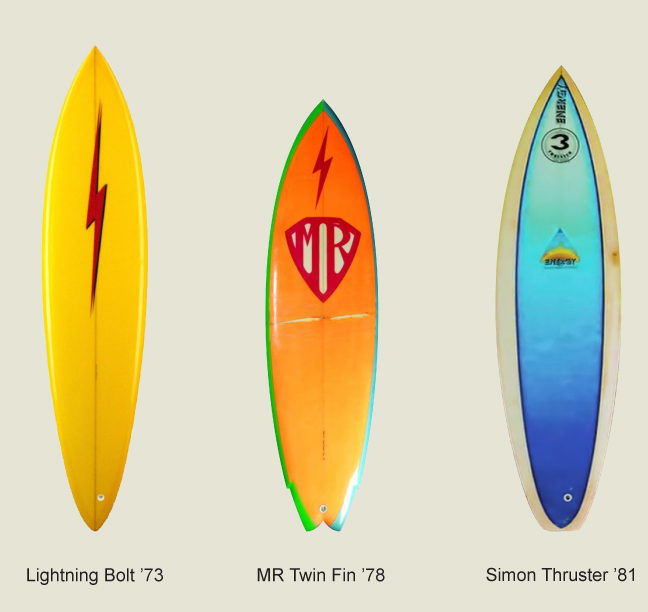
In 1971 Gerry Lopez and Jack Shipley formed Lightning Bolt surfboards. Lopez's designs and shapes were fast and maneuverable and could be customized for heavy water waves like Pipeline and to a full variety of waves from critical to user friendly worldwide. Even more interesting than the designs and shapes evolving in the 70s and 80s was the creation of the Mark Richards Twin Fin and the Simon Anderson Thruster. These two fin design concepts created a massive shift in the maneuverability of surfboards. MR TWIN FIN In the 1970s Mark Richard found his relatively narrow tailed single fins difficult to turn and maneuver in marginal and smaller surf. The concept of a surfboard with two fins existed decades before he developed his twin fin. In the 40s Bob Simmons designed a surfboard with two fins to stabilize and control his boards. In the late 60s Surfboards La Jolla's Nick and Bear Mirandon created their Twin Pin design. At the same time in the late 60s Steve Lis created the Fish featuring two keel fins. Inspired by two fin history MR shaped his first modern twin fin in 1977. The design offered a new level of performance in marginal and smaller waves. The success of MR’s twin fins was pivotal in the transition from single fins to twin fins and ultimately to thrusters in the early 1980s. The unique performance of the twin fin remains popular with a wide variety of surfers and is functional for every surfboard design class. SIMON ANDERSON THRUSTER In late 1980 Simon Anderson created the Thruster fin configuration. The Thruster featured three fins of the same size and offered a unique combination of speed, stability, maneuverability, control, and predictability. The performance of this fin configuration had a massive affect on surfing and surfboards. Instantly the Thruster became the primary fin configuration for shortboards and remains so to this day. Anderson's three fin design offered the speed and maneuverability of a twin fin with the control, stability, and predictability of a center fin added to the configuration. ICONIC 80s BOARDS |
|
 |
|
|
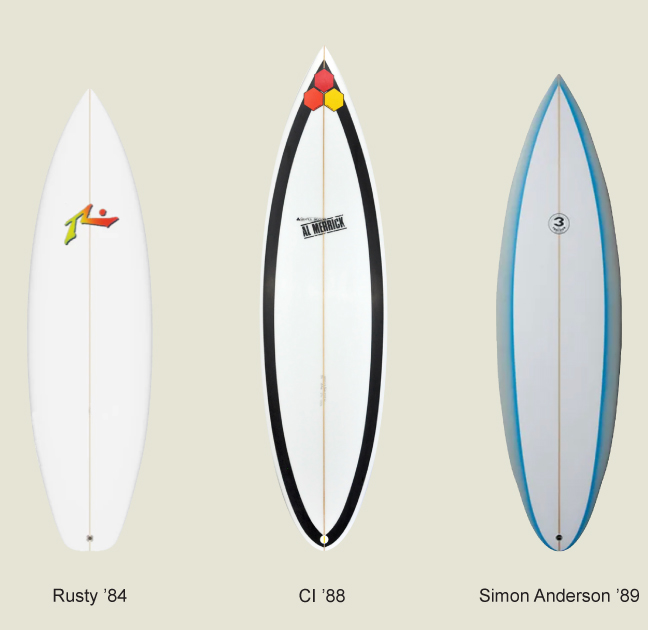
Three iconic brands from the 80s - a Rusty, a Channel Islands,
and a Simon Anderson. Universally shapers refined all the fundamental
design elements tuning rocker and outlines to fit the curves of
waves, foiling rails to engage waves with predictability and control,
and exploring and creating bottom contours to maximize lift, reduce
drag, and increase maneuverability.
MICHEL BARLAND CREATES THE FIRST CNC SHAPING MACHINE Nearly two decades before CNC shaping became mainstream in surfboard shaping and manufacturing, Michel Barland launched this technology designing and building the first surfboard specific CNC shaping machine. Barland was a mechanical engineer, industrial designer, and manufacturer with a metal works in Southwest France. He was also one of the "Tontons du Surfeurs," the first generation of French surfers, and was the first French shaper, and with Jacky Rott the first surfboard manufacturer and brand in France. He designed and built his original shaping machine in his metal works in Bayonne, France and collaborated with a computer scientist to develop the design and machine software. The precision, consistency, and efficiency of CNC shaping and the control of variables and design features in design software ultimately provide shapers with a very powerful design and manufacturing tool. |
|
1990s
THE GLASS SLIPPER - EVOLUTION & DEVOLUTION Inspired by the surfing of the Momentum Generation, shapers worldwide designed increasingly shorter, narrower, and thinner boards with extreme rocker. This design became known as the Glass Slipper. The Glass Slipper was an extremely low volume surfboard. It was short, narrow, and thin with extreme rocker nose to tail and a multiple concave bottom. Common dimensions were 6' 0" x 17 3/4" x 2". These extremely low volume boards surfed incredibly well in the pocket of critical waves, but they failed to maintain their speed and energy through less critical sections. Shortboard volume remained low through most of the 90s before it became obvious that the Glass Slipper required more volume to be an effective and universally functional design. GLASS SLIPPERS |
|
 |
|
|
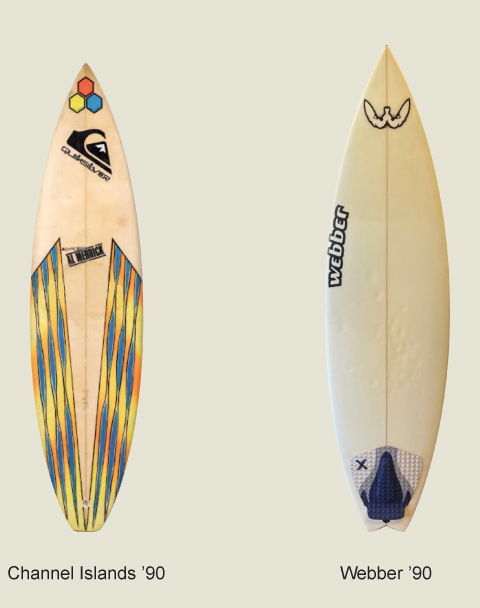
Glass Slippers shaped in the early 90s by Al Merrick at Channel
Islands and Greg Webber in Australia. The Glass Slippers introduced
radical dimensions and evolutionary design features. They were
extremely narrow and thin, featured significant rocker in the nose
and tail, and deep concaves from nose to tail.
The late 80s and early 90s saw the reemergence of longboards and the development of mid length designs. These higher volume designs were relevant to and very popular with the increasing number of novice and recreational surfers who struggled to enjoy surfing lower volume shortboards. While the Glass Slippers were gaining popularity among most surfers, the popularity of surfing longboards and mid length boards began to grow exponentially for recreational surfers who didn't want to struggle surfing low volume high performance shortboards. Clark Foam, which was still supplying the foam cores for the vast majority of all surfboards on the market, said that the end of the 90s saw a 50 / 50 split of under 8 foot and over 8 foot blanks sold. |
|
2000s
Surfers and shapers added volume and modified rocker to the Glass Slipper design and developed shorter, wider, higher volume boards with nuanced rockers, profiles, and foils that were user friendly and maintain and further evolve surfboard performance. The 90s and early 2000s saw the introduction of CNC technology to surfboard design and manufacturing. Designing and milling with CNC technology allowed a new level of precision and consistency for surfboards. This technology made the design and manufacturing process faster, consistently more precise, and offered the ability to control design variables with greater precision. Surfboard design and machine software continue to evolve, milling highly customized boards that can be designed and shaped to any surfer's unique preferences. CLARK FOAM CLOSES In December 2005 Clark Foam, the world's primary and largest supplier of polyurethane foam blanks, closed. After the initial shock new sources of polyurethane foam emerged. Shapers and manufacturers embraced alternative materials to the PU / PE construction schedule. EPS / Epoxy boards become mainstream with EPS foam and Epoxy resins developing surfboard specific qualities. EPS / EPOXY BOARDS When Clark Foam closed abruptly in 2005, the world's largest producer and supplier of polyurethane foam surfboard blanks ceased manufacturing blanks without warning or explanation. Blank inventories sold through overnight, inventories and distribution of other essential materials and supplies were affected, surfboard inventories quickly sold through, and board prices rose substantially. Innovative designers took the opportunity to explore alternative efficient means of surfboard design and manufacturing. EPS foam cores became an immediate alternative to polyurethane foam cores. The modern era of EPS / Epoxy surfboards was born. EPS / Epoxy based surfboards continue to gain popularity. They are generally lighter and very lively and have a different flex pattern and feel compared to Polyurethane / Polyester boards. These properties make EPS / Epoxy boards excel in smaller less powerful waves and conditions. PU / PE remains the most common construction for most boards. Heavy water and XXL boards are nearly all PU / PE construction. In 2006 Firewire begins manufacturing quality EPS / Epoxy surfboards on a production level. Their technology and variety of designs offered a quality alternative to custom shaped boards. Alternative designs become popular with the growth of surfing. Designs are created and adapted for the full spectrum of surfers. Shortboards, mid lengths, longboards, fish, and other designs are widely available and continue to evolve. LONGBOARDS & MID LENGTHS REEMERGE In the late 80s and early 90s longboards reemerged in surfing. These boards featured two distinct design threads. One a contemporary performance longboard designed to carve like a shortboard and trim and nose ride like a traditional longboard. The other an evolved single fin longboard designed to perform like the classic longboards from the peak of the longboard revolution. LONGBOARDS |
|
 |
|
|
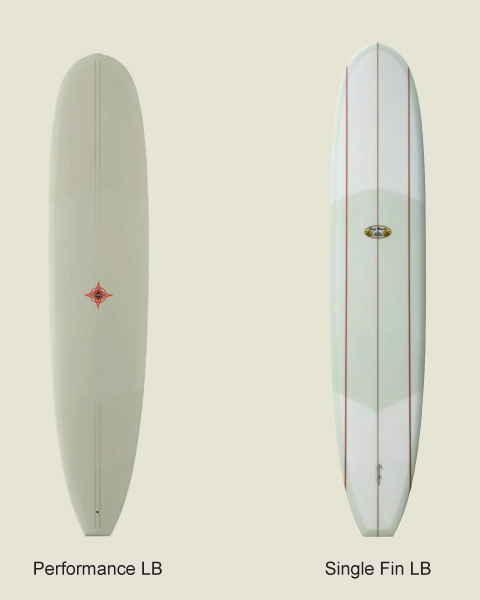
When longboarding first reemerged longboards and longboard
surfing were an extension of shortboard surfing. In the 90s a new
generation of surfers and shapers embrace pre shortboard single fin
longboards and surfing and develop evolved classic single fin
longboards.
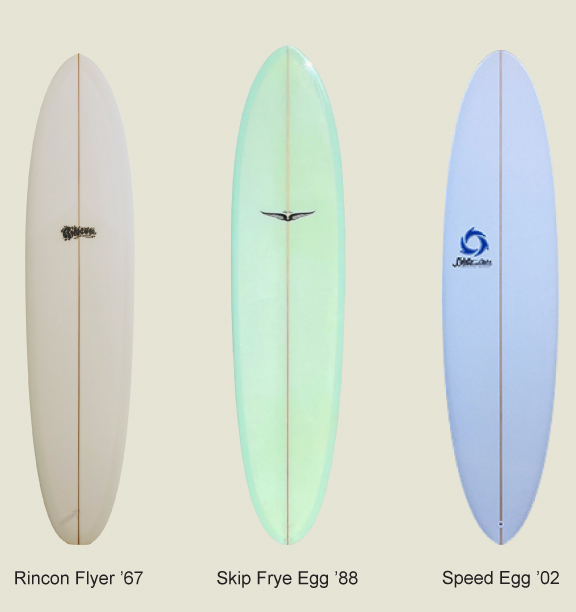
The first mid length surfboards appeared in the late 60s during the shortboard revolution. Bob McTavish's Rincon Tracker and Skip Frye's Eggs were the first mid length surfboards, even though they were considered shortboards at that time. These boards were consequential designs in the shortboard revolution, revolutionizing surfing performance. MID LENGTHS & EGGS |
|
 |
|
|
In the 2000s mid length surfboards initially gained popularity
among recreational surfers as a diverse and user friendly surfboard.
Eventually mid length boards became increasingly popular and common
to surfers of all skill levels due to their evolution, their ease to
surf, and their performance in a wide and diverse range of
conditions.
2010s COMPUTERIZED SHAPING ACCELERATES DESIGN INNOVATION Computer Aided Design and Computer Aided Manufacturing in the mid 90s opened the doors of innovation and creativity even further. These technologies greatly streamlined the surfboard design and shaping process, allowing for easier mass production and innovation. SHORT, WIDE & PRACTICAL - COMPACT USER FRIENDLY VOLUME In early 2000s the ability of CAD software to accurately measure a full range of surfboard dimensions allowed the concept of volume to became another variable that could be measured and quantified. The measure of volume helped surfers and shapers tune boards to the correct and functional volume across all surfboard classes. Greater knowledge of volume helped develop higher volume shorter, wider, and thicker shortboards for a broad spectrum of surfers. Surface area, profiles, and foils are varied to add and remove volume. CONTEMPORARY SHORTBOARDS |
|
 |
|
|
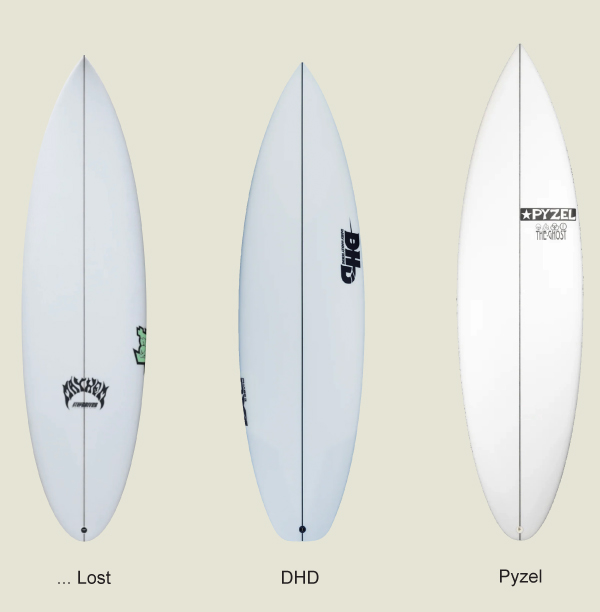
Three contemporary shortboards - higher volume boards remain
short, fast, and maneuverable, and offer the opportunity for expanded
high performance surfing on more versatile and functional boards than
the Glass Slipper. The broad spectrum of designs with increased
surface area and volume are well suited for twin fins, quads, and
other fin configurations. Imagination, ideas, and creativity generate
diverse and alternative designs. Asymmetrical boards are explored,
theorizing, designing, and testing surfboards that were uniquely
suited to specific surfers and waves.
Shortboards are shorter, wider, and moderatley thicker with volume matching surfers' size and skill. Mid lengths evolve substantially as more surfers embrace the design. Performance and single fin longboards also continue to evolve. More alternative designs emerge. Surfers and shapers explore asymmetrical boards and alternative materials. Modern surfboard designs continue to develop through incremental and quantum innovations and refinements. 2020s Surfers, designers & shapers evolve designs incrementally & in quantum leaps Increasingly diverse designs & classes of boards emerge Construction concepts, innovations, schedules & materials evolve Computerized shaping continues to evolve |
| |
|
| |
< top of page > |
| |
|
| |
ROCKER |
| |
|
| |
January 3, 2024 |
| |
|
| |
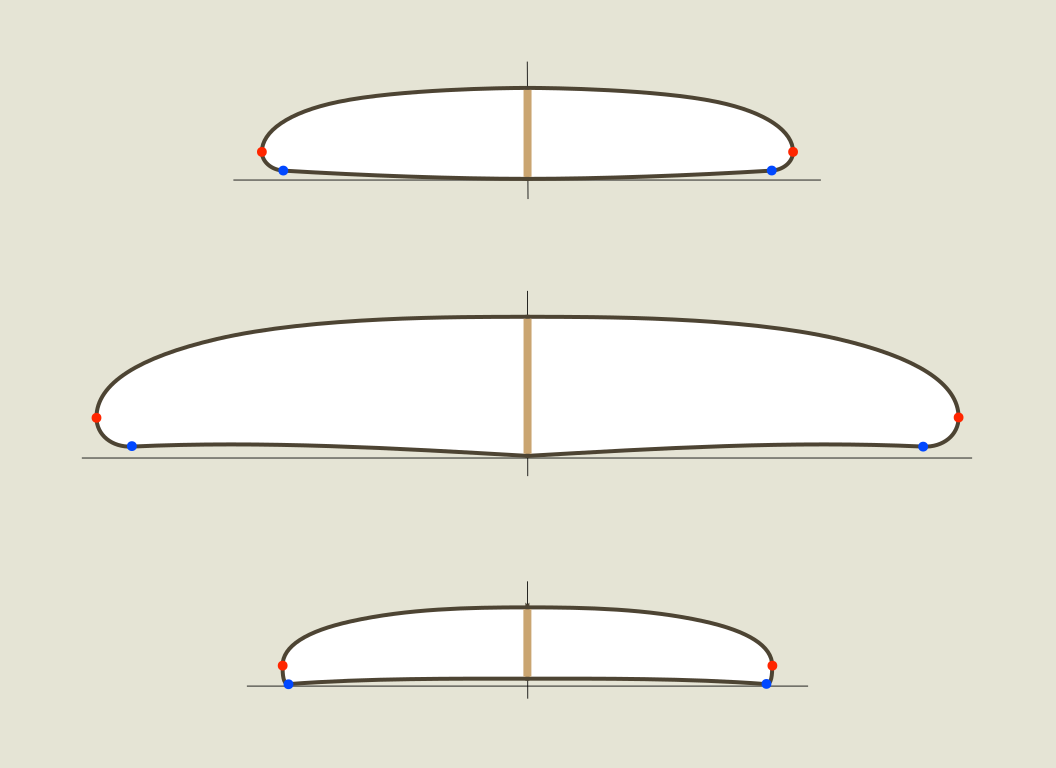
ROCKER is the most significant and critical component in the
design of a surfboard. Rocker is a curve observed and measured along
the bottom, deck, and rails of a surfboard from nose to tail. Bottom
rocker is a curve following a straight line along the bottom of a
surfboard from nose to tail. Deck rocker is a curve following a
straight line along the deck of a surfboard. Rail rocker is a curve
along the rail of a surfboard following the outline and either the
bottom or apex of the tail.
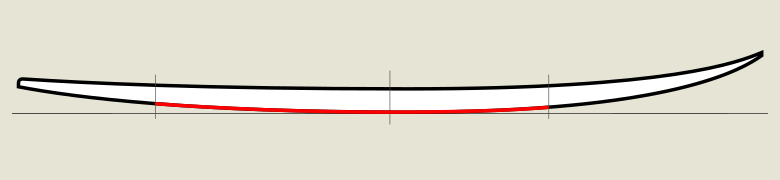
Bottom rocker is universally the first design component a shaper designs and shapes into a surfboard. The bottom and rails of a surfboard are the primary elements of design that interact with the surface of a wave. Bottom rocker and rail rocker are designed to fit correctly and functionally in the curves of a wave. Water flowing up the face of a wave in vertical and critial sections produces the most energy a wave has to offer. Rockers that fit into these critical sections therefore create the greatest amount of energy transfered into board. More energy offers more design performance. Essentially rocker allows a surfboard to source the energy in a wave providing all the primary and significant performance features required for a surfboard - acceleration, projection, speed, maneuverability, and control. Once bottom rocker is established a shaper will create deck rocker and proceed to foil the profile of a board from nose to tail and rail to rail, add bottom contours, and rails all in relation to the bottom rocker. It's essential that these additional variables compliment the bottom rocker of the board. If these design variables are not in sync, they risk working against each other. A well designed and well executed bottom rocker is the foundation of a magic surfboard. There are three primary varieties of bottom rockers in surfboard design - Speed Box rockers, Continuous rockers, and Relaxed rockers. All three rockers have important features in common, entry rocker, mid board rocker, and tail rocker. They all share these fundamental features - more curve in entry, less curve mid board and more curve in the tail. The curves accelerate in the nose and tail and are reduced mid board. All these rockers may be applied to any surfboard class and design - shortboards including stepups, semiguns, XXL guns, tow boards, mid lengths & eggs, longboards, retro, and specialty shortboards - as shapers design the performance characteristics into a surfboard. However, each of these bottom rockers is generally best suited for specific surfboard classes and designs. |
| |
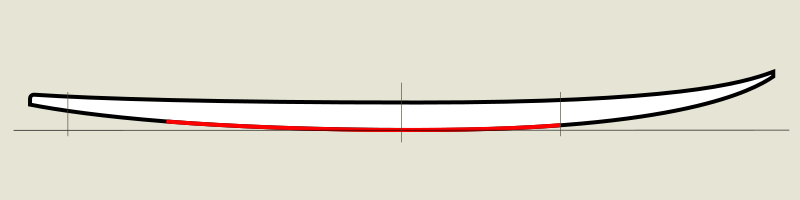
SPEED BOX ROCKER is a bottom curve that features relatively flat
curves through the mid section of the surboard referred to as a speed
box with accelerated curves in the entry and tail. Speed Box rockers
share this feature with continuous and relaxed rockers with the
rocker mid board reduced to maximize acceleration, projection, speed,
and control of a shortboard out of it's turns. The speed box can vary
moderately in curves, length, and position. The manner that these
reduced and accelerated curves transition into each other is critical
to the successful application of this design. Smooth integrate
transitions allow the board to maximize performance. Poorly placed,
abrupt, or interrupted transitions will cause the board push water,
drag and lose speed.
Speed Box rockers are used primarily in shortboards, semiguns, and XXL guns. Lengthening the straighter curves in the mid section of a board yields great acceleration, projection, and planning speed with a longer natural arc out of the turns. Shortening and increasing the curves in the mid section yields a tighter turning radius and shorter arcs out of the turns without loss of acceleration, projection, and speed. Surfers with the skill to ride these boards are able to generate acceleration, projection, and maintain speed no matter the natural arc or turning radius of the board. Shapers use these fundamental principles with moderate variations to maximize a boards performance in a variety of conditions. Speed Box rockers are the most versatile rockers in surfboard designs offering great performance across the whole spectrum of waves and conditions. |
| |
 |
| |
SPEED BOX ROCKER - Note the area of flatter rocker, the speed box, through the mid section of the board highlighted in red. Zoom view |
| |
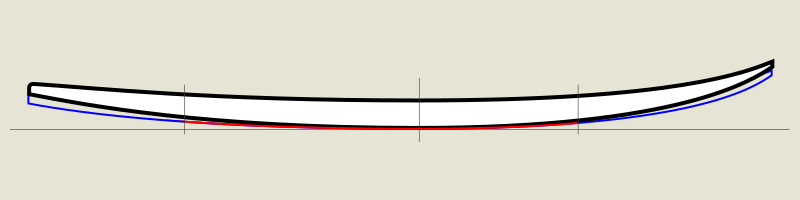
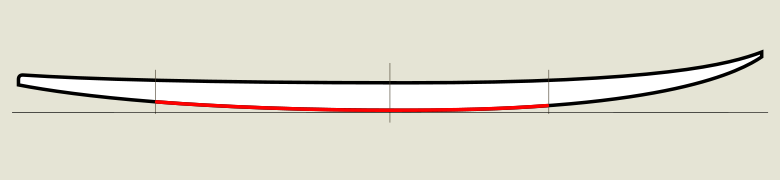
CONTINUOUS ROCKER is a bottom curve with no flat spots or notable
staged transitions. They excel in the critical sections of high
quality, hollow, barreling waves. The curves flow from accelerated
curve in the nose and entry, to less curve in the mid board, to
accelerated curve in the tail. Continuous rocker curves keep boards
loose and rails clean in the tight sections of critical waves. These
smooth and continuous curves allow a surfboard to turn with ease and
accelerate, project, and create speed with complete control in
critical sections.
Continuous rocker in shortboards, step ups, semiguns, and XXL guns, allows a surfboard to transition from rail to rail, turn in a variety of arcs, and project out of turns with acceleration, speed, and control. Shapers may dial up or down performance features by varying the degree of these curves. A relatively greater continuous rocker will have a tighter turning radius offering greater manuverability. A relatively flatter continuous rocker will offer more projection and a longer natural turning radius. Continuous rocker in mid length designs, eggs and longboards allows a surfboard to glide or trim at speed and turn with ease. Shapers may dial up or down these performance features, as they do in other types of designs by varying the curves. Mid length and egg designs will have rocker similar to shortboards designed to turn and accelerate when the opportunity presents itself yet glide and trim in marginal waves with less energy and power. Contemporary longboards will have rocker patterns that are flatter throughout, particularly in the nose. They are still characterized by clean continuous curves with no flat areas. The flatter nose and entry rocker of longboards creates the trim and nose riding features of the design. The greater accelerating curves from wide point to tail in longboards creates the turning features of the design. |
| |
 |
| |
CONTINUOUS ROCKER - Note the constant curve from nose to tail compared with the Speed Box Rocker highlighted in blue and the Speed Box Rocker's speed box highlighted in red. Zoom view |
| |
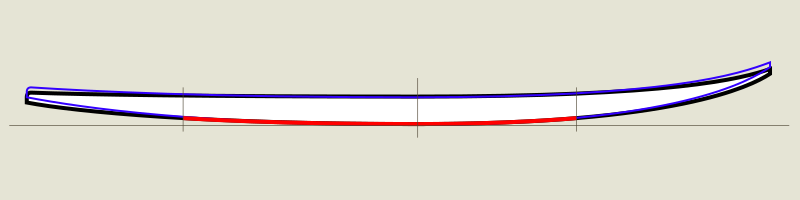
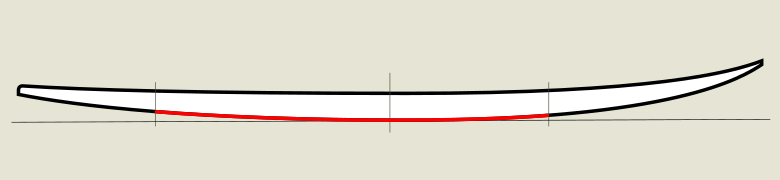
RELAXED ROCKER is a Speed Box or a Continuous rocker with reduced entry and tail rocker. The lower rockers profiles in the nose and tail offer performance characteristics of Speed Box and Continuous rockers in small and marginal conditions. They are designed to help a surfboard carve and accelerate through turns and hold speed and power through transitions in marginal or smaller waves. Relaxed rockers are most common to small wave boards, mid lengths and eggs, and contemporary longboards. |
| |
 |
| |
RELAXED ROCKER - Note the relaxed lower rocker in the nose and tail compared with the Speed Box Rocker highlighted in blue. The Relaxed Rocker's speed box is highlighted in red. Zoom view |
| |
|
| |
SUMMARY
Rocker is the most significant and critical component in the design of a surfboard. Bottom rocker is the first design element a shaper puts into a surfboard. Once bottom rocker is established a shaper will create deck rocker and proceed to foil the profile of a board from nose to tail and rail to rail, add bottom contours, and rails all in relation to the bottom rocker. A well designed and well executed bottom rocker is the foundation of a magic surfboard. |
| |
|
| |
< top of page > |
| |
|
| |
OUTLINES | ||||
| |
|
||||
| |
April 20, 2026 | ||||
| |
|
|
OVERVIEW
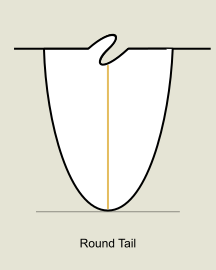
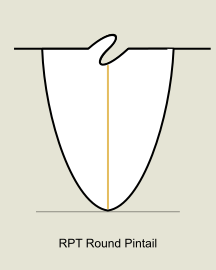
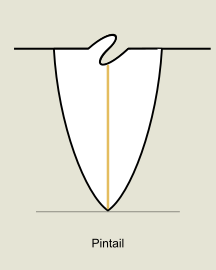
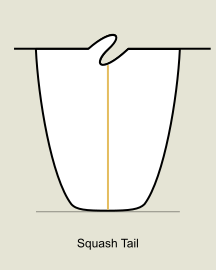
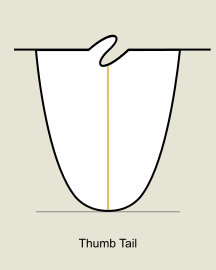
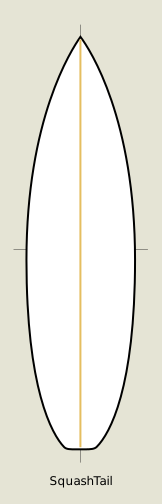
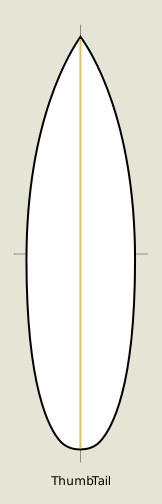
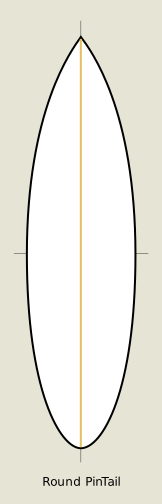
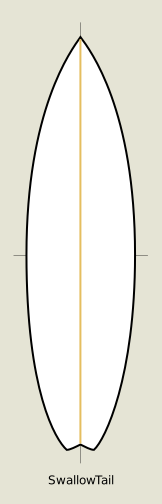
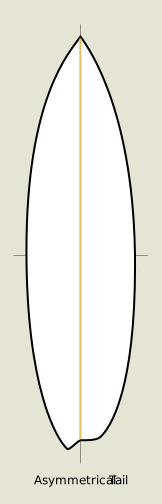
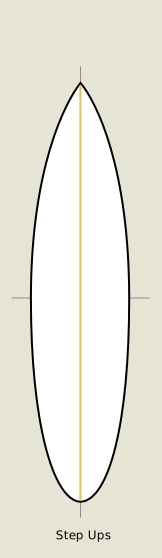
The outline of a surfboard is the configuration and distribution of the surface area of the board. Outlines have always been an essential design element of surfboards. Prior to computer design and shaping the first step after blank selection in shaping a board was drawing an outline on the blank. The outline along with the other elements of design - rocker, profile and foil, bottom contours, and rails was and always will be fundamental and essential to an efficient board. There are outlines for every class and subclass of surfboards - shortboard, semi gun, and XXL boards, mid lengths and eggs, and longboards. Nose and tail outline configurations are commonly used to reference specific outline designs or features. Nose outlines are often identified as round, full, narrow, or "no" nose. Tail outlines are more specially identified as Round Tails, Round Pin Tails or RPTs, Pin Tails, Square Tails, Squash Tails, Thumb Tails, and Swallow Tails. An intriguing and increasingly more common outline is an asymmetrical outline featuring an asymmetrical tail. The wide point and nose outline are also asymmetrically designed. Identifying a board by its tail outline is common to all classes of boards. |
 |
 |
 |
 |
 |
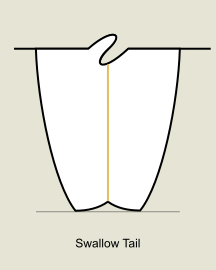 |
| TAIL OUTLINES |
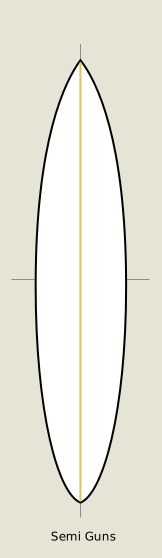
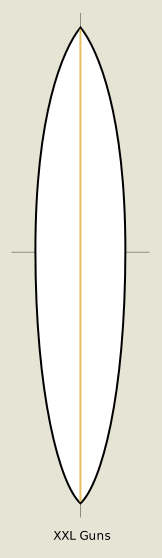
| Surfboard classes and sub classes, performance goals and requirements, surf venues, conditions, and surfer preferences all factor into outline design. |
| Shortboards, Semi Guns, and XXL guns are one class of surfboards. Their outlines vary in length, width, wide point, and distribution of surface area tuned to the previously mentioned factors and variables. |
|
|
 |
|
|
|
SHORTBOARDS
Squash Tail, Thumb Tail, Round Pin Tail Swallow Tail & Asymmetrical Tail |
|
|
 |
|
STEP UPS, SEMI GUNS & XXL GUNS
Round Pins & Pin Tails |
|
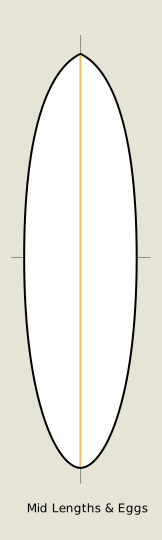
Mid Lengths and Eggs are another primary class of surfboards.
Their outlines are wider overall and fuller in the nose and tail than
shortboards. Mid Lengths and Egg outlines have notably more surface
area than shortboards.
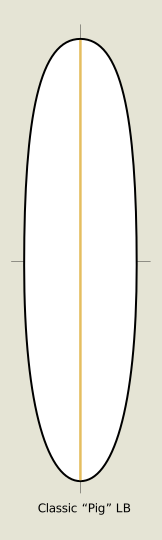
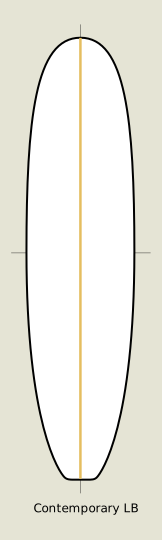
Longboards and longboard sub classes are a third primary class of surfboards. Their outlines are similar to mid length and egg outlines although generally fuller in the nose. Longboard outlines maximize surface area. |
|
|
 |
|
MID LENGTH EGG, "PIG" LB & CONTEMPORARY LB
Round Pin Tail, Round Tail & Squash Tail |
| |
|
| |
< top of page > |
| |
|
|
PROFILES & FOILS
THE DISTRIBUTION of VOLUME in a SURFBOARD |
|
| |
|
| |
January 3, 2026 |
| |
|
|
OVERVIEW
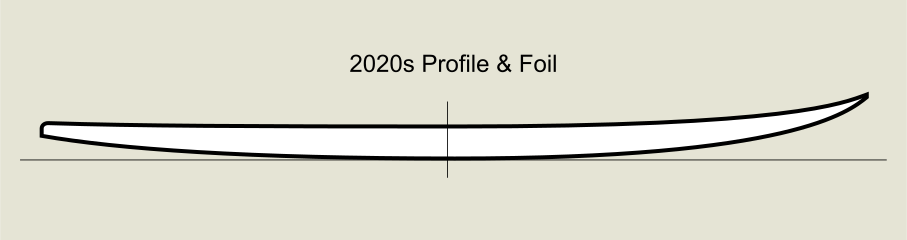
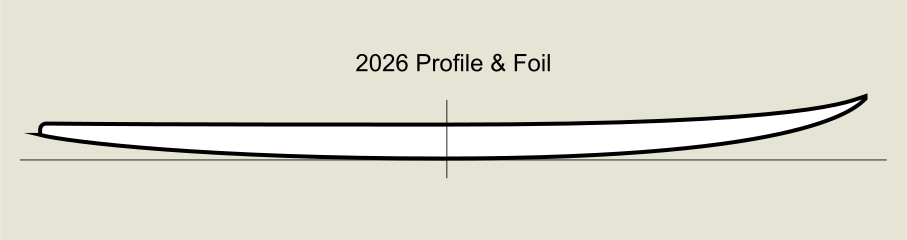
The Profile and Foil refer to the distribution of thickness and volume in a surfboard. Surfboards are foiled nose to tail and rail to rail. Rails are also foiled from nose to tail and deck to bottom. Surfboard foils vary with the many classes of surfboards. The foil nose to tail facilitates several performance features for a surfboard - creating inertia and momentum, initiating maneuvers, control of the rails and tail, and support for the surfer's displacement and technique. The rail to rail foil facilitates the same performance features as well as enhancing transitions from rail to rail, and maintaining control and support for surfing on rail through maneuvers. An efficient well designed and well shaped foil creates acceleration, projection, planning speed, maneuverability, control, and predictability. SHORTBOARD FOILS The primary effect of an efficient shortboard foil is generating lift and reducing drag in a design. The foil of the modern shortboard is pretty unique. The performance demands and volume of these designs requires extremely well nuanced design features. Foils are dependent on and designed for a surfer's displacement and technique. Foils are moderately thicker throughout carrying more volume through the nose and tail for bigger or more powerful surfers and, conversely, foils are moderately thinner throughout carrying less volume through the nose and tail for smaller or more light footed surfers. Nose to tail along the length of a board the shortboard foil has the volume concentrated from 12" to 15" aft of the nose to the rail fins near the tail. The volume in the nose and tail are thinner than the volume from the wide point to the fins, the nose moderately thinner than the tail from the 1990s to the early 2000s. Foils have evolved to moderately thicker in the nose than in the tail in the 2020s. The transition from thinner nose to the concentration of foam under the surfer to thinner tail must be seamless and clean to maximize the board's performance. An efficient surfboard foil is moderately thin and crisp in the nose and entry, gains volume as it approaches the wide point, carries volume through the wide point, has a very subtle but well defined reduction in volume from the wide point approaching the fins, and carries that thinner volume from the fins through the tail. The thinner entry allows the board to transition with ease onto rail and from rail to rail. The moderate thickness at the wide point supports the surfer on rail. The moderately thin foil near the fins provides control and creates acceleration and projection. Carrying moderate volume from the fins through the tail maintains and carries the speed developed from turns. Foils from the early 1990s to the early 2000s were generally 1/8" to 1/4" thinner 12" from the nose than 12" from the tail and 1/16" to 1/8" thinner 24" from the nose than 24" from the tail. Shortboard foils from the 2020s are now moderately thicker at 12" and 24" from the nose, generally 1/16" to 3/16" thicker at 12" and 24" from the nose than from 12" to 24" from the tail. In the 2020s foils the distribution of volume has shifted forward in all shortboard designs mimicking the foils of Semi Guns and XXL Guns. This trend started in heavy water and XXL waves long before it was adapted to high performance shortboard and step up designs. This evolutionary foil feature and distribution of volume offers enhanced performance paddling, catching waves, early entry, acceleration, out of turns, turning a board as hard as possible with no risk of losing control, and particularly the ability to hold a board on rail throughout the full arc of turning on rail. Early 1990s to 2000s performance shortboards were notably longer than the more efficient versions of the 2020s. They ranged from 5' 10" to 6' 4" depending primarily on the size, skill, and fitness of the surfer. The 2020s versions range from 5' 8" to 6' 2". To offset the length in these longer shortboards profiles and foils were designed thinner with less volume to minimize the length's affect on quickness, maneuverability and turning performance. The shorter rail line and outline of the 2020s shortboard offers more versatile and efficient quickness, maneuverability, and turning performance. To maximize acceleration, projection, speed, and control the remarkably efficient shorter performance shortboards of the 2020s shifted volume forward from the early glass slipper profiles and foils. Dimensions nose and tail at 12" and 24" are generally 1/16" to 3/16" thicker in the nose than in the tail. Shortboard foils have evolved for decades with variations in bottom and deck rockers and volume distribution. Thickness, volume distribution and flow, and dimensions have evolved notably from the 1990s to 2000s glass slipper shortboards to the 2020s performance shortboards. Variations and options in dimensions, volume, and flow have developed as surfing, surfboard performance and surfboard design evolve. |
 |
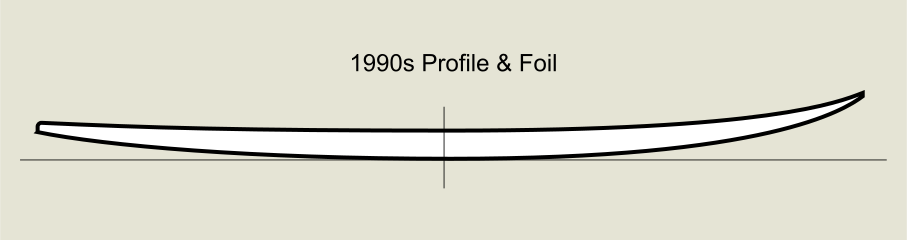
| 1990s SHORTBOARD FOIL Extreme entry rocker, well foiled, low volume, volume concentrated from wide point to fins, extremely thin nose and tail with the nose notably thinner than the tail. |
 |
| 2020s SHORTBOARD FOIL Efficient rocker, nuanced moderate foil, moderate volume, volume shifted forward with the nose equal to or thicker than the tail. |
|
SEMI GUN FOILS
Semi Gun foils feature volume shifted forward compared to the foils in the glass slipper shortboards of the early 1990s and 2000s and the foil is moderately more pronounced from the wide point to the tail. The volume in the classic semi gun foil has been shifted forward from the origins of contemporary semi guns. The foil shifted forward enhances paddling mobility, paddling for entry and generates and maximizes key performance features acceleration, projection, speed, and control in heavy water and critical waves. This offers greater control and projection through the critical turns required in larger and thicker waves. Surfers have the option of going slightly, moderately, or substantially thicker with the semi gun's volume and profile depending on their size, technique, style, skill, and fitness. |
 |
| SEMI GUN FOIL Volume shifted forward compared to the foil in shortboards. Semi Gun foils are moderately more pronounced from the wide point to the tail with extra volume in the core. |
|
XXL GUN FOILS
The foil of the XXL big wave gun is designed for paddling, catching waves, making the drop, and accelerating and maintaining speed off the bottom and down the line. Like it's little brother, the semi gun, the foil has the volume shifted forward. A full yet well foiled nose gains volume through the wide point, then tapers with a smooth reduction of volume through the tail. Most of the volume is concentrated at and slightly forward of the wide point corresponding to the concentration of surface area in the outline. The forward concentration of volume in an XXL Gun offers great paddling mobility, efficient take off and entry, complete control on rail and has a pendulum effect pulling the board down the face in take off and down the line out of the turns. XXL Gun foils are focused, consistent, predictable, simple, and efficient. |
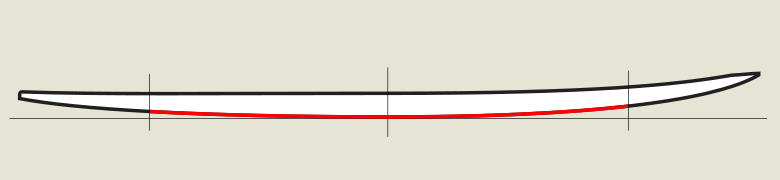 |
| XXL GUN FOIL Volume shifted forward. XXL Gun profiles have significant volume with nuanced foil from the nose and entry to wide point and wide point to the tail. Extra volume is maintained in the core. |
|
MID LENGTH & EGG FOILS
Mid Length and Egg foils are balanced from nose to tail. They mimic shortboard foils. The nose and entry rocker are notably more relaxed than shortboard and semi gun entry rocker. The performance features of these boards are created and tuned with nuanced foil options. Foil options are dependent on a surfer's displacement and technique and the venues and waves they surf. Foils are moderately thicker throughout carrying more volume through the nose and tail for bigger or more powerful surfers. Conversely, foils are moderately thinner throughout carrying less volume through the nose and tail for smaller or more light footed surfers. Foils for venues with marginal to moderate waves are moderately higher volume. Foils for venues with critical waves are moderately lower volume. |
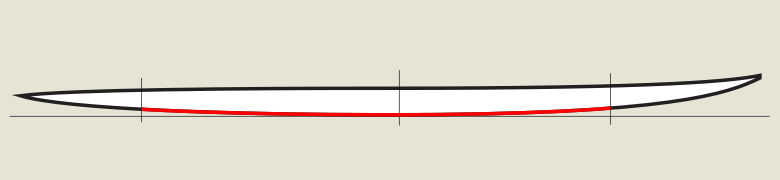 |
| MID LENGTH & EGG FOIL Balanced foil with moderate volume in the nose, entry, and tail. |
|
PERFORMANCE LB FOILS
Performance LB foils are balanced from nose to tail. They mimic Mid Length and Egg. Nose and entry rocker is notably relaxed, even more than the relaxed entry in Mid Lengths and Eggs. The performance features of these LBs are created and tuned with nuanced foil options dependent on a surfer's technique and the venues and waves they surf. Performance LB foils are similar to the foils of most surfboard designs and classes, but are moderately thicker throughout. Foils are moderately thicker throughout carrying more volume through the nose and tail for bigger or more powerful surfers. Conversely, foils are moderately thinner throughout carrying less volume through the nose and tail for smaller or more light footed surfers. Foils for venues with marginal to moderate waves are moderately higher volume. Foils for venues with critical waves are moderately lower volume. |
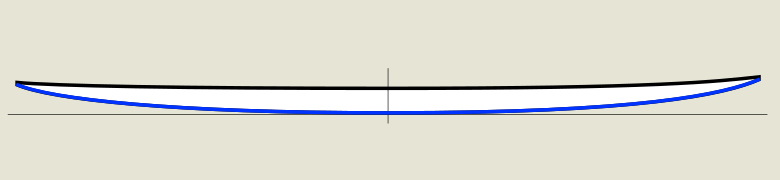 |
| PERFORMANCE LB FOIL Notable volume in the nose, entry, and tail with nuanced profile and foil. |
|
CLASSIC LB FOILS
Classic LB foils are full and balanced from nose to tail. Nose and entry rocker is notably relaxed. Rocker accelerates in the tail. Volume is concentrated mid board with a moderately foiled nose, entry, and tail. The foil wide point to tail carries volume well into the tail. |
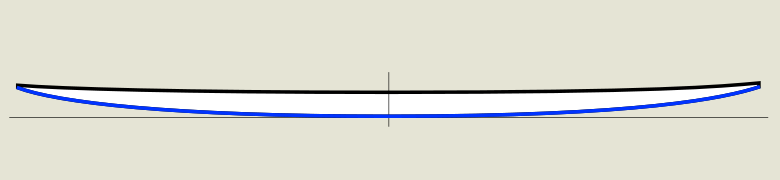 |
| CLASSIC LB FOIL Full and balanced foil with notable volume throughout. The nose, entry, and tail are moderately foiled. |
| |
MATCHING VOLUME to SURFERS & DESIGNS
Surfers vary in age, gender, size, skill, fitness, and technique or style. Matching volume to these variables is essential to maximizing the performance of a contemporary shortboard. Correct volume for one surfer may not be correct for another. The Theory of Volume and the Theory of Displacement are principles for surfers and shapers to tune dimensions appropriate volume. |
| |
|
|
LINK
Acceleration & Foiled Profiles |
| |
|
| |
< top of page > |
| |
|
| |
FOIL HISTORY - EVOLUTION & DEVOLUTION
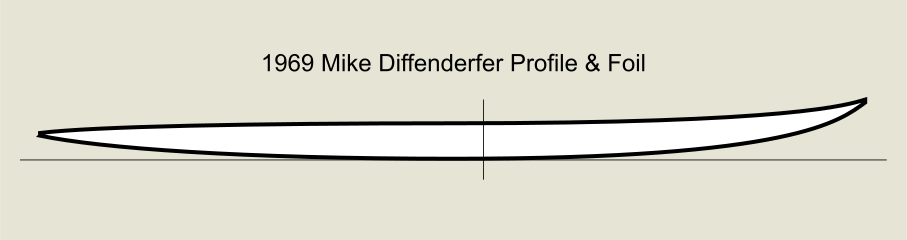
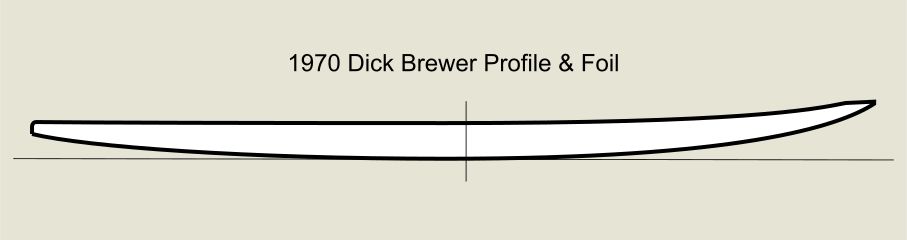
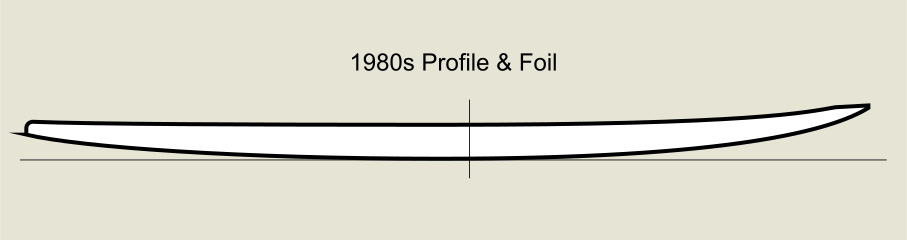
November 10, 2020 Updated October 21, 2023 1966 to 1990 Shortboards date to the second half of the 1960s pioneered by George Greenough, Bob McTavish, Mike Diffenderfer, and Dick Brewer. Greenough's planning hull designs were the first shortboards and opened the door for decades of design evolution and performance surfing evolution. The core principle of Greenough's deigns were their foils. Correct distribution of volume creates a foil and ultimately acceleration, speed, and control. 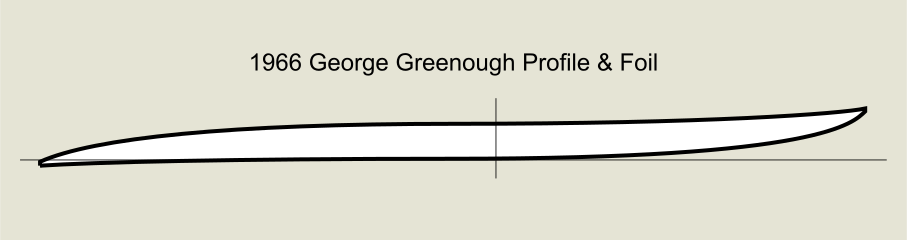 Mike Diffenderfer and Dick Brewer mini gun designs were the next
step in the evolution of surfboard design. Diff and RB developed
rockers and profiles that fit the most critical and powerful sections
of waves enabling boards and surfers to tap into the abundant energy
offered by waves. In the late 60's through the 70s and 80s their
foils, profiles, rockers, outlines, and rails were the ultimate
standard in surfboard design. Every design feature in their boards
was foiled, balanced, and synchronized.
Mike Diffenderfer and Dick Brewer mini gun designs were the next
step in the evolution of surfboard design. Diff and RB developed
rockers and profiles that fit the most critical and powerful sections
of waves enabling boards and surfers to tap into the abundant energy
offered by waves. In the late 60's through the 70s and 80s their
foils, profiles, rockers, outlines, and rails were the ultimate
standard in surfboard design. Every design feature in their boards
was foiled, balanced, and synchronized.
|
| |
THE GLASS SLIPPER
Contemporary high performance shortboard designs date to the late 1980s and early 1990s. These designs were pioneered by the surfers of the Momentum Generation - Shane Dorian, Taylor Knox, Rob Machado, and Kelly Slater, and their Australian peers Taj Burrow and Shane Herring. Prior to that era shortboards were generally high volume designs featuring moderate length, full rails and outlines, and primarily convex bottom contours. The first generation of early contemporary performance shortboards are often refered to as Glass Slippers. They were extremely low volume designs featuring a very narrow outline, a very thin profile and foil, significant banana like rocker with accelerating tail and nose rocker, and deep concave arrays. Early versions of contemporary high performance shortboards - the Glass Slippers - were relatively long, extremely narrow, and extremely thin compared to today's shortboards. Common dimensions were 6' 0" to 6' 2" long x 17 3/4" to 18" wide x 1 7/8" to 2 1/8" thick. The basic distribution of volume was thin in tail, thin at the wide point, and even thinner in the nose. Typically, these profiles were 1/8" to 1/4" thinner 12" from the nose than 12" from the tail, and 1/16" to 1/8" thinner 24" from the nose than 24" from the tail. These designs featured banana like rocker and deep concaves. The relatively thicker back half of the profile and foil was designed to support the surfer with lift from surface area, deep concave array, and moderately foiled profile from wide point to tail. The nose was designed thinner to eliminate the effect of nose volume on the board's performance. These low volume designs remained the prototypical shortboard for 10 to 15 years despite their many limitations. Unfortunately, the Glass Slippers were radically over foiled. Fortunately, the core design features of the Glass Slipper have been the basis for the evolution of the contemporary shortboard. 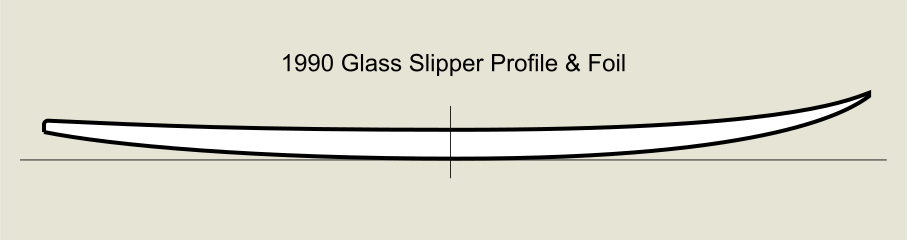 1990 - 2026
The evolution of high performance shortboards from 1990 to 2026 has been dramatic. 21st century surfing and surfboard design has produced progressive - maximum performance shortboards. It has been a truly practical, efficient, and versatile upgrade in surfboard design. This trend to maximum performance shortboards through efficient and versatile designs continues today and should arguably be a constant underlying theme in surfboard design. Design and performance evolved with nuanced rockers, profiles and foils, more surface area in outlines, efficient bottom contours, and tuned rails.
|
| |
|
| |
EVOLUTION & DEVOLUTION of FOILS & PROFILES
1990 The Glass Slippers were a paradox of evolution and devolution of shortboard designs. The exciting performance features of these low volume designs overshadowed their lack of versatility both in various conditions and across the spectrum of surfer skill. This attraction to the potential for radical surfing combined with extreme rockers, extremely thin profiles and foils, and narrow outlines was like a lead weight on surfboard design and surfing performance for nearly two decades. Performance shortboards of this era were on average 6' 0" to 6' 4" long x 17 3/4" to 18 1/4" wide x 2" to 2 1/4" thick. The distribution of volume in the profile and foil was 1/8" to 1/4" thinner 12" from the nose than 12" from the tail, and 1/16" to 1/8" thinner 24" from the nose than 24" from the tail. |
| |
1990 Foiled Profile 6' 2" x 17 3/4" x 2 1/16" - Original Glass Slipper high performance shortboard distribution of volume, profile, and foil - extreme entry and tail rocker - extremely thin throughout - extremely low volume. |
| |
|
| |
2000
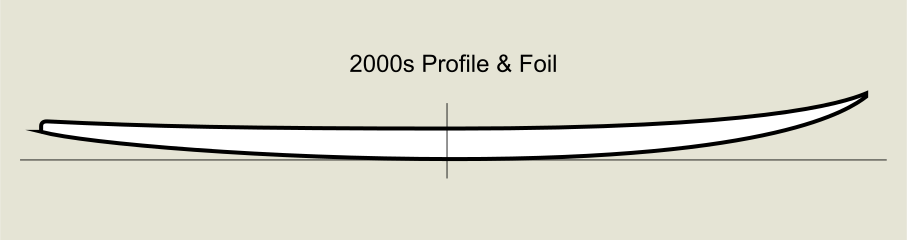
Boards began to get a little shorter, wider, and thicker and featured more nuanced rockers. Concave bottom contours were also moderated and tuned to improve overall performance while maintaining the lift factor they bring to these deigns. Performance shortboards of this era were on average 5' 10" to 6' 0" long x 18 1/2" to 19 1/4" wide x 2 1/4" to 2 3/8" thick. One feature remained the same and that was the distribution of volume in the profile and foil. The profiles and foils were still 1/8" to 1/4" thinner 12" from the nose than 12" from the tail, and 1/16" to 1/8" thinner 24" from the nose than 24" from the tail. These design changes initiated an era of expanded performance range for shortboard designs. Designs were notably more efficient and versatile than their original Glass Slipper predecessors. |
| |
2000 Foiled Profile 6' 1" x 18 1/2" x 2 3/16" - Moderated and nuanced distribution of volume - thicker at widepoint - moderately thicker nose and tail - moderated entry and tail rocker - moderately more volume. |
| |
|
| |
2010
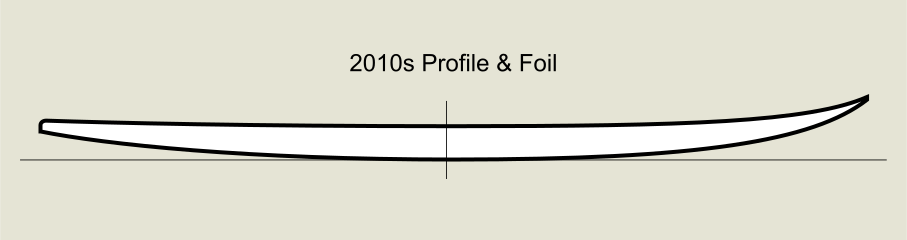
Surfboard design continued trending to improved function and performance and more versatile surfboards. Twenty plus years of design, shaping, and surfing Glass Slipper inspired designs provided surfers and shapers with volumes of observations, feedback, and input to improve performance and versatility of contemporary shortboards compared to the first late 80s early 90s designs. Designs continued to improve performance and versatility across the whole spectrum of surf conditions. Efficient and practical design edits saw boards going marginally shorter, wider, and thicker compared to the previous 10 years. Common dimensions of this era are 5' 8" to 6' 0" long x 18 1/2" to 19 1/4" wide x 2 1/4" to 2 1/2" thick. One element of design that shifted notably is the distribution of volume in the profile and foil. As boards got shorter, more efficient and more versatile it was important to maintain volume or even add some volume to the core of the shape. Shapers started to hide foam in shapes corresponding to the area under a surfer's torso when paddling and stance when riding waves. Outlines also added hidden surface area with the same goal. The center of mass moved slightly forward with these volume and surface area adjustments. The other primary design elements - outlines, rails, and bottom contours, evolved in nuanced sync with rockers, profiles, and foils. |
| |
2010 Foiled Profile 6' 0" x 18 3/4" x 2 5/16" - Continued evolution - nuanced moderation in the distribution of volume - slightly thicker overall - balanced thickness nose and tail - more moderated and nuanced entry and tail rocker - overall moderatley more volume. |
| |
|
| |
2020
The evolution of high performance shortboards from 2010 to 2020 was a truly practical, efficient, and versatile upgrade in surfboard design. The trend continues today and should arguably be a constant underlying theme in surfboard design. Performance shortboard designs added and shifted a bit more volume and surface area forward. Previously profiles and foils were 1/8" to 3/16" thinner 12" from the nose than 12" from the tail and 3/16" to 1/4" thinner 24" from the nose than 24" from the tail. Shifting volume forward made profiles and foils 1/8" to 3/16" thicker in the nose at 12" than at 24" from the tail and 3/16" to 1/4" thicker in the nose at 24" than at 24" from the tail. Adding and shifting volume and surface area forward was new to the basic all around shortboard, but not new to all designs. Step ups, semi guns, and XXL guns successfully featured hidden volume, equal and sometimes greater thickness in the nose than in the tail, and outlines with the widepoint and surface area shifted forward. When applied to contemporary shortboards this forward shift in the distribution of volume and surface area creates a better more efficient foil thus generating more lift, reducing drag and consequently providing more acceleration and speed. Lift reduces drag, reduction in drag increases acceleration and speed. |
| |
2020 Foiled Profile 5' 11" x 19" x 2 3/8" - Volume shifted forward - moderate thickness throughout - thicker nose relative to tail - moderate entry rocker and lower tail rocker - notably more volume - versatile and efficient design - generates and maintains speed - accelerates on demand. |
| |
|
| |
2026
Evolution of shortboard design is a constant. The trend to practical, efficient, and versatile designs continued from 2020 to 2026 with nuanced edits of all design features. Evolving rockers, profiles, and foils offer surfers maximum performance. Design is focused on catching waves, acceleration and projection, speed, maneuverability, control, and predictability. |
| |
2026 Foiled Profile 5' 11" x 19 1/8" x 2 7/16" - Volume shifted forward - moderate thickness throughout - thicker nose relative to tail - slightly lower entry rocker and tail rocker - notably more volume - a practical, efficient, and versatile design - generates and maintains speed - accelerates on demand. |
| |
|
| |
MATCHING VOLUME to SURFERS & DESIGNS
Surfers vary in age, gender, size, skill, fitness, and technique or style. Matching volume to these variables is essential to maximizing the performance of a contemporary shortboard. Correct volume for one surfer may not be correct for another. The Theory of Volume and the Theory of Displacement are principles for surfers and shapers to tune dimensions appropriate volume. |
| |
|
| |
LINKS
Theory of Volume Theory of Displacement |
| |
|
| |
< top of page > |
| |
|
| |
ACCELERATION & FOILED PROFILES |
| |
|
| |
February 6, 2021 Updated March 10, 2023
THE SCIENCE of SURFBOARD PROFILES & FOILS Profiles and foils serve many functions in surfboard design. Not the least of these is acceleration. The two elements of a design's profile and foil are the bottom rocker and the deck rocker. Together they form the design's profile and foil. A well designed profile is a foil. See foil and Brounelli Principle below. Designing acceleration into a profile and foil includes a bottom rocker that fits naturally and comfortably in the critical parts of a wave with curves that tap into a wave's energy. A rocker like this offers or provides the design with acceleration, speed, maneuverability and control. The profile and foil of a design also includes the deck rocker. The relation of the deck rocker to the bottom rocker accounts for the distribution of volume in the profile and foil, the other primary factor in distribution of volume for the whole design is the board's surface area determined by the outline. A foiled profile distributes the volume in a manner that creates lift and reduces drag, ultimately providing acceleration and creating and maintaining speed. Distribution of volume effects how and to what extent a surfer displaces water by weighting and unweighting the board's bottom, profile, and rails. This basic shortboard technique or style accelerates the surfboard and generates and maintains the speed required to perform the vast array of maneuvers common to contemporary surfing. Engaging, holding and releasing the bottom, profile, and rails in the face of a wave amplifies the lift and reduces the drag components of a foil moving through water. This technique is functional in all conditons. It may be performed across the whole spectrum of surf conditions and venues - critical, high quality, fun, or marginal. A foiled profile contributes to all performance features - acceleration, speed, maneuverability, and control. The distribution of volume in a profile creates the performance features of this essential design element. As previously mentioned, a well designed profile is a foil that creates lift and energy and reduces drag by harnessing energy from a wave as it moves through water. This lift generated energy and reduced drag create the acceleration and speed that a surfboard offers a surfer. This occurs when water flows along the bottom of a board creating a force perpendicular to that flow generating lift that is substantially greater than the drag of the board in the water. The lift and energy generated by the foil is then transferred into the the acceleration, speed, and maneuvers performed while surfing. Tuning and controlling the lift to surfer and conditions with design features is an essential part of surfboard design. PHYSICS & SCIENCE of PROFILES & FOILS In physics and fluid mechanics, a foil is a solid object with a shape that when placed in a moving fluid at a suitable angle of attack the lift on the object, the force generated perpendicular to the fluid flow is substantially greater than the drag, a force parallel to the fluid flow. A foiled profile of a surfboard is a shape that when under the power of a wave and being maneuvered on and through the water by a surfer transfers the generated lift and energy into forward acceleration. The greater the lift the greater the reduction in drag. Reduced drag yields greater acceleration and speed in every surfboard design. BROUNELLI'S PRINCIPLE APPLIED to SURFBOARD FOILS Brounelli's principle states that increased speed of a fluid on a surface occurs simultaneously with a reduction of pressure on the same surface. The reduction of pressure results in a transfer of energy we feel as lift and forward acceleration in a surfboard. The distribution of volume in a foiled surfboard profile benefits from this principle. When a mass of fluid, water in surfboard design and performance, is flowing horizontally from a region of higher pressure in the entry to a region of lower pressure in the tail at increasing speed there is more pressure aft on the surfboard than forward. This yields a force on the shape, the surfboard, accelerating it along the horizontal line of it's "x" axis. This explains how a surfboard foil will perform when the distribution of foam varies from thinner, to thicker, to thinner from nose to tail, providing lift that is transfered into acceleration, speed, and maneuverability. |
| |
|
| |
LINK
Wikipedia Overview of Foils & Fluid Mechanics |
| |
|
| |
< top of page > |
| |
BOTTOM CONTOURS |
| |
|
| |
October 8, 2025 |
| |
|
| |
There are several bottom contour configurations found in
contemporary surfboard design. They may be divided into these primary
groups - flat, convex, concave, and reverse vee bottoms. All may be
incorporated in any type of surfboard, although most are relevant to
specific types of boards.
FLAT BOTTOMS Some shapers employ flat bottoms in their designs, but a flat bottom is hard pressed to add any performance features to a surfboard - shortboards, step ups, semi guns, XXL guns, mid lengths and eggs, or longboards. Although fast, flat bottoms provide no lateral stability, lift, or leverage. Bottom contours with flat areas combined with other bottom contours can be an exception. Combined with vees, tri planes, soft rolled surfaces, and concaves, bottoms with flat features move beyond their safe, neutral, vanilla performance features and contribute to developing acceleration, projection, speed, maneuverability, and control. CONVEX BOTTOMS are any combination of rail to rail planes and curves that descend below the rail line of the surfboard. Convex bottoms generate lift and reduce drag by reducing wet surface and maximizing laminar flow. Tri plane entry and wide point to panel vee is a very basic and simple bottom design. Tri planes create lift and reduce drag. It's a very fast bottom, as it planes in the face of a wave with less wet surface, it's very forgiving as it lifts the forward rails out of the water in critical sections, and it initiates turns with ease as the tri plane entry transitions from rail to rail with minimum effort. Panel, rolled panel, and spiral vees from wide point to tail also offer fluid rail to rail transitions as well as acceleration, projection, speed, and maneuverability. The combination of tri plane and vee feels like a ball bearing under a surfer. Convex designs provide great lateral stability and control, smooth transitions from rail to rail, and are very forgiving. They handle well at a full range of speeds. They are an excellent design for XXL guns. They are very functional in mid lengths, eggs, and longboards. And, they are functional, although somewhat conservative, in shortboards and specialty shortboards. CONCAVE BOTTOMS are combinations of curves nose to tail and rail to rail that ascend above the rail line. Rail rocker drops below bottom rocker creating concaves. Variations of single and single to double concaves are the primary bottom contour configurations in the modern shortboard. Concaves are one of the most complicated and contradictory design components in surfboard design. Consideration of other design variables of the board is essential to decisions about the arrangement, depth, and placement of concaves. Imagination and experimentation, trial and error, testing and observation yield efficient multiple concave bottoms. When a surfboard moves over water concaves produce lift with laminar flow channeling water under the board. Concaves produce additional lift when water runs under the bottom of a surfboard through the tail. Here the board's outline curves into the tail reducing surface area. The water flowing through the tail under the board is compressed into less surface area creating additional lift. Try placing both sides of a spoon under a faucet of flowing water. The concave side of the spoon pushes away from the flow of water. The convex side of the spoon sucks into the flow of water. It's a classic example of water moving over a surface and creating either lift or drag ! Working effectively with lift and drag is key to designing concaves into the bottom of a surfboard. Efficient multiple concaves feed water under a surfboard then release water through the fins and tail of a surfboard. When a surfer weights the rail and bottom of a surfboard he compresses the water, channeling it through the concave array. The rocker, template, rail, and fin arrangement provides this compressed water with an avenue of escape - out through the tail section of the board. This phenomena excentuates the power, acceleration, projection, and speed of the surfboard through it's turns. Tuning each variable and their interaction with the other variables determines the performance characteristics of the surfboard. Most concave bottoms are one of two primary concave designs single concave or single to double concave. Single concave features shallow concave or vee in the entry, shallow single concave from entry to wide point increasing in depth to maximum depth just in front of the fins, with concave decreasing in depth through the fins to the tail. The single concave may transition to vee behind the fins. A single to double concave features shallow concave or vee in the entry, shallow single concave from entry to wide point increasing in depth to maximum depth just in front of the fins, and double concave from this point through the tail. The double concave may also transition to vee behind the fins. Holding the other primary surfboard design variables constant, single concaves tend to be looser than single to double concaves and have the potential for greater variation in turning radius. They have more control and predictability. The spine of a double concave offers more lift to the center of the bottom of a board. Single to double concaves have a consistent predictable turning radius. REVERSE VEE BOTTOMS feature vee or alternatively spiral vee or double concave vee in the nose and entry - even optionally to the wide point - transitioning to very shallow flat, vee, or concave bottom contours from the wide point through the fins to the tail. The convex bottom contours in the front half of the board is deeper than the bottom contours in the back half of the board. Early shortboard designs often featured these or similar bottom contours. The "mini gun" designs of the late 60s that became prototypical shortboards throughout the 70s and 80s often featured vee in the entry, flat or shallow concave from the wide point to near the fins, and panel vee or alternatively spiral vee through the fins and tail. As the down rail shortboard designs of the 70s and 80s evolved it was common for the vee in the nose and entry to be reduced or eliminated entirely and the vee from wide point to tail or in the area of the fin or fins increased in depth. The multiple concave shortboards that evolved from the glass slippers of the early 90s also rarely if ever featured vee in the nose and entry. Reverse vee designs reintroduce convex entry to laminar flow in bottom contours. Bottom contours coupled with rocker, profile, and rails create the laminar flow of water along the bottom of a board. Correct laminar flow maximizes lift and minimizes drag. In reverse vee designs the vee forward transitions to flat or concave contours aft. The vee forward in the design settles a board into the water and the transition to reduced vee, flat, or concave feeds the water under a board from the wide point to the tail maximizing lift, acceleration, and speed. Vee or double concave from the fins to the tail coupled with nuanced rocker and rails releases the water flowing under the bottom of the board reducing friction and minimizing any drag. The performance features of reverse vee bottoms come from the juxtapisiton of the curve of bottom rocker with straighter rail rocker. This combination creates a board that goes rail to rail with ease and provides speed and power through turns. The vee forward in the design creates easy rail to rail transitions and the flat or concave bottom from wide point to tail or between the fins provides controlled and predictable acceleration, projection, speed, and maneuverability. Nuanced tail rocker and rails release water off the tail of the board. Credit to Maurice Cole and Tom Curren for the emergence of reverse vee in contemporary surfboard design. Surf history and culture found both of them living and surfing in Southwest France in the 80s. In 1990 they collaborated on a reverse vee design that was at the core of Curren's trials to title World Championship run in 1991 and became an iconic functional design |
| |
|
| |
BOTTOM CONTOUR IMAGES |
| |
|
| |
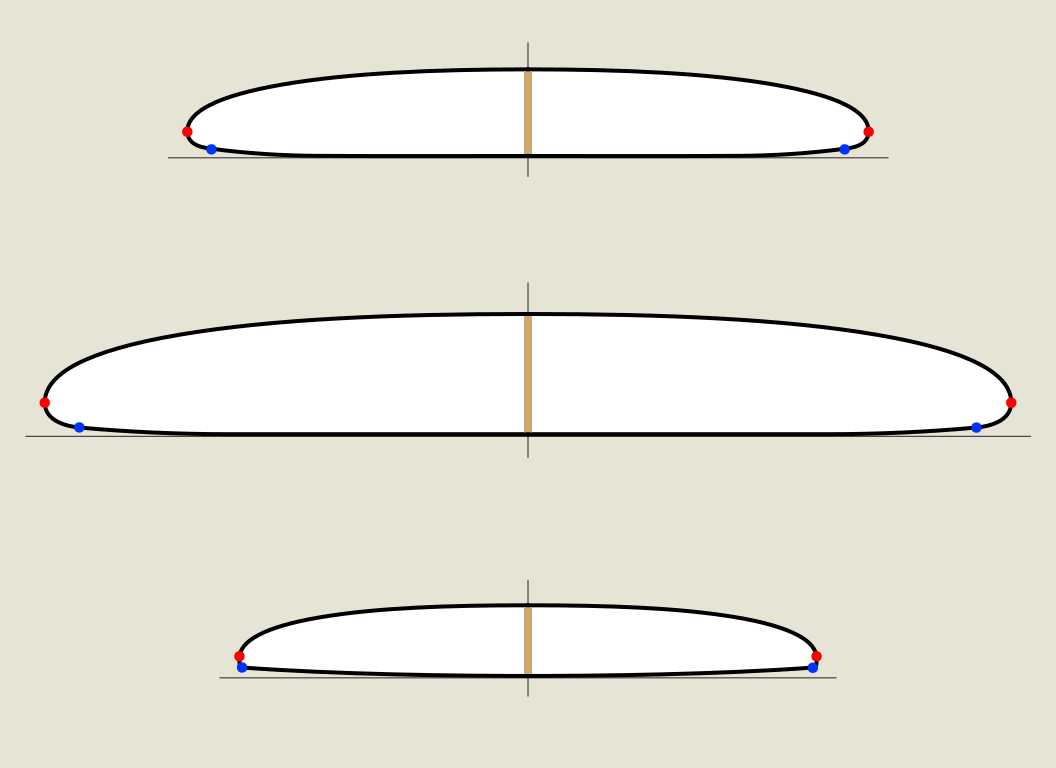
CONVEX BOTTOMS offer more momentum than any bottom contour. By their design and nature they maintain their speed, trim, and glide better than any bottom design. Tri plane contours in the entry and wide point engage waves with less wet surface, create lift, and reduce drag. They initiate fluid rail to rail transitions off the front foot. Panel, rolled panel, and spiral vees from wide point to tail also offer fluid rail to rail transitions as well as acceleration, projection, speed, and maneuverability. |
| |
 |
| |
TRI PLANE to ROLLED PANEL VEE |
| |
|
| |
CONVEX TRI PLANE to PANEL VEE designs maximize laminar flow and minimize drag. They offer excellent turn and trim features. They are the ultimate bottom design for maintaining and controlling speed. |
| |
|
| |
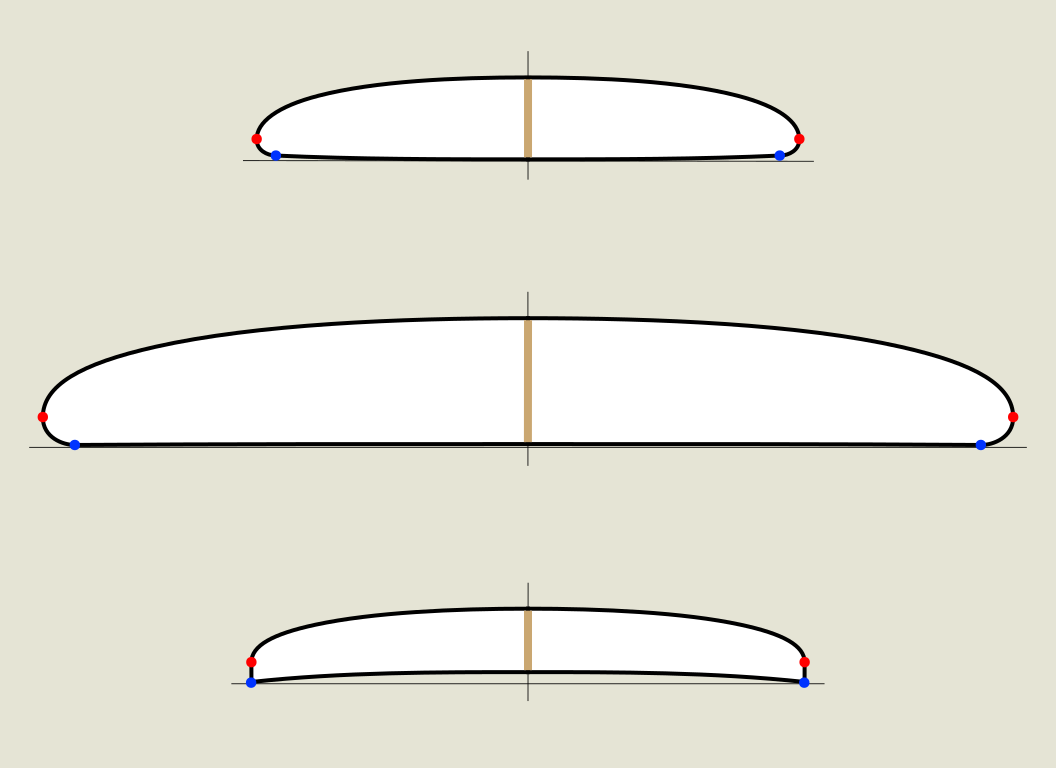
CONCAVE BOTTOMS are the primary bottom design for contemporary
high performance shortboards, step ups, and semi guns. They are
created by the juxtaposition of bottom rocker and rail rocker. They
feature more curve in the rail rocker than in the bottom rocker.
Concave bottoms are generally single concave nose to tail with the
concave getting progressively deeper until the just in front of the
fins before fading through the tail, or single to double concaves
featuring the same progressively deeper single concave into the fins
with double concave fading through the tail. Some double concaves
feature the double concave further into the bottom from the tail.
When tuned correctly in a design concaves amplify laminar flow and
create lift acceleration, projection, speed, and maneuverability.
Single concave and single to double concave performance varies moderately. Water flows in a smooth arc from rail to rail in single concaves enabling powerful, stable, and predictable turns. The smooth rail to rail water flow enables maximum controlled power through turns and nuanced turning radii for a wide variety of turns and barrels in different waves. The way water flows from the rail the peak of the double concave at the stringer creates additional lift at the center of the bottom of the board and with it's spine offers directional stability through turns. Single concaves may have a touch of double concave or vee in the last 4" to 5" of the tail. The short double concave or vee adds an extra element of release, stability, and control. The short double concave or vee are particularly functional on squash and swallow tail designs to promote easy rail to rail transitions. Moving the double concave feature forward in the bottom contours yields the classic single to double concave. |
| |
 |
| |
VEE to SINGLE CONCAVE |
| |
|
| |
CONCAVE DESIGNS have significant curves and fit into and source energy in critical sections and waves. They offer an exciting and powerful blend of acceleration, projection, speed, and maneuverability. |
| |
LINK
Single & Single to Double Concaves |
| |
|
| |
REVERSE VEE BOTTOMS feature vee or alternatively spiral vee or double concave vee in the nose and entry - even optionally to the wide point - transitioning to very shallow vee, flat, or concave bottom contours from the wide point through the fins to the tail. The convex bottom in the front half of the board contrast with the bottom contours in the back half of the board. Early shortboard designs often featured these or similar bottom contours. The "mini gun" designs of the late 60s that became prototypical shortboards throughout the 70s and 80s often featured vee in the entry, flat or shallow concave from the wide point to near the fins, and panel vee or alternatively spiral vee through the fins and tail. As the down rail shortboard designs of the 70s and 80s evolved it was common for the vee in the nose and entry to be reduced or eliminated entirely and the vee from wide point to tail or in the area of the fin or fins increased in depth. The multiple concave shortboards that evolved from the glass slippers of the early 90s also rarely if ever featured vee in the nose and entry. Reverse vee designs reintroduce convex entry to laminar flow in bottom contours. |
| |
 |
| |
PANEL VEE to SPIRAL VEE to SINGLE CONCAVE |
| |
|
| |
REVERSE VEE DESIGN offer generous portions of power, projection, and acceleration. They are most common for step ups, semi guns, and XXL guns, although they are entirely relevant for shortboards as well. Reverse vee designs offer the most power of all bottom contours. |
| |
LINK
Reverse Vee Designs |
| |
|
| |
< top of page > |
| |
|
| |
SINGLE & SINGLE to DOUBLE CONCAVES |
| |
|
| |
May 1, 2019 Updated June 6, 2024 |
| |
|
| |
Surfers are familiar with the common concave bottom contours in contemporary shortboards. The most common concave arrays are single concave and single to double concave. Concave shapes have more curve in the rail line than in the bottom. The curve in the rail rocker drops below the curve in the bottom rocker. This intriguing and nuanced juxtaposition of curves creates concaves. Concaves increase the surface are of the bottom of a board and amplify laminar flow. When tuned correctly these features generate lift, reduce drag, and amplify control. |
| |
 |
| |
Note the rail rocker displayed in red drops below the bottom rocker displayed in blue between the entry and the wide point to near the tail and rises above the bottom rocker near the nose and tail. This juxtapostion of the two curves creates the concave area in the bottom contours mid board and some vee behind the fins and in the nose. Zoom view |
| |
|
| |
SINGLE CONCAVES
SINGLE CONCAVES offer the surfer acceleration, projection, speed, maneuverability and maximum control. Single concave designs are very powerful, fast, and loose. The simple clean rail to rail arc of a single concave offers maximum controlled lift to the rails. Water flows in a smooth arc from rail to rail in single concaves enabling powerful, stable, and predictable turns. The smooth rail to rail water flow enables maximum controlled power through turns and nuanced turning radii for a wide variety horizontal and vertical angles of turns. Single concaves offer maximum control and maneuverability in critical barreling waves. Surfers can turn with maximum load off the bottom contours and rails. Occasionally, a single concave will have a touch of double concave or vee in the last 4" to 5" of the tail. This short double concave adds an extra element of stability, control, and release. Moving this double concave feature forward in the bottom contours yields the classic single to double concave. |
| |
|
| |
|
| |
SINGLE to DOUBLE CONCAVES
SINGLE to DOUBLE CONCAVES offer, in addition to acceleration, speed, projection, and maneuverability, an extra element of lift to a board. As water flows from rail the to the spine of the double concave it creates additional lift in the center of the board. The spine along the center of a double concave sustains the flow of water down the length of the bottom of a board maximizing laminar flow and directional stability through turns. The peak and the depth of the spine of a double concave can be moved forward or back and deeper or shallower to fine tune manuverability and control. A tuned double concave provides notable lift and reduces drag. The spine of the double concave and the performance features it offers make the design a great bottom contour option for the full spectrum of waves and conditions. |
| |
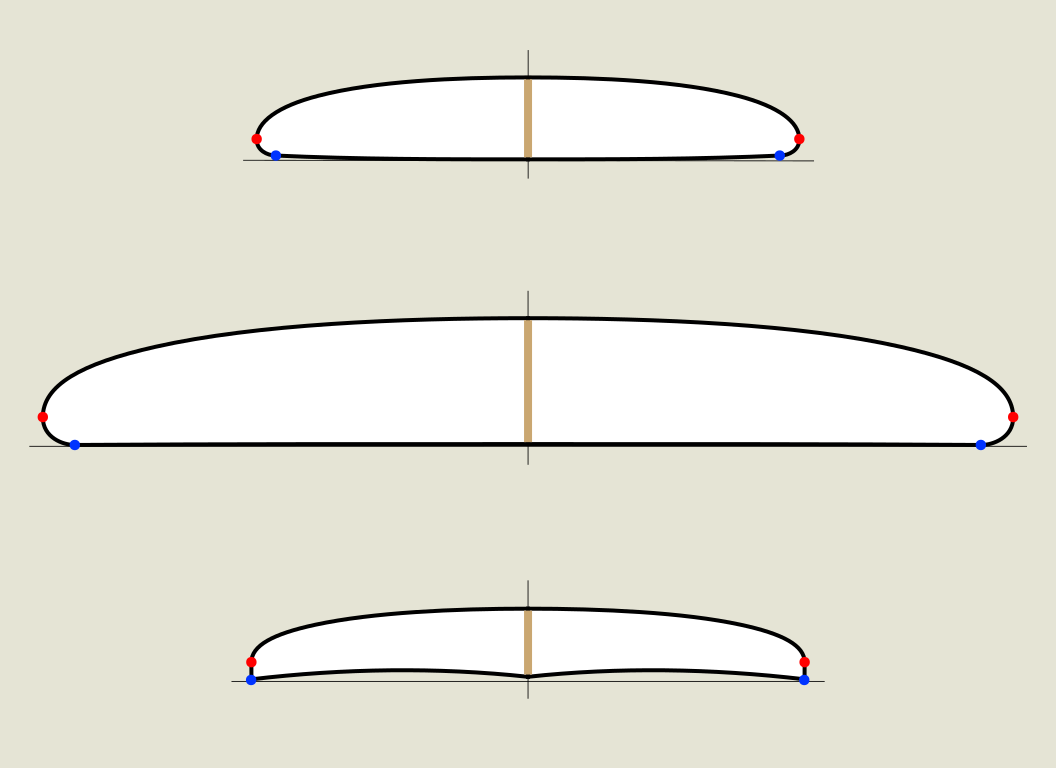 |
| |
|
| |
SUMMARY
Concaves are a radical design feature. By their nature they include conflicting forces. When well designed and balanced with other design variables and surfed with correct technique they generate lift and reduce drag. They offer acceleration, projection, planing speed, maneuverability, and control - all depending on nuanced and balanced design and surfer technique. When poorly designed or not balanced with other design variables and surfed without correct technique they lack lift and will drag compromising all performance features. Concaves have different configurations, different depths, and different placement in a shape. Their radical nature allows surfers and shapers to tune performance by their configuration. A well designed concave array maximizes concaves' positive features - acceleration, projection, planing speed, maneuverability, and control. |
| |
|
| |
< top of page > |
| |
|
| |
REVERSE VEE DESIGNS |
| |
|
| |
October 15, 2024 |
| |
|
| |
OVERVIEW
Surf history and culture found Maurice Cole and Tom Curren living and surfing in Southwest France in the 1980s. In 1990 they collaborated on a design that was at the core of Curren's trials to title World Championship run in 1991 and became an iconic functional design. Their original reverse vee design featured significant vee from the nose to the wide point that transitioned to flat through the fins and tail. The primary design features of their original reverse vee design were less curve in the rail along the outline from nose to tail (rail rocker) relative to the curve along the center of the bottom of the board (bottom rocker) and amplified laminar flow created by the convex entry transitioning to flat in the fins and tail channeling water under the bottom of the board. Over time reverse vee bottom contours would evolve from the same convex entries to include concaves from wide point to fins and tail. The concave feature further amplified the lift created by the laminar flow under the board. The transition from convex entry to concave tail can vary from in front of the wide point to behind the wide point. The reduced rail curve in the entry of the design and the amplified laminar flow offered Curren fresh dynamic performance features - excellent paddling entry, fluid rail to rail transitions, and exceptional acceleration and projection. Reverse vee designs feature vee and alternatively spiral vee or double concave vee in the nose and entry that transitions to very shallow vee, flat, or concave bottom contours from the wide point through the fins to the tail. The vee, spiral vee, or double concave vee in the front half of the board is deeper than the bottom contours in the back half of the board. Early shortboard designs often featured these or similar bottom contours. The "mini gun" designs of the late 60s that became prototypical shortboards throughout the 70s and 80s often featured vee in the entry, flat or shallow concave from the wide point to near the fins, and panel vee or alternatively spiral vee through the fins and tail. As the down rail shortboard designs of the 70s and 80s evolved it was common for the vee in the nose and entry to be reduced or eliminated entirely and the vee from wide point to tail or in the area of the fin or fins increased in depth. The multiple concave shortboards that evolved from the glass slippers of the early 90s also rarely if ever featured vee in the nose and entry. Reverse vee designs reintroduce convex entry to laminar flow in bottom contours. REVERSE VEE THEORY Bottom contours coupled with rocker, profile, and rails create the laminar flow of water along the bottom of a board. Correct laminar flow maximizes lift and minimizes drag. In reverse vee designs the convex features of vee, spiral vee, or double concave vee forward transitions to flat or concave contours aft. The convex bottom forward in the design settles a board into the water and the transition to reduced vee, flat, or concave feeds the water under a board from the wide point to the tail maximizing lift, acceleration, and speed. Vee or double concave from the fins to the tail coupled with nuanced rocker and rails releases the water flowing under the bottom of the board reducing friction and minimizing any drag. The performance features of reverse vee bottoms come from the juxtopisiton of the curve of bottom rocker with straighter rail rocker. This combination creates a board that goes rail to rail with ease and provides speed and power through turns. The vee, spiral vee, or double concave vee forward in the design creates easy rail to rail transitions and the flat or concave bottom from wide point to tail or between the fins provides controlled and predictable acceleration, projection, speed, and maneuverability. Nuanced tail rocker and rails release water off the tail of the board. EVOLUTION of REVERSE VEE Maurice Cole and Tom Curren captured lightning and found a pot of gold with Maurice's reverse vee designs (Maurice refers to them as EEV designs.) The first EEVs featured a bottom with vee in the entry transitioning to flat in the tail. The primary distinctive feature compared to the majority of surfboard designs of that era was straighter curves in the rail in the nose and entry blended with common curves from the wide point to the tail. This feature remains constant in the evolution of reverse vee designs. The depth and length of the vee forward in the designs, the transition to flat or concave from the wide point to tail, and integrating vee, single, or double concave in and through the fins to the tail are variables that have evolved reverse vee designs. Tuning these variables to different surfboard classes and designs, to surfers, and to conditions inevitably creates an excellent surfboard. There's something very interesting, unique, and pivotal about the function and performance of reverse vee bottom contours. The convex entry settles a board in the water whether paddling, taking off, or riding a wave. The transition from convex to flat or vee to concave provides lift that creates and generates acceleration, projection, and speed when a board is turned on rail. The short vee or double concave in the fins and tail provide release. The bottom rocker and rail rocker from the wide point to the fins and tail create the natural turning arcs and radius of turns. |
| |
|
| |
REVERSE VEE & SURFBOARD CLASSES & DESIGNS
Reverse vee is functional for all surfboard classes and designs. Reverse vee shortboards including step ups and semi guns feature vee entry and wide point, single concave wide point to fins, and vee or double concave fins to tail. This design offers many surfer friendly performance features including easy entry, smooth rail to rail transitions, and powerful turns on rail. A variation of this bottom features panel vee entry, subtle spiral vee at the wide point fading as it transitions to the fins, with deeper spiral vee or double concave fins to tail. This variation offers increased lift and power through turns. XXL guns feature the same vee entry to wide point, very subtle single concave of flat wide point to fins, and vee fins to tail. Mid lengths and contemporary longboards feature a similar convex bottom to XXL guns. |
| |
|
| |
REVERSE VEE BOTTOM CONTOUR ILLUSTRATIONS |
| |
|
| |
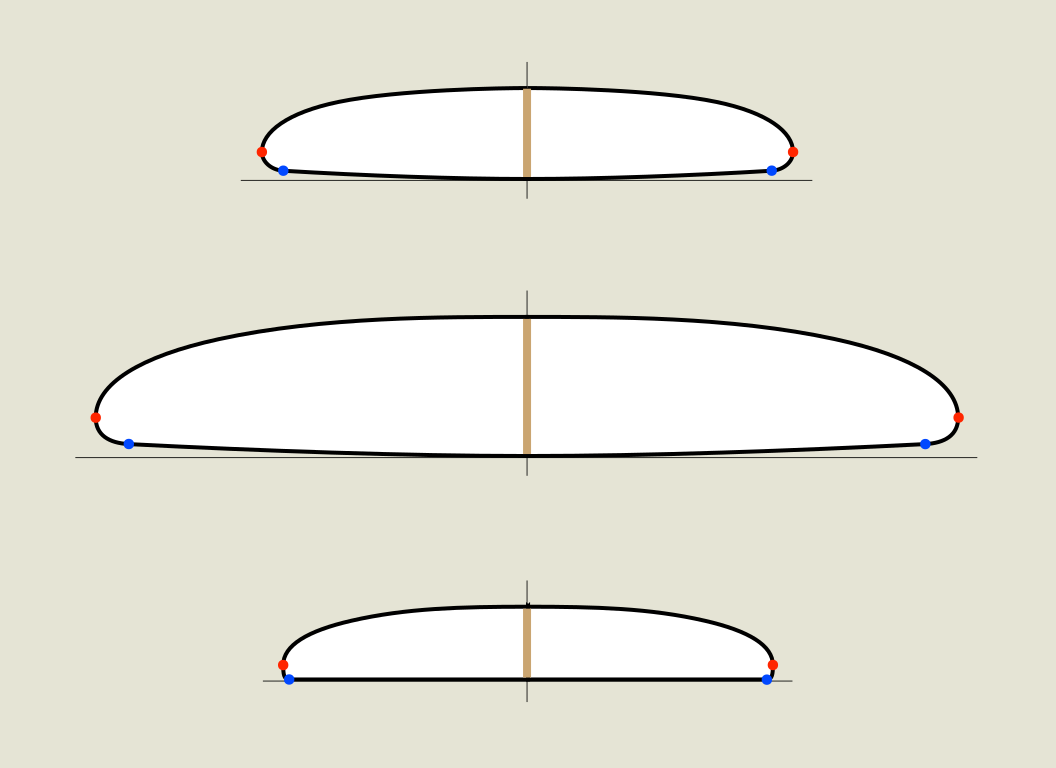
|
| |
PANEL VEE to FLAT |
| |
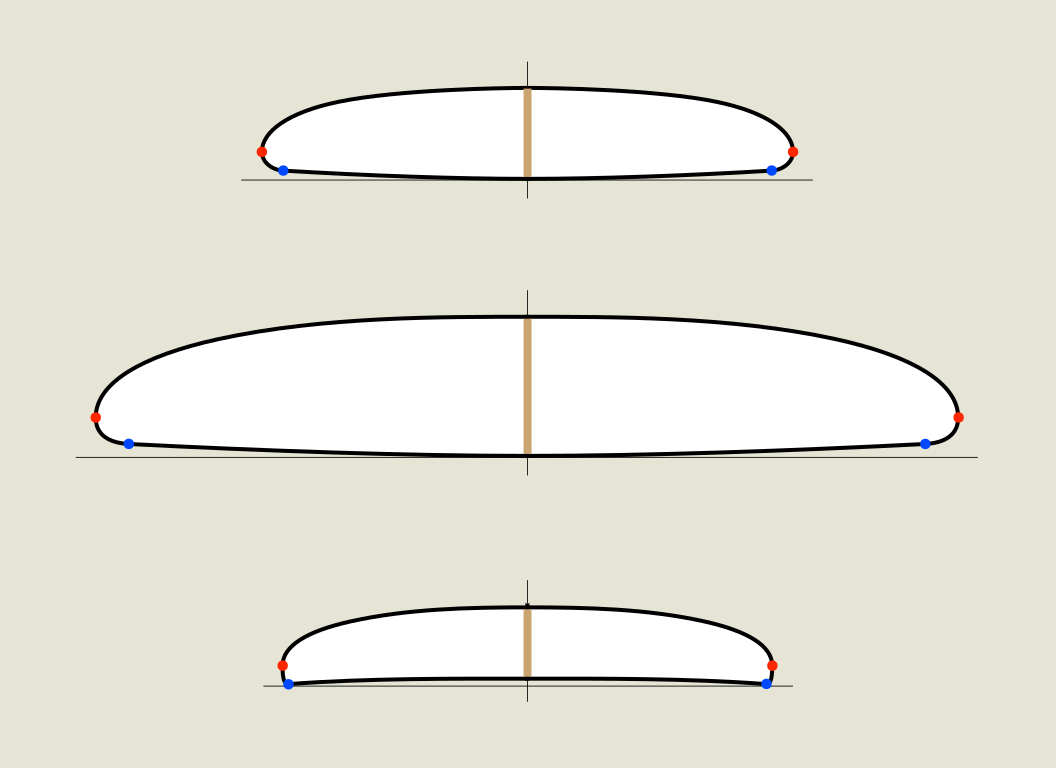
|
| |
PANEL VEE to SINGLE CONCAVE |
| |
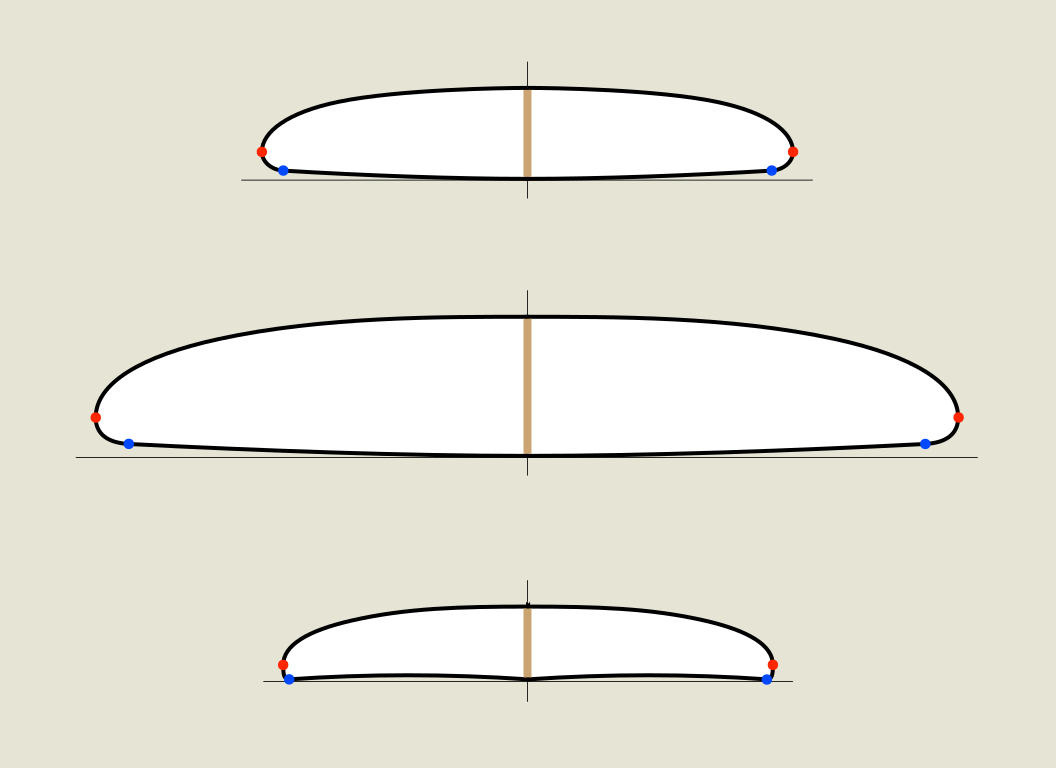
|
| |
PANEL VEE to DOUBLE CONCAVE |
| |
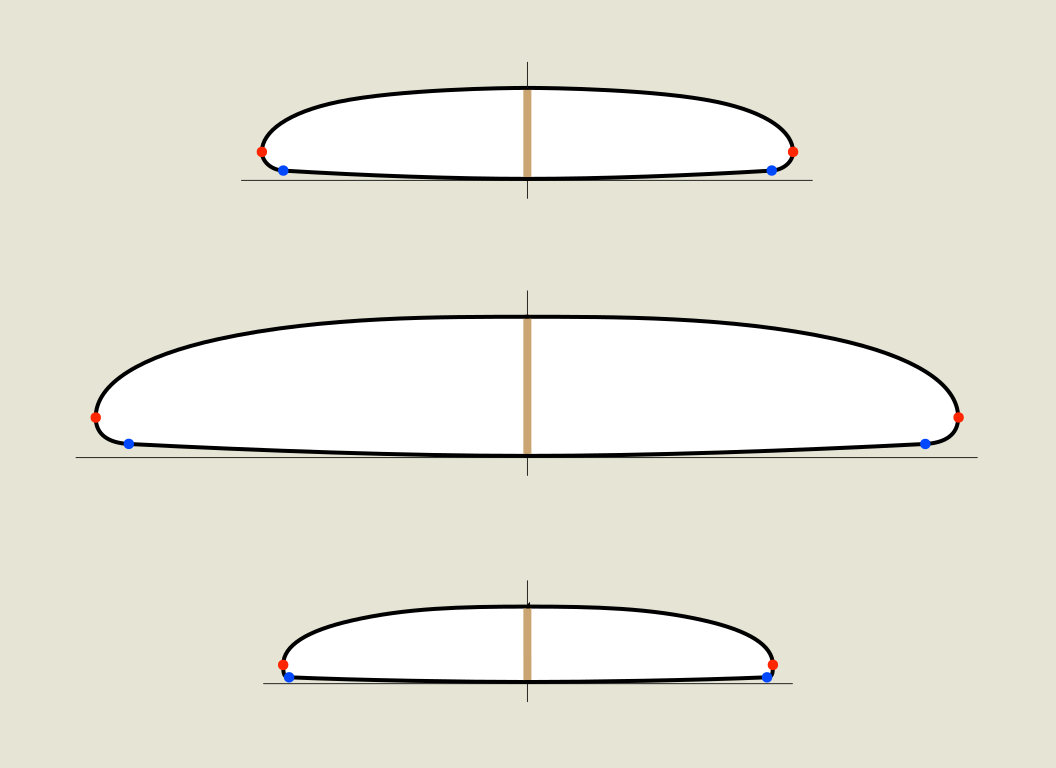
|
| |
PANEL VEE to ROLLED PANEL VEE |
| |
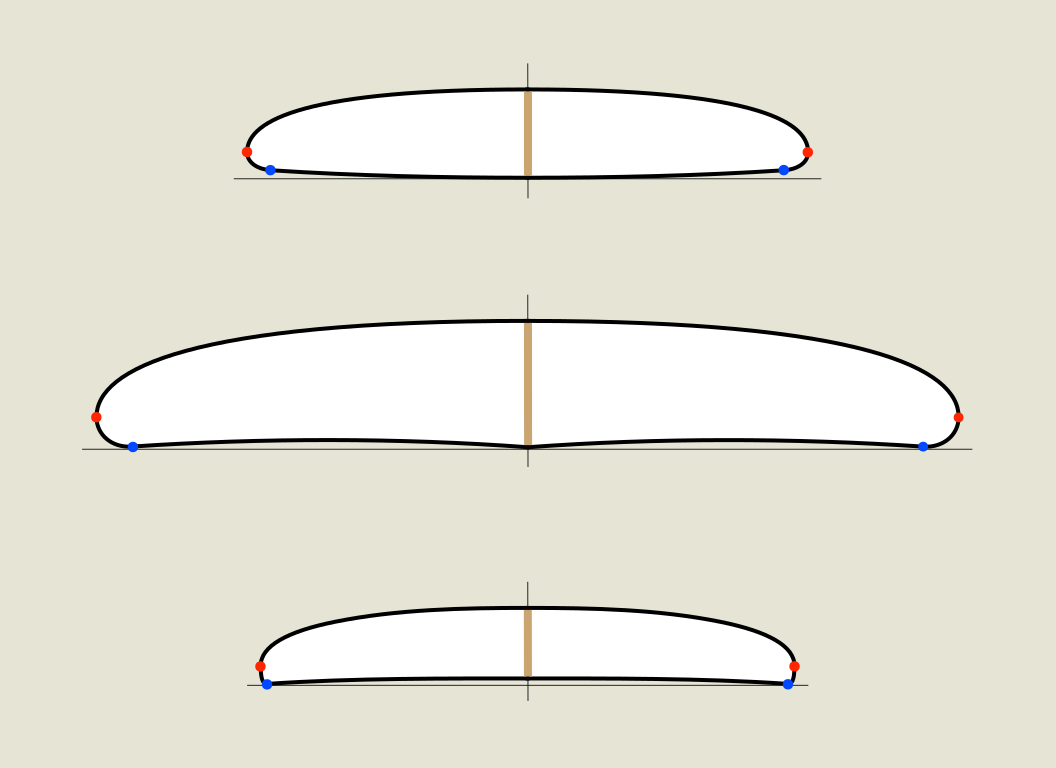
|
| |
PANEL VEE to DOUBLE to SINGLE CONCAVE |
| |
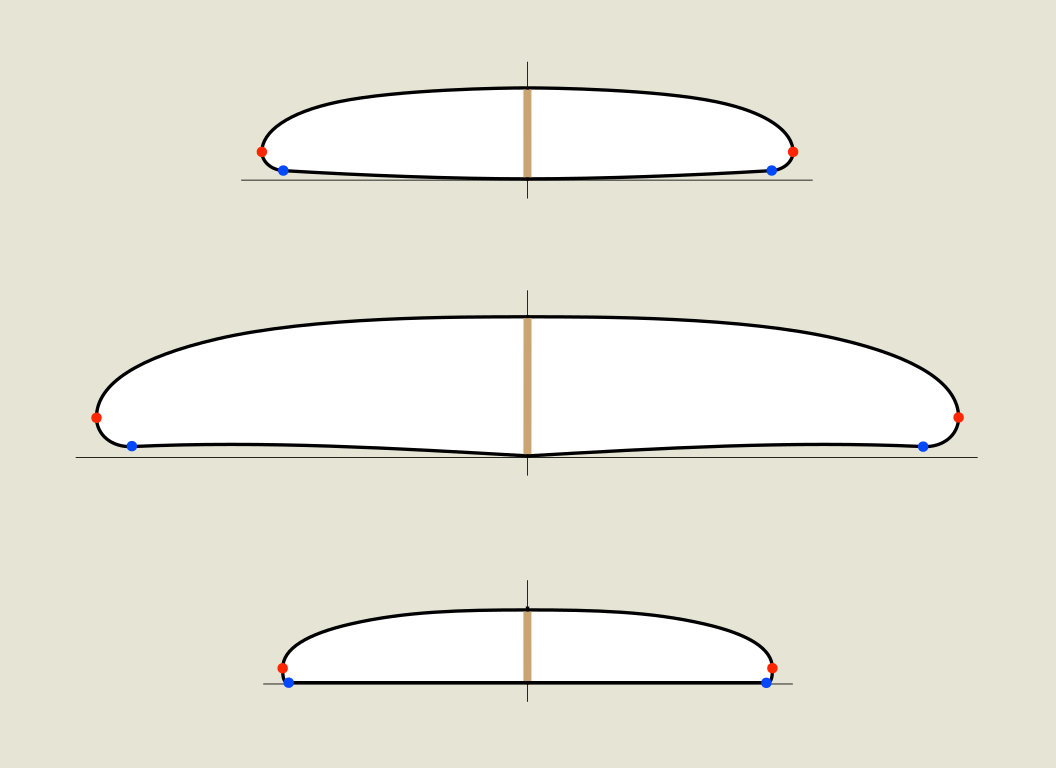
|
| |
SPIRAL VEE to FLAT |
| |
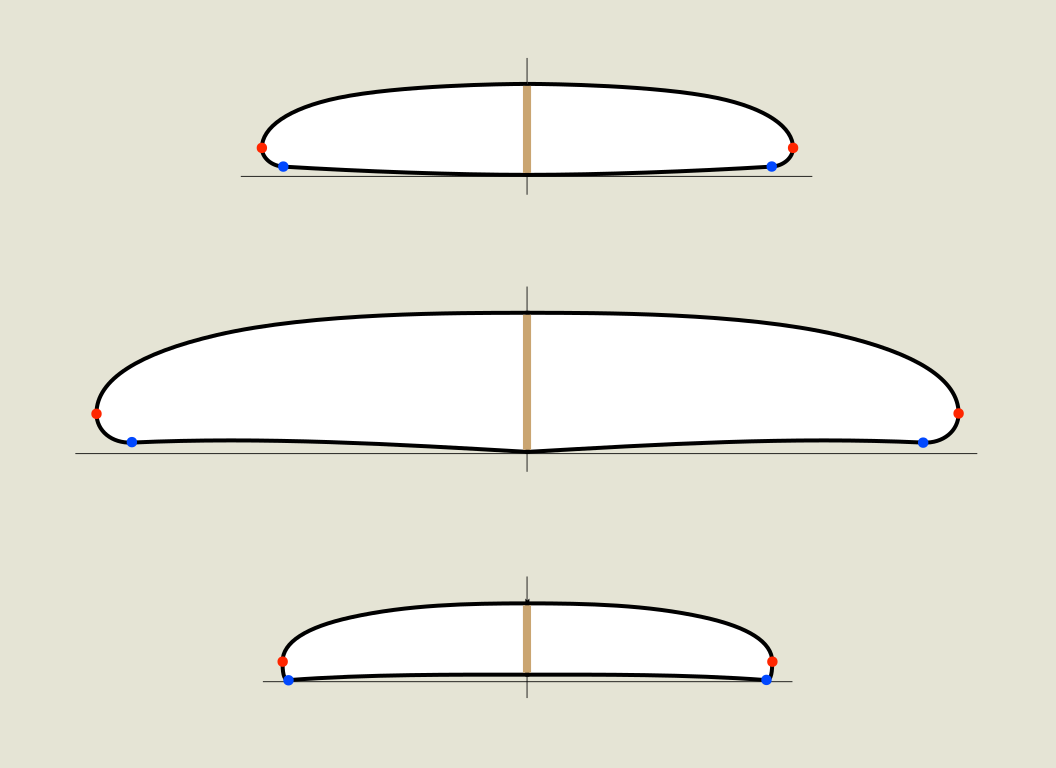
|
| |
SPIRAL VEE to SINGLE CONCAVE |
| |
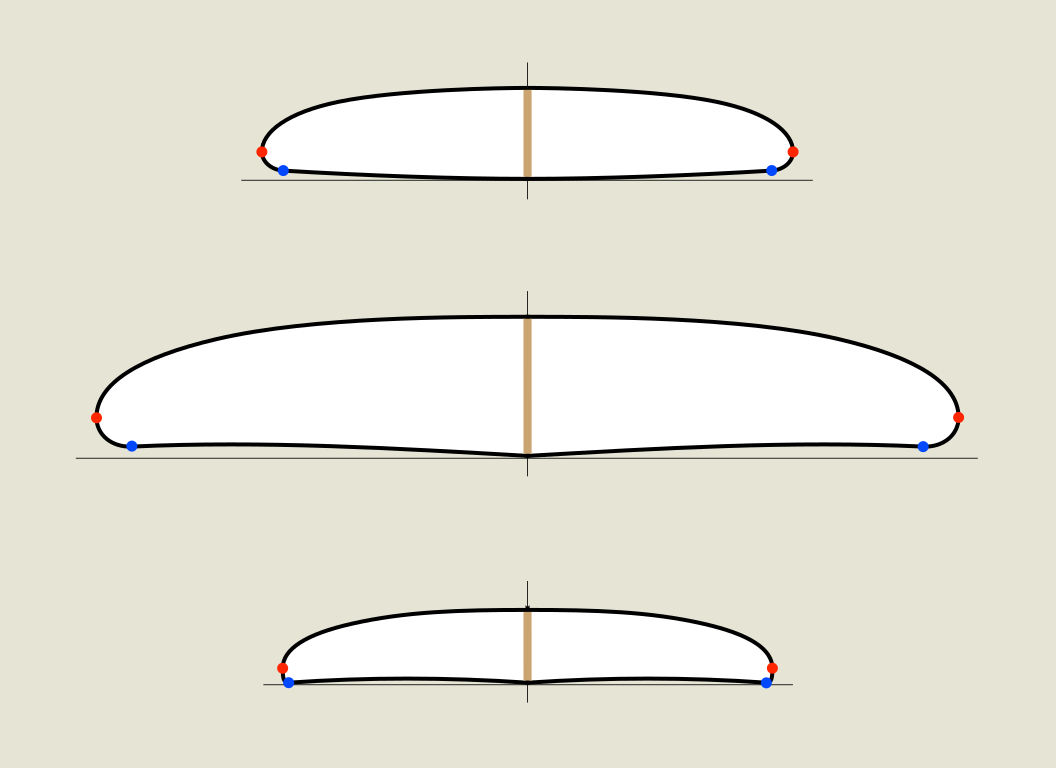
|
| |
SPIRAL VEE to DOUBLE CONCAVE |
| |
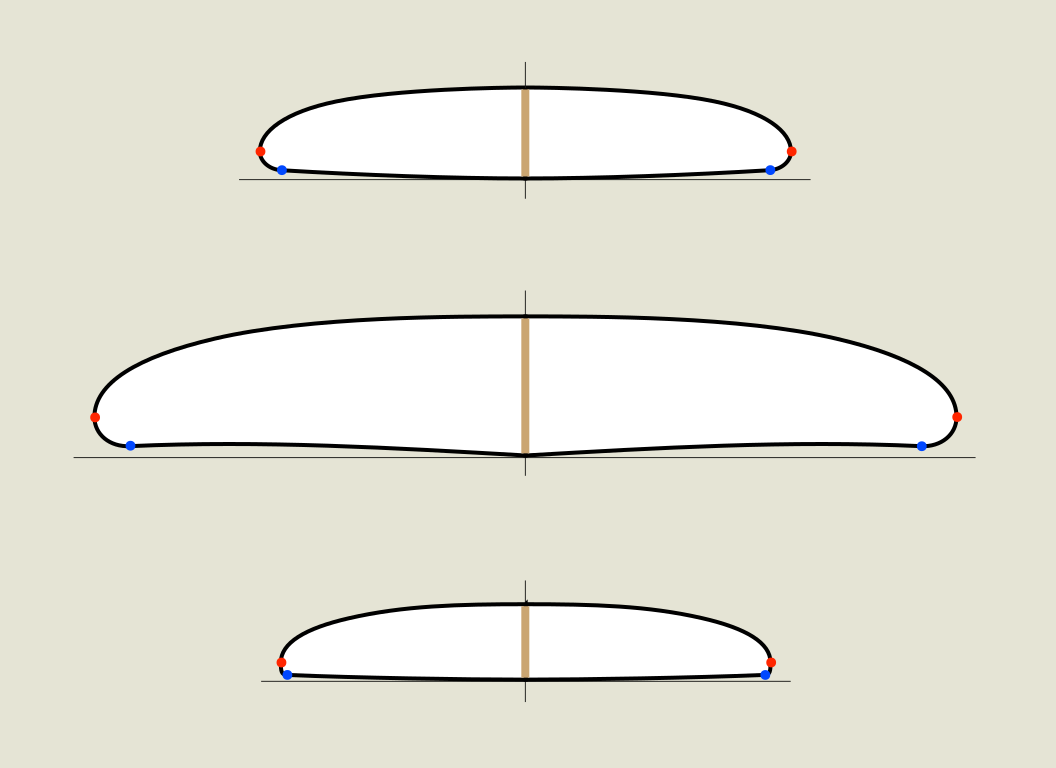
|
| |
SPIRAL VEE to ROLLED PANEL VEE |
| |
|
| |
REVERSE VEE PROFILES, FOILS & RAIL ROCKER |
| |
|
| |
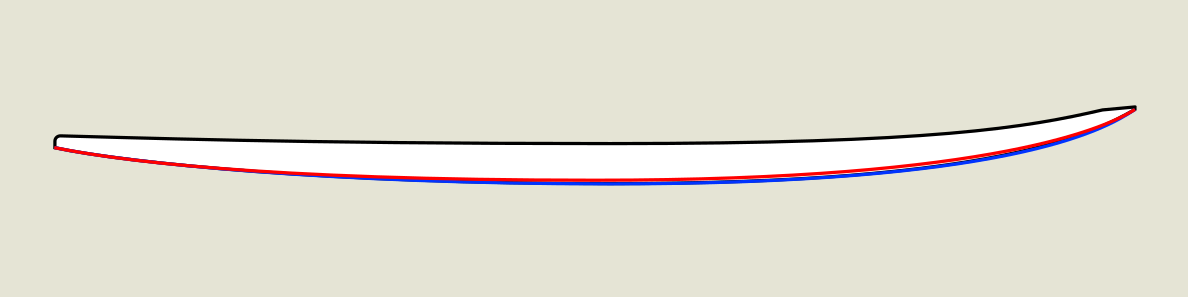
|
| |
RV PROFILE & FOIL - BOTTOM & RAIL ROCKER VEE to FLAT |
| |
|
| |
Profile and foil of board in black with bottom rocker in blue and rail rocker in red. Rail rocker in entry and wide point rise's above the board's profile and foil creating convex bottom contours. Rail rocker is in the same plane as the board's profile in the fins and tail creating a flat rail to rail bottom contour. Zoom view |
| |
|
| |
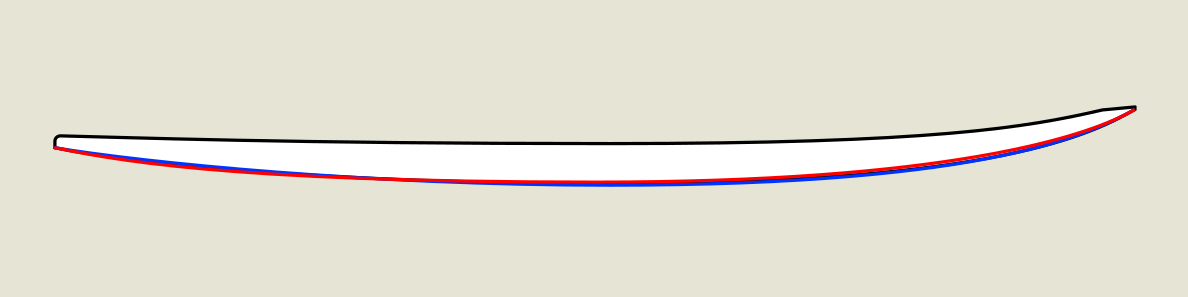
|
| |
RV PROFILE & FOIL - BOTTOM & RAIL ROCKER VEE to CONCAVE |
| |
|
| |
Profile and foil of board in black with bottom rocker in blue and rail rocker in red. Rail rocker in entry and wide point rise's above the board's profile and foil creating convex bottom contours. Rail rocker descends below or lower than the board's profile in the fins and tail creating a concave rail to rail bottom contour. Zoom view |
| |
|
| |
< top of page > |
| |
|
| |
SURFBOARD RAIL ANATOMY |
| |
|
| |
October 3, 2023 |
| |
|
| |
OVERVIEW
Rails are a critical component of every board. The configuration, volume, and features of rails - the profile, apex, tuck and edge, and volume determine how rails perform. The performance of a well designed rail for surfers, waves, and conditions offers acceleration, projection, planning speed, maneuverability, and control. Nuanced variations in rail features provides maximum performance features for various surfboard designs and classes. |
| |
|
| |
RAIL CONFIGURATIONS COMPONENTS & FEATURES
Rail configuration is significant not only for it's features and the rail's performance, but also for and how seamless the rails perform in sync with the other variables of a board's design. |
| |
|
| |
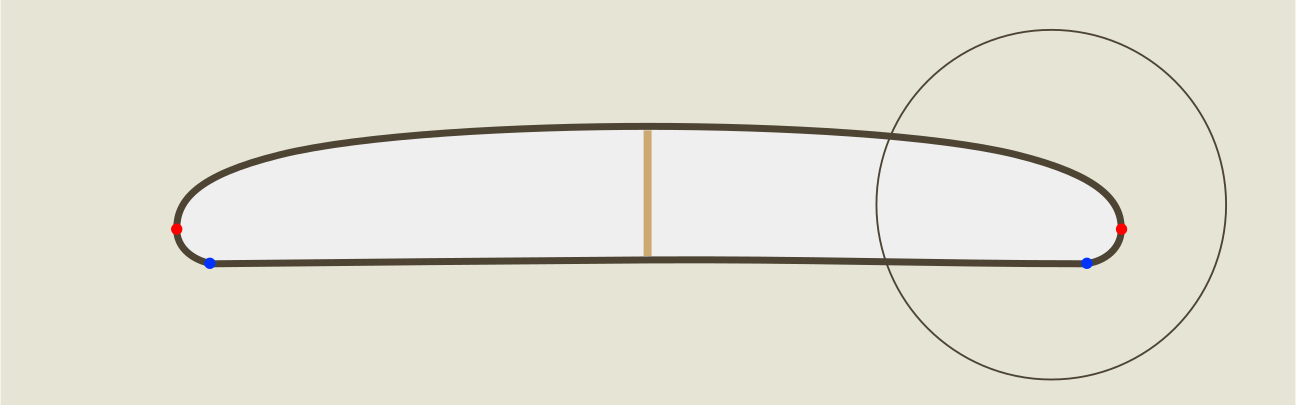 |
| |
|
| |
Rail Profile |
| |
|
| |
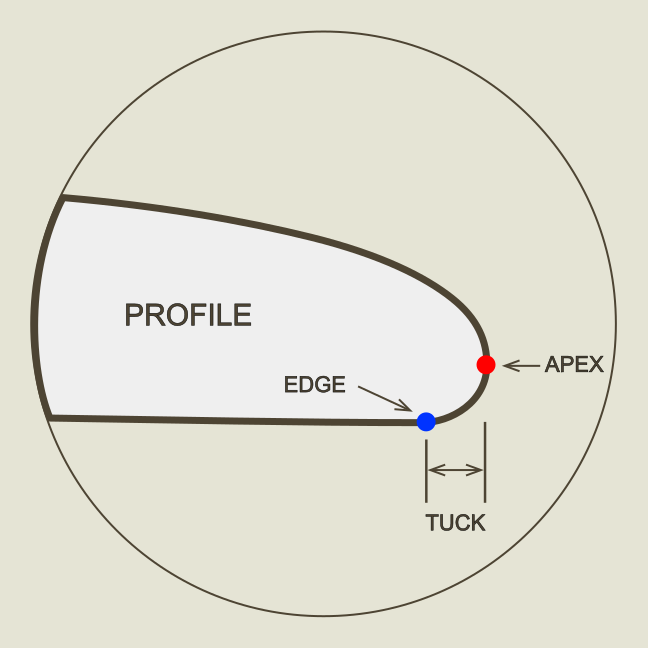 |
| |
Rail Profile Zoomed In with Configuration Features |
| |
|
| |
PROFILE The profile of a rail is defined by the curve connecting
the top and bottom of a board. The apex or furthest point from the
center of the board in this curve determines the type or class of
rail. Rail profiles vary from nose to tail. Rails are foiled from the
nose and entry, through the wide point to the tail. Profiles are
neutral in the nose, entry, and wide point and develops a tucked
corner and edge as it transitions from wide point to tail. It's
important to note that as a rail profile transitions or foils from
nose to tail the rail profile curve on the deck side of the rails
maintains it's profile and curve. The rail profile curve from the
apex to the bottom changes to develop the tuck and edge common and
essential to rail and ultimately board performance. The apex of rails
in most surfboard classes and designs is at or below center of a
boards thickness. Common rail profiles as defined by their apexes are
a 50 / 50 rail profile, a 60 / 40 rail profile, and some lower rail
profiles depending on the performance requirements of a board. Prior
to the shortboard revolution of 1966 to 1969, classic LBs featured a
neutral 50 / 50 rail profile. Early shortboards featured the same
neutral rail profile. This rail configuration featured stability and
control, but failed to offer much acceleration, planning speed, or
maneuverability. The shortboard revolution introduced a lower apex to
rails. The down rail profile creates notably more lift and less drag
providing more acceleration, projection, planning speed, and
maneuverability with excellent stability, predictability, and
control. The development of the down rail profile by Mike Hynson
improved surfboard performance dramatically and was a quantum leap
forward in surfboard design.
APEX The apex of a rail is the point on a rail where the profile transitions from the top or deck to the bottom of a board. It is the furthest point of a rail from the center of a board. The apex is higher on full boxy rails and lower on crowned rails. The apex of a rail remains constant in proportion to the rail foil from nose to tail to maintain uninterrupted laminar flow. The rail foil mimics and is in sync with a board's profile foil creating acceleration and control. TUCK & EDGE Tuck and edge are features that define the rail profile from the apex of the rail to the bottom of a board from nose to tail. Tuck is how far this curve goes into the bottom of the board. Generally, there is more tuck in the nose, entry, and wide point. Tuck decreases from wide point to tail. Edge is the transition from tucked rail to the bottom of a board. Edge is generally non existent in the nose, entry, and wide point. It starts to develop at the wide point and develops notably as the rail nears the tail. VOLUME Rail volume is a feature that with the other features of a rail determines how a rail enters, holds, and releases the water in the face of a wave when turning and planning. Higher volume rails require more force from a surfer for rails to enter and release water and perform maneuvers. Conversely, lower volume rails require less force from a surfer for rails to enter and release water and perform maneuvers. Too much rail volume and a board will keep a board high on the water, ok for speed, but lacking control on rail. Too little volume and a board will sit low in the water and when on rail will not have the buoyancy necessary to accelerate after engaging and releasing the rail. Correct rail volume with appropriate profile and well foiled from nose to tail, will engage the rail for stability and control and release the rail to accelerate out of turns, develop, sustain, and maintain speed in the various sections of a wave. |
| |
|
| |
DOWN RAILS
All contemporary surfboard classes and designs feature a down rail profile with the exception of classic LBs and some retro designs. Mike Hynson is credited with introducing down rails from nose to tail in the late 60s to surfboard design after observing how well one of his boards with a rolled soft rail and flat deck in the nose planed upside down across a shallow reef. The performance of down rail designs was so efficient that it became the standard rail profile for all evolving shortboards. Rail profiles lower than a 50 / 50 profile are a down rail profile. The low apex of a down rail profile creates lift and reduces drag creating acceleration, projection, speed, and maneuverability. The deck side curves created by the rail's low apex hold the rail and board securely in the face of a wave with stability, predictability, and control through turns, speeding down the line rail to rail, or in trim. The bottom side of the rail with it's transition from soft moderate tuck with no edge in the nose, entry, and wide point to the reduced tuck and developing edge in the tail releases the rail. Specific down rail design features - profile, apex, tuck and edge, and volume - will vary and are tuned for surfer, board design, and wave size, quality, and conditions. |
| |
|
| |
PRIMARY RAIL PROFILES
BOXY RAILS Fuller boxier rails are generally for boards that require more rail volume. Shorter boards for marginal waves, boards for heavy footed or bigger surfers, and boards requiring more stability. Note the higher apex and slightly deeper tuck of the boxy profile. |
| | |
| |
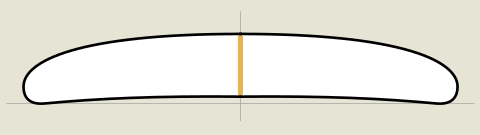 |
| |
BOXY RAIL PROFILE |
| |
CROWNED RAILS Crowned, domed, or tapered rails are generally for boards that require less rail volume. Performance shortboards for quality waves, Step ups, Semi guns, boards for light footed or smaller surfers, and boards requiring maximum control. Note the lower apex and slightly shallower tuck of the crowned profile. |
| |
|
| |
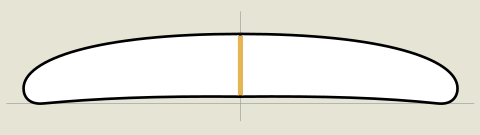 |
| |
CROWNED RAIL PROFILE |
| |
RAIL PROFILES & FOILS NOSE to TAIL
Rail profiles transition or foil from nose to tail to create a rail that engages the water in a wave for stability and control, creates lift to maximize performance, and releases water from the board in the tail to eliminate drag and promote acceleration, projection, planning speed, and maneuverability. The neutral rail profile in entry and wide point features a seamless transition of the curve of the rail from the top to the bottom of the board. The curve of the rail meets the bottom of the board at one single point creating a seamless profile. This transition from the apex of the rail to the bottom of the board promotes notable lift from the bottom and maximum rail control. The reduced tuck and developing edge from the wide point to tail produce a cornered transition from the apex of the rail to the bottom of the board. The bottom and curve of the rail intersect at one point creating a cornered profile that promotes more lift than the lift at entry and wide point and maintains stability and control. Although reduced significantly the tuck nearing the tail continues to maintain stability and control. A soft or hard edge with little or no tuck in the tail releases water from the rail. This release is an essential performance feature reducing drag and promoting acceleration, projection, planning speed, and maneuverability. The nuanced nature of the transitions or foil nose to tail in rail profiles are essential to all performance features for all surfboard designs and classes. Rail profiles foil from neutral nose tucked with no edge, to wide point with hints of nuanced tuck and no edge, to tail with minimum tuck and maximum edge. The foil from neutral entry to firm tail varies by a board's design and range of conditions. Boards for smaller or marginal waves feature less tuck and more edge from wide point to the tail. Conversely, boards for critical, powerful, hollower, or bigger waves feature more tuck and less edge from wide point to tail. Rail profile foils vary depending on a board's design. Neutral nose, entry, and wide point is common to nearly every design and surfboard class. Tuck and edge from wide point to tail varies notably from small and moderate wave designs to XXL wave designs. Tuck and edge vary across the entire range of designs and classes from performance shortboards to mid length fun boards to cruising LBs. |
| |
DESIGN SPECIFIC RAIL FEATURES with PROFILE & FOIL IMAGES |
| |
|
| |
SHORTBOARD RAILS Shortboard, Step Down, and Step Up rail profiles range from boxy to crowned. Rail volume is tuned to surfers and waves based on theories of volume and displacement. Tuck in the nose, entry, and wide point is neutral with no edge. Tuck from wide point to tail decreases notably to no tuck and hard edge in the tail. The neutral entry and wide point profile foils to minimum tuck and hard edge well forward from the tail on shortboards and step ups to maximize release and lift. The nuanced, balanced, and integrated rail profile, rail foil, and tuck and edge of shortboards and step ups fit naturally and comfortably in critical sections of waves creating acceleration, projection, planing speed, and maneuverability. |
| |
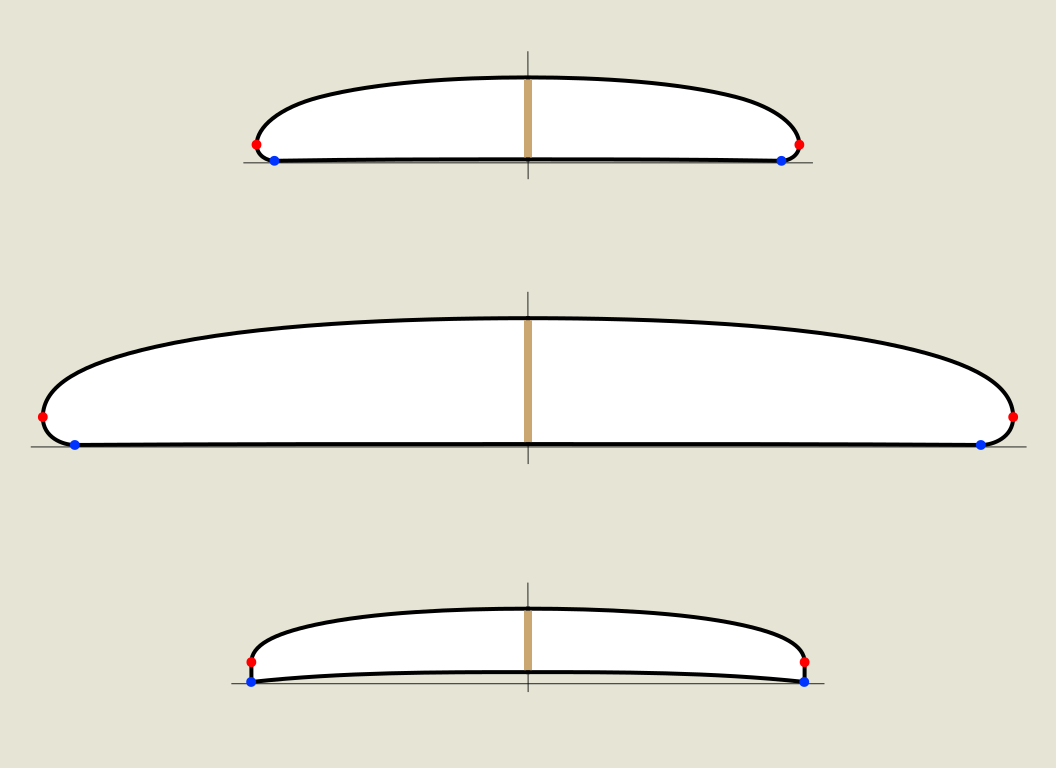 |
| |
SHORTBOARD RAIL PROFILE & FOIL |
| |
|
| |
Shortboard rail foil at nose, wide point, and tail designed to maximize performance features - acceleration, projection, and speed through turns, planning speed, maneuverability, predictability, control, and stability. The thinner neutral rail in entry and wide point allows the rail to engage the face of the wave. The developing tucked edge from wide point to tail creates lift. The tucked machined edge in the tail releases the rail. Note the apex and tuck in the nose, wide point, and tail. |
| |
|
| |
SEMI GUN RAILS Semi Gun rail profiles are moderately crowned or low volume box. Rail volume is tuned to surfers and waves based on theories of volume and displacement. Tuck in the nose, entry, and wide point is neutral with no edge. Tuck from wide point to tail decreases gradually to minimum tuck and soft edge in the tail. The neutral entry and wide point rail profile foils to minimum tuck and soft edge at the tail in semi guns for release and control creating lift, acceleration, projection, planning speed, and maneuverability. |
| |
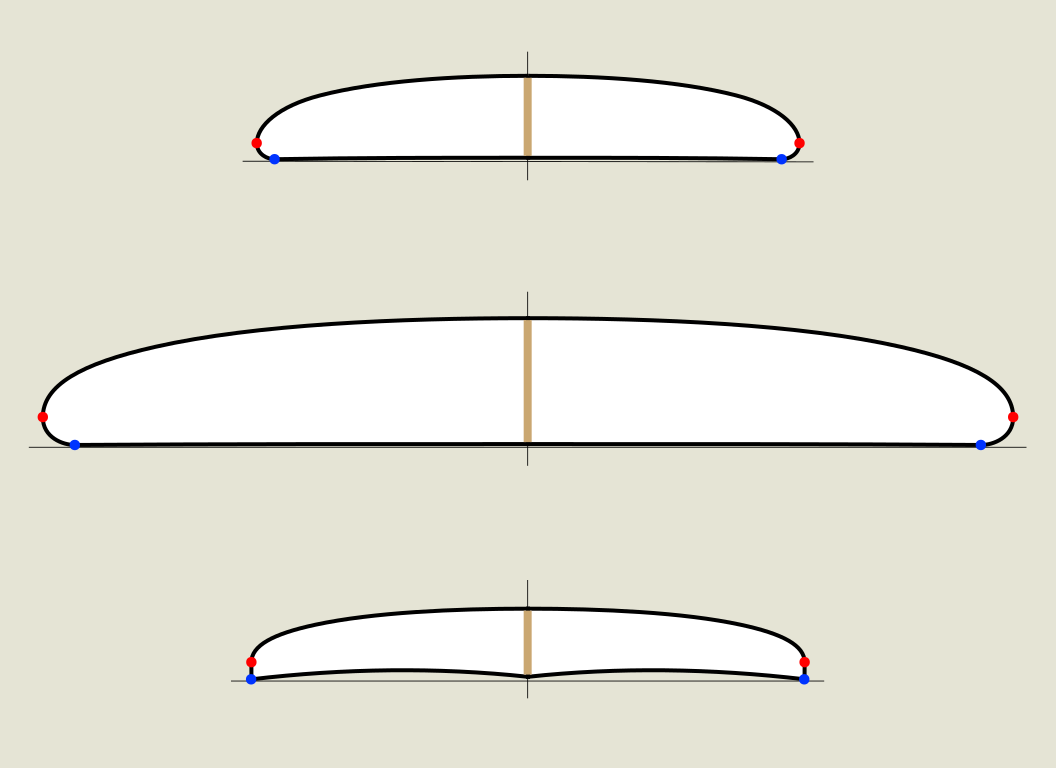 |
| |
SEMI GUN RAIL PROFILE & FOIL |
| |
|
| |
Semi gun rail foil at nose, wide point, and tail featuring hidden foam on the deck side of the rail profile for paddling with a low apex for performance and control. Note the apex and tuck in the nose, wide point, and tail. |
| |
|
| |
XXL GUN RAILS XXL Guns can feature a crowned deck or a flat deck for increased paddling power and stability in XXL waves and heavy water and a low chiseled rail profile and foil for performance and control. XXL Gun rails are tuned to surfer and XXL and heavy water waves. The rail profile is constant from wide point to tail, but the volume and thickness of the rail foils with the the profile foil of the board. Although crowned and tapered the rails of a gun must have significant volume to accomodate the speed and power in XXL waves and heavy water. The rail must support the forces of the wave and the surfer to control and maintain speed dropping into critical XXL waves and carving long turns on rail. Tuck in the nose, entry, and wide point is neutral with no edge. Tuck from wide point to tail decreases gradually to minimum tuck and soft edge in the tail. From wide point to tail the bottom of the rail profile transitions from a neutral tucked profile to a moderately tucked soft edge. At the fin the rail has some tuck to maintain maximum control and stability. The neutral entry and wide point rail foil with minimum tuck and soft edge in the tail is designed to control the speed and power of XXL waves and heavy water. |
| |
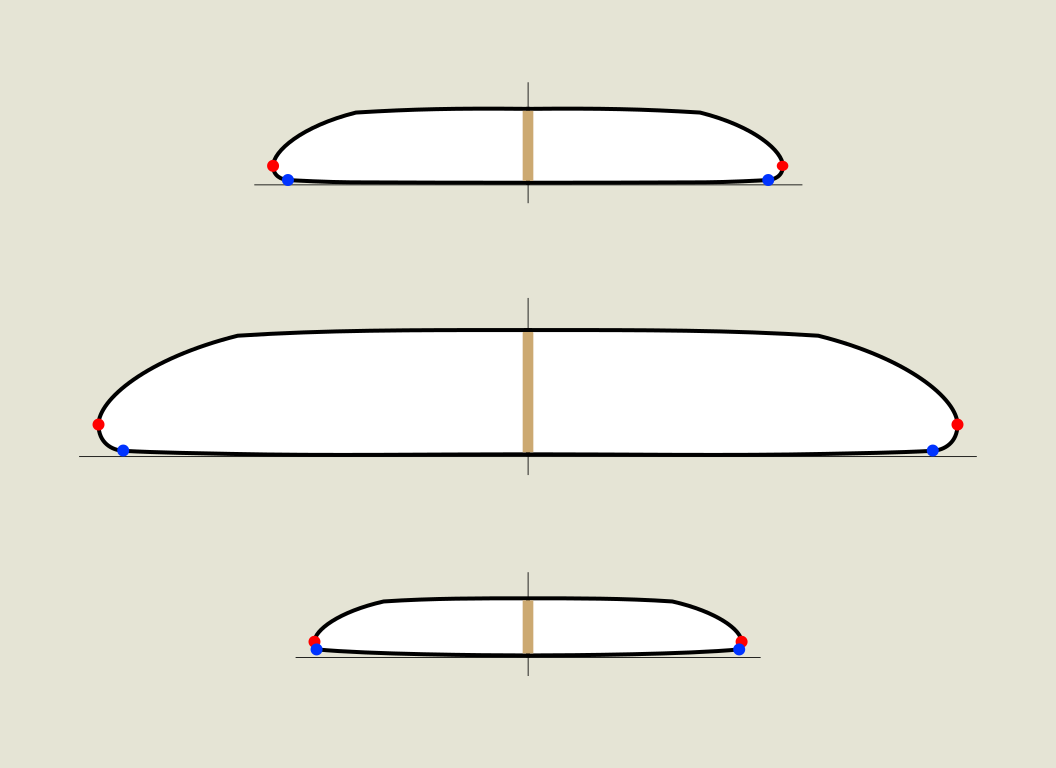 |
| |
XXL GUN RAIL PROFILE & FOIL |
| |
|
| |
XXL Gun rail profile at nose, wide point, & tail featuring a flat deck for paddle power and stability and low chiseled rail for performance and control. Note the apex and tuck in the nose, wide point, and tail. |
| |
|
| |
MID LENGTH & EGG RAILS Mid Length and Egg rails are borrowed from the modern shortboard. The notable and substantial volume of Mid Length and Egg designs from their length, width, and thickness requires the rail profile to be a lower moderately thin boxy profile or lower crowned rail profile. The profile is round and neutral through the nose, entry, and widepoint allowing the rail to engage the face of waves as a board rolls onto the rail. The round, neutral rails in the entry and wide point provide easy transitions from rail to rail in critical tight sections of waves. Rail volume is tuned to surfers and waves. From the wide point to the tail the rail profile remains the same on the deck, but below the apex develops a tucked edge. At the fins the rail has minimum tuck and a moderately hard edge. The rail foil provides control and release creating acceleration, projection, planning speed, and manuverability. Mid Length and Egg rail profiles are sublime foils offering performance, planning speed, control, and stability. |
| |
|
| |
MID LENGTH & EGG RAIL PROFILE & FOIL |
| |
|
| |
Mid Length and Egg rail profile at nose, wide point, and tail featuring sublime foils for acceleration and speed, projection, maneuverability, turning performance, planing speed, control, and stability. Note the apex and tuck in the nose, wide point, and tail. |
| |
|
| |
CONTEMPORARY LB RAILS Contemporary LB rails mimic shortboard, step up, semi gun, and mid length and egg rails. Contemporary LB rails feature the same sublime foils as mid length and eggs for performance generating acceleration, planning speed, control, and stability. Profiles range from full box to thin crown. Volume is tuned to surfers and waves. Rail volume also considers the size, technique, and style of the surfer and the dimensions and ultimately high volume of the modern contemporary LB. Tuck in the nose, entry, and wide point is neutral with no edge. Tuck from wide point to tail decreases to minimum tuck and soft edge in the tail. Like the rails on almost all designs and classes from shortboards to contemporary LBs these rail feature provide control and release creating acceleration, projection, planning speed, and manuverability. |
| |
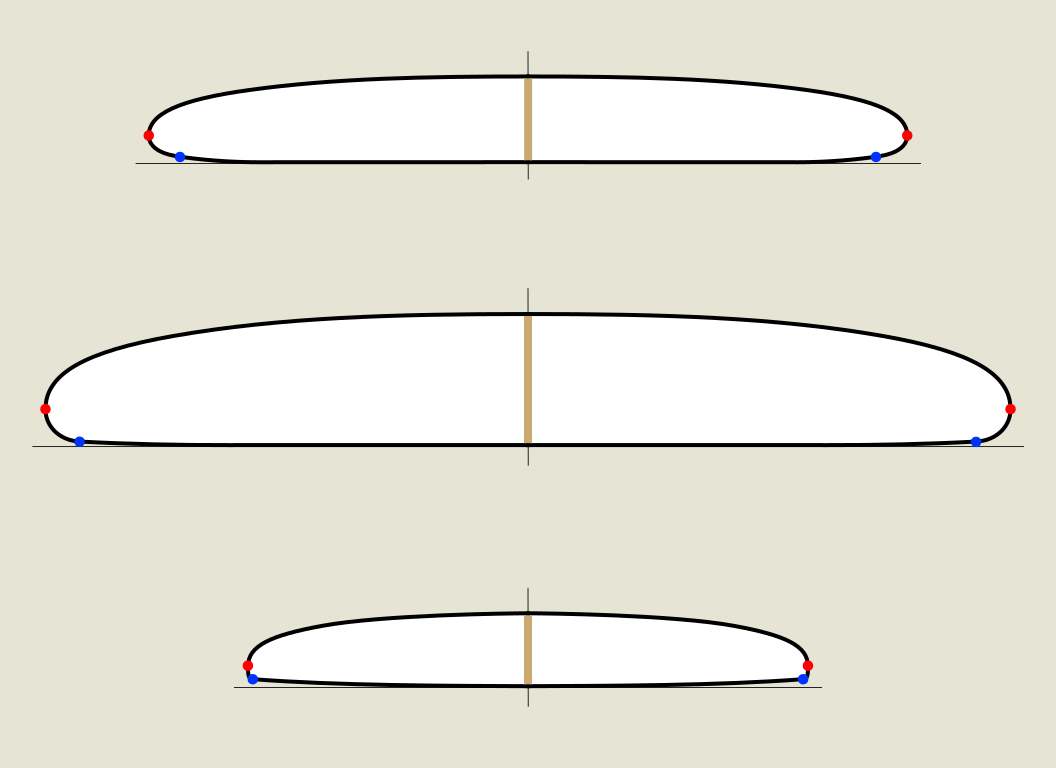 |
| |
CONTEMPORARY LB RAIL PROFILE & FOIL |
| |
|
| |
Contemporary LB rail profile at nose, wide point, & tail featuring the same sublime foils as the mid lengths & eggs for acceleration, projection, maneuverability, turning performance, planing speed, control, and stability. Note the apex and tuck in the nose, wide point, and tail. |
| |
CLASSIC LB RAILS Classic LB rails are neutral from nose to tail. The profiles vary from 40 / 60, 50 / 50, to 60 / 40. The length, width, and ultimately high volume of a classic longboard, combined with the size, technique of the surfer, and deck design determine the volume of the rail. Rails tuck into the bottom from the apex from nose to tail. Tuck decreases slightly from wide point to tail. Classic LB rails have no edge. The neutral rails and apex nose to tail with with tuck and no edge are an essential feature of the glide, trim, and nose riding performance features of Classic LBs. |
| |
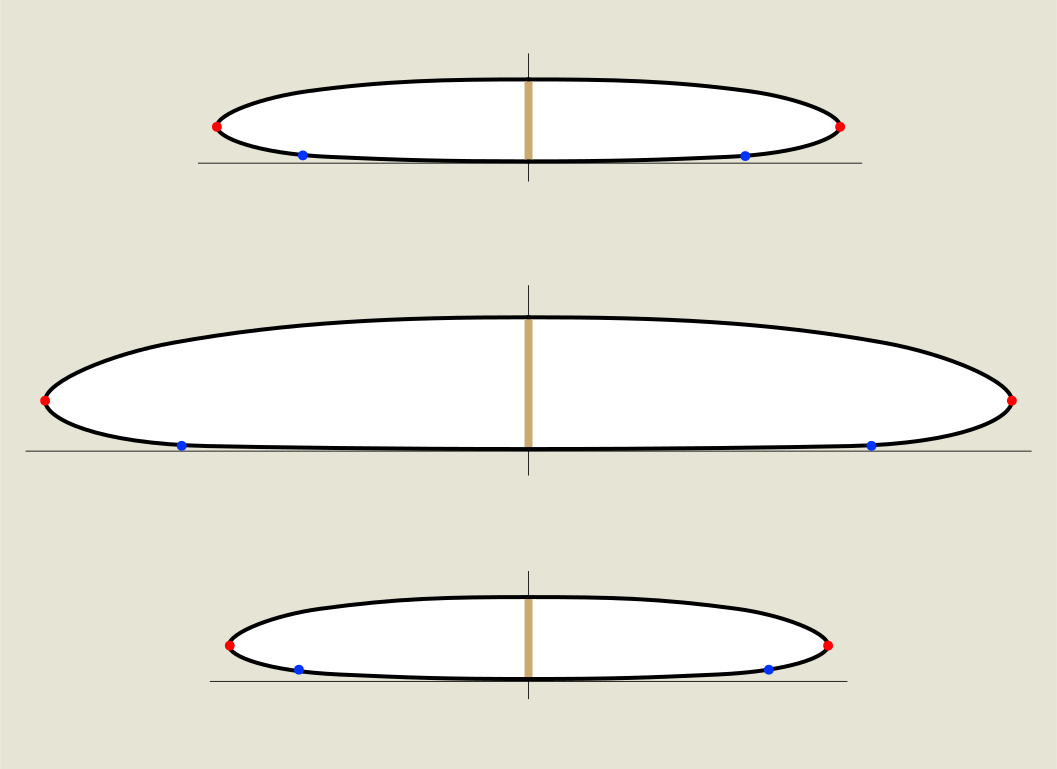 |
| |
CLASSIC LB RAIL PROFILE & FOIL |
| |
|
| |
Classic LB rail profile at nose, wide point, and tail featuring 40 / 60 profile in the nose, 50 / 50 profile at the wide point, and 60 / 40 profile in the tail. The neutral rail with no tucked edge and the rolled tri plane bottom hold the Classic LB firmly in the face of a wave - key design features for trim and nose riding. Note the apex and tuck in the nose, wide point, and tail. |
| |
|
| |
LINKS
Theory of Volume Theory of Displacement Tuning & Detuning Rails |
| |
|
| |
< top of page > |
| |
|
| |
TUNING & DETUNING RAILS |
| |
|
| |
October 10, 2018 Updated September 30, 2023 |
| |
|
| Rail are configured of their profile, their apex, the mid point in the rail profile between the top and bottom of the board, and their tuck and edge, the bottom corner of the rail where the rail profile meets the bottom of the board. All features of a surfboard's rails are integrated to create a rail that best suits the purpose of the board's design.> |
| |
|
| |
|
| |
|
| |
Full Rail Profile |
| |
|
| |
|
| |
|
| |
Rail Profile Zoomed in with Configuration Features |
| |
|
|
When designing boards for a variety of conditions we can vary the
tuck and edge of the rail from the apex of the rail and from wide
point to tail to fine tune generating acceleration, projection,
speed, and maneuverability and control, the primary performance
features of a surfboard. The further we tuck the rail into the bottom
of the board the more the board will sit down in the water and
conversely, the less we tuck the rail into the bottom of the board
the more the board will sit on top of the water. The more a board and
rails sit down in the water the more control a surfer will have
performing maneuvers in critical waves and barrels. We refer to this
as "detuning" the rails. The less a board and rails sit down in the
water the more acceleration, projection, planning speed, and
maneuverability a board will have in small or marginal conditions. We
refer to this as "tuning" the rails. Basically we detune rails to
promote control in critical waves and barrels and tune rails to
promote performance in small and marginal waves.
The length a hard edge or a machined edge carries from the tail towards the wide point has a similar affect to the tuck of the rail. The shorter this edge, where the edge blends to a soft tuck from the tail towards the wide point, the lower the board will sit in the water and the more control the board will offer the surfer performing maneuvers in solid waves and quality conditions. The further this edge carries towards the wide point the higher the board will sit on the water and the more acceleration, projection, and speed it will generate in small waves and marginal conditions. |
| |
|
| |
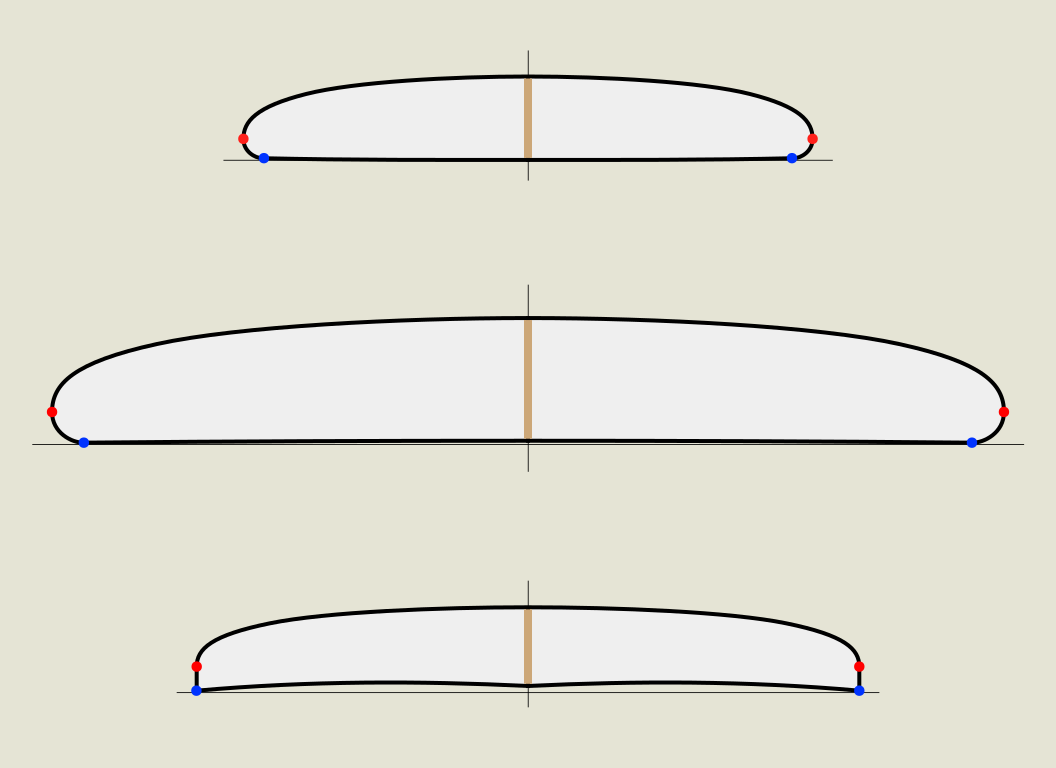 |
| |
|
| |
TUNED RAIL with no tuck and maximum edge in the tail |
| |
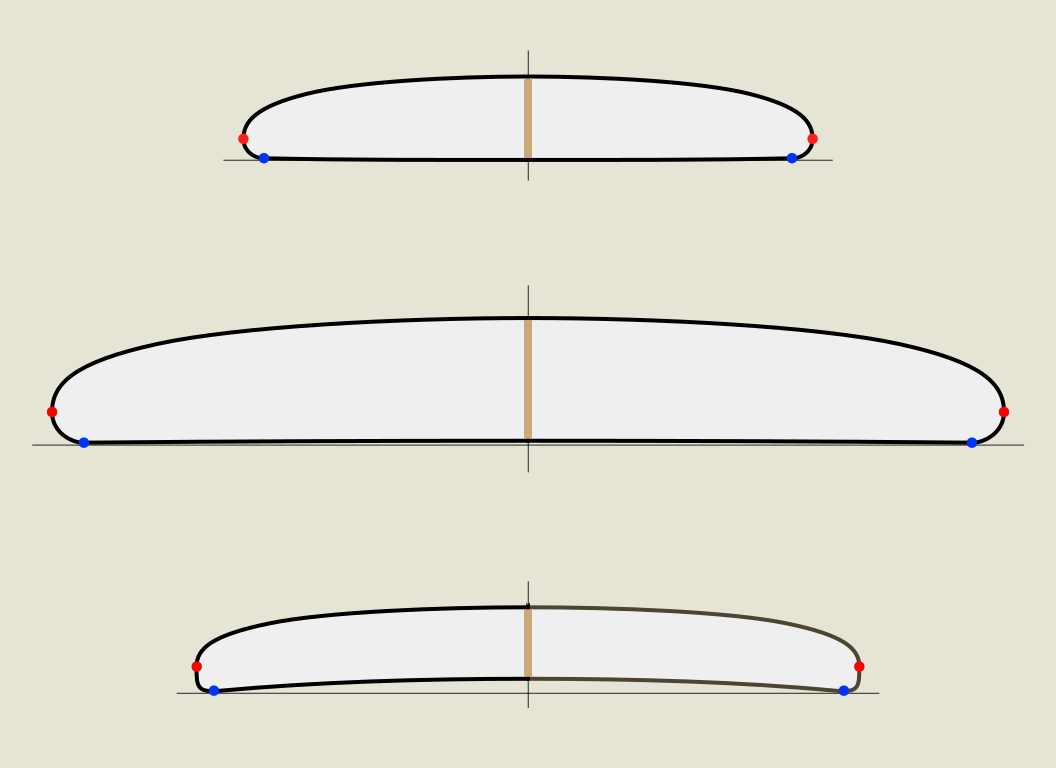 |
| |
|
| |
DETUNED RAIL with notable tuck and minimum edge in the tail |
| |
|
| |
The distance a rail is tucked from the apex of the rail and the
distance a rail has a hard edge from the tail towards the wide point
determines how a rail's performance varies. Less tuck and longer edge
offer more release. More tuck and shorter edge offer more control.
Ultimately, the tuck and edge of rails allows us to fine tune control and performance in all our designs maximizing performance features for waves and conditions. Boards for small waves and marginal conditions will benefit from less tuck and more edge. Boards for all around conditions will benefit from a reasonable blend of tuck and edge. Boards for critical waves, barrels, heavy water, and big waves will benefit from more tuck and less edge. |
| |
|
| |
LINK
Rail Anatomy 2012 & 2023 |
| |
|
| |
< top of page > |
| |
|
| |
SURFBOARD FIN ANATOMY |
| |
|
| |
HISTORY, CONFIGURATIONS, DESIGN COMPONENTS & FEATURES, FOILS & CONSTRUCTION |
| |
|
| |
June 12, 2022 |
| |
|
| |
FIN HISTORY
Surfboard fins date to the mid 1930s. In 1935 Tom Blake attached the first known fin to a surfboard. After surfing with a fin or skeg as he referred to it for the first time Blake said, "When I first paddled out the board felt like it was much easier to keep in a straight line. I thought I might be imagining it. My first wave revealed the truth. Never before had I experienced such control and stability. It was remarkable the control you had over the board with this little skeg. I knew from that moment it was a success." The introduction of a fin on a surfboard changed surfing and surfboard design forever. In the 1950s innovative surfboard manufactures developed ever more functional solid fiberglass fins. In the 1960s Mike Hynson, Skip Frye, and Donald Takayama developed progressive longboard fins. In 1967 George Greenough introduced the high aspect ratio flex fin. In 1967 Tom Morey and in 1970 Bill Bahne designed and developed removable single fin systems. Credit to George Downing for creating an early removable fin box in 1951. In 1970 Steve Lis and Jeff Ching developed Twin Keel Fins for their Fish designs. In the mid 1970s Mark Richards and Reno Abellira developed Performance Twin Fins. In the 1980s Peter Ware and Glen Winton pioneered the first Quad configurations. Over the last 30 years Bill "Stretch" Riedel, Bruce McKee, and several other surfer shapers continued to develop the quad fin array. In 1981 Simon Anderson created the Thruster. In the 1990s FCS and Futures developed removable multi fin systems. In the 1990s fin manufacturers introduced RTM and G10 materials to fin construction. In the 1980s and 1990s Curtis Hesselgrave developed extremely progressive and performance enhancing foils including inside or vector foils. |
| |
|
| |
FIN CONFIGURATIONS |
| |
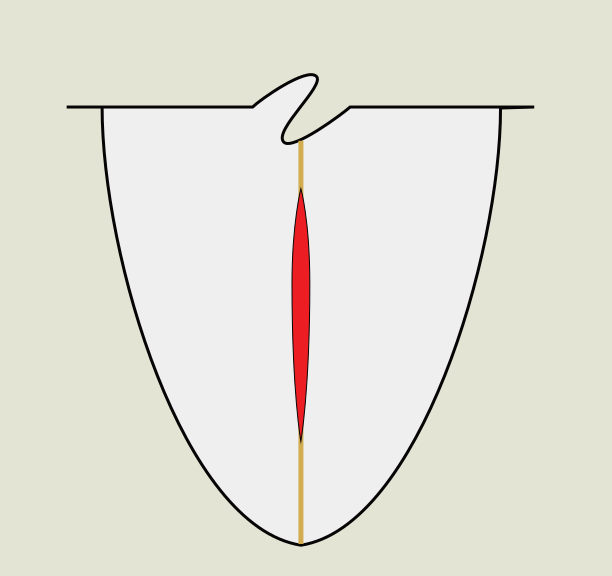
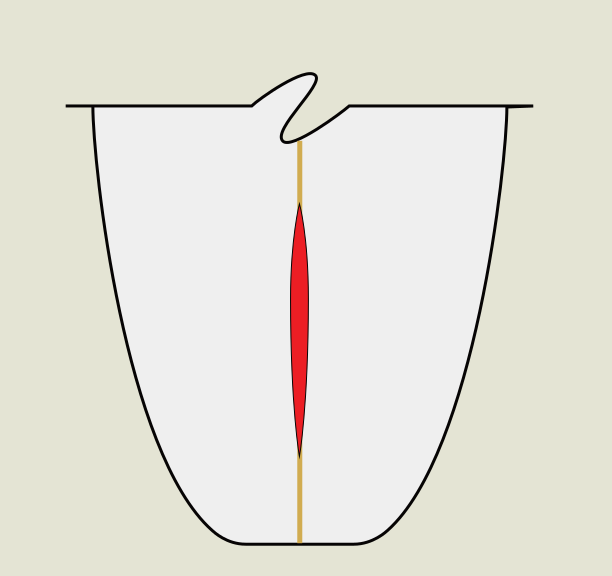 |
| |
|
| |
SINGLE FINS Single fins were common to all surfboards with few exceptions from the first surfboards with fins to well into the shortboard revolution. Initially all single fins were "glassed on" until Tom Morey and Bill Bahne developed removable fin systems in the 60s. The removable fin systems featured "fin boxes" glassed into the bottom of boards to facilitate removable alternative designed fins and move fins forward and aft. Turns with a single fin can be pivotal or projection oriented depending on the fin's template and placement. Single fins are ideal for fast, down the line surfing. Well foiled single fins of various configurations and depth offer a predictable, controlled, and stable feel to longboards, mid lengths, and classic or contemporary single fin shortboards. |
| |
|
| |
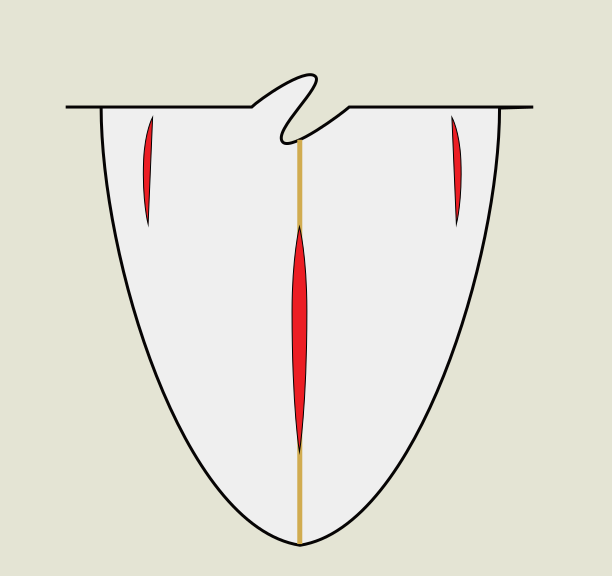 |
| |
|
| |
2 + 1 FINS The 2 + 1 fin configurations feature a glassed on or removable box single fin lined up in the center of a surfboard with two regular thruster rail fin boxes near both rails. Center fins feature a symmetrical foil. Center boxes are 8.5" or 10.5" long allowing the fin to to be set forward or aft to vary performance. The two rail fins or side bites feature flat or asymmetrical foils offering a board greater lift and control. The 2 + 1 is fin configuration is common to most contemporary longboard, mid length, and egg designs. |
| |
|
| |
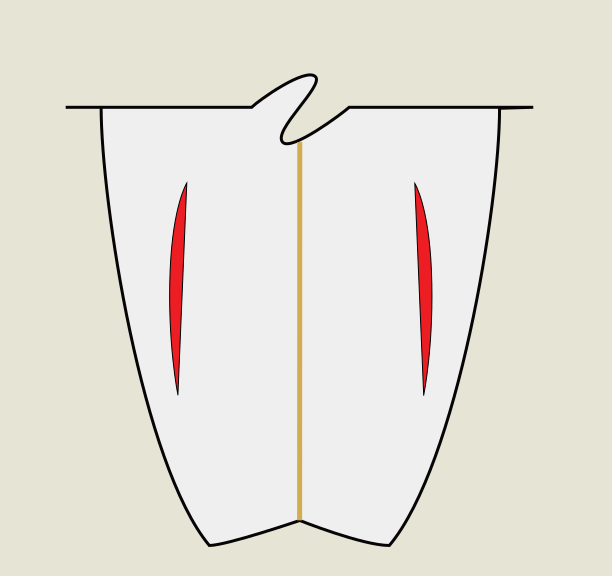 |
| |
|
| |
TWIN FINS Twin fins are a two fin configuration. They offer speed and maneuverability primarily from eliminating a center fin. Twin fins have more surface area, are deeper, and have a wider base than quad and thruster fins. The extra surface area is the driving force for this fin configuration. Twin fins can feature a flat, inside, or asymmetrical foil. The various foils provide nuanced variations in performance. Twin fins are most common to shortboards, particularly in smaller or moderate sized waves for their acceleration and speed, although they can be functional on all surfboard designs. |
| |
|
| |
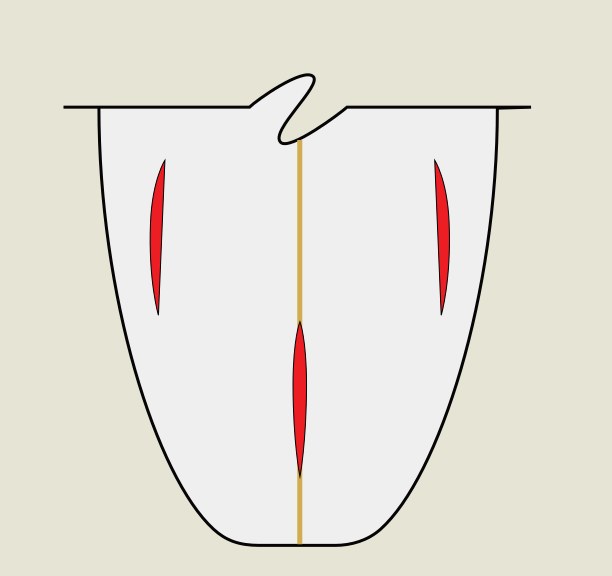 |
| |
|
| |
THRUSTERS The thruster fin configuration is the most common contemporary fin configuration. It is functional on nearly every class of surfboard. Thrusters combine the best performance features of single fins and twin fins. The front or rail fins are set angled near the center of the board at the nose. They typically feature a flat foiled inside surface to provide lift, acceleration, speed, projection, and maneuverability. The center fin features a symmetrical foil to offer stability and control. |
| |
|
| |
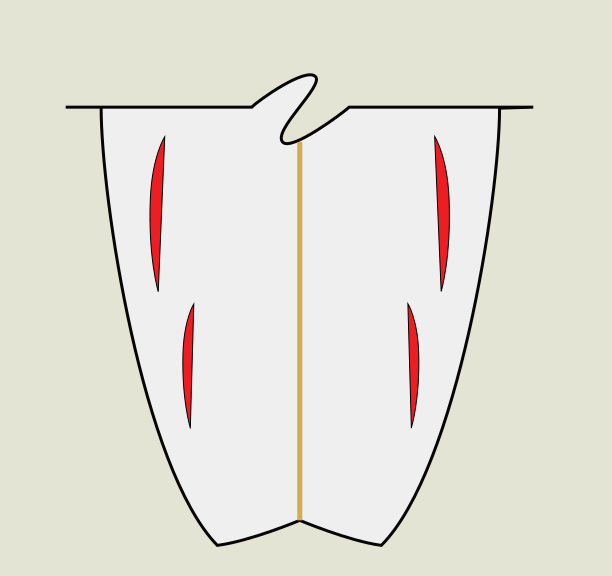 |
| |
|
| |
QUADS FINS Quad fin configurations offer acceleration, speed, and
maneuverability in all conditions. The two fins, the leading fin and
the trailing fin, configured near each other on each rail increase
the surface area and base of fin on rail offering additional power,
projection, acceleration, and speed. The absence of a center fin
notably reduces drag. The leading fins in a quad set are generally
the same size as the rail fins in a thruster set and feature a flat
foil. The trailing fins commonly have about 80% the surface area,
depth, and base of the leading fins and feature either a flat or
80/20 foil. Quads fins are common to boards surfed in hollow barrels
and fast down the line waves on point, reef, and beach breaks. Quad
fins are also very functional in heavy water and XXL waves.
Templates, dimensions, and foils vary. For heavy water and XXL
conditions quads feature 50/50, 60/40, and 80/20 symmetrical and
asymmetrical foils.
REVERSE QUADS feature a smaller rail fin and a larger trailing fin. They are functional in all conditions and excel in heavy water and XXL waves. |
| |
|
| |
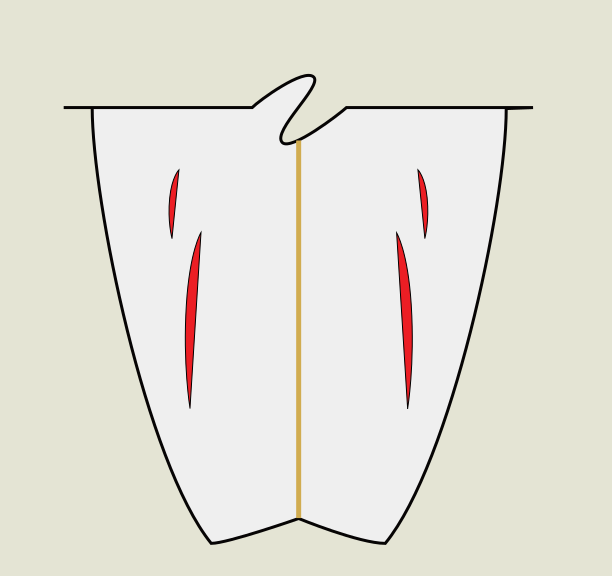 |
| |
|
| |
TWINZERS The twinzer fin configuration features a twin fin and a fore fin referred to as a canard. The twin fin offers speed and maneuverability by eliminating a center fin. Twin fins are deeper, have a wider base, and have more surface area than quad and thruster fins. The extra surface area creates notable acceleration and projection. The twin fin in the twinzer configuration is positioned the same as on a pure twin fin dependent on the board's dimensions. The canard reduces turbulence, prevents cavitation and adds stability and control to twin fin designs. It is positioned in front, is offset to the side, and very slightly overlaps the leading edge of the twin fin. |
| |
|
| |
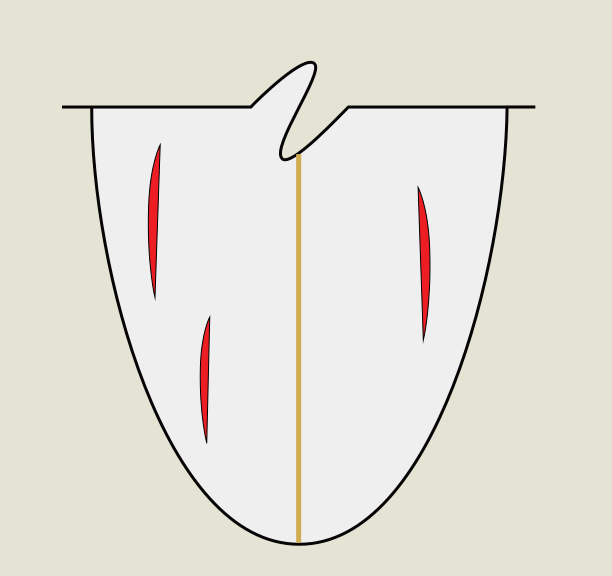
 |
| |
 |
| |
|
| |
ASYMMETRICAL Asymmetrical fin designs can feature many designs,
layouts and configurations. They can feature combinations of single
fins, twin fins, thrusters and quads. This image illustrates quads on
one rail and twin or thruster or quad without a trailer on the other
rail. The positioning and juxtaposition of the fins can be varied for
performance features. The rail with the quads offers maximum power,
projection and acceleration. The rail with twin or thruster or quad
without trailer offers maximum pivotal maneuverability. This rail and
fin layout offers a wide range of horizontal and vertical angles out
of turns. Creative and imaginative combinations can be designed for
venues, toe side and heel side turns, and surfer
preferences.
These images illustrate Asymmetrical fin placement. One rail features a quad layout and the other rail features a twin or thruster or quad without a trailer. The rail with the quad layout offers maximum power, projection, and acceleration. The rail with twin or thruster or quad without trailer offers maximum pivotal maneuverability. |
| |
|
| |
COMPONENTS & FEATURES of FIN DESIGN | |
| |
|
|
| |
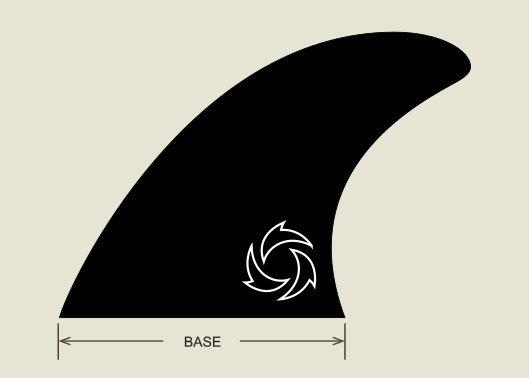 | |
| |
BASE The base is the length of the bottom of the fin. A longer base offers more lift and projection. A shorter base offers less lift and more maneuverability. | |
| |
|
|
| |
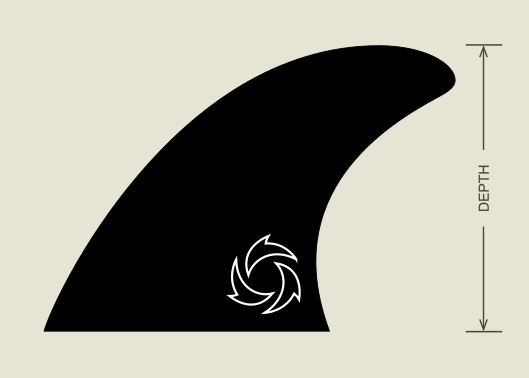 | |
| |
DEPTH The depth of a fin is the length of the fin from base to tip in a straight vertical line. Deeper fins offer more holding power - shallower fins less. Deeper fins provide longer turns and more projection - shallower fins provide a tighter turning radius and more maneuverability. | |
| |
|
|
| |
| |
| |
SURFACE AREA The surface area of a fin is a product of the geometry of a fin's template. It is the area of the surface of a fin. Surface area is a square measurement. A fin with more surface area will have more holding power and more projection. A fin with less surface area will have less holding power and less projection. Of note, more surface area increases drag and less surface area reduces drag. | |
| |
|
|
| |
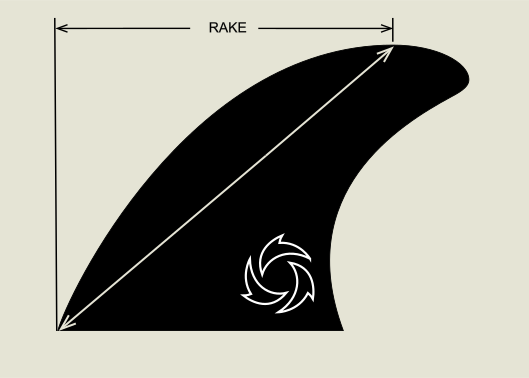 | |
| |
RAKE references the relative position of the tip of the fin to the base of the fin. A fin with more rake has the tip of the fin further aft relative to the base. A fin with less rake has the tip of the fin less aft relative to the base. More rake promotes more projection from turns. Less rake promotes more pivotal turns. | |
| |
|
|
| |
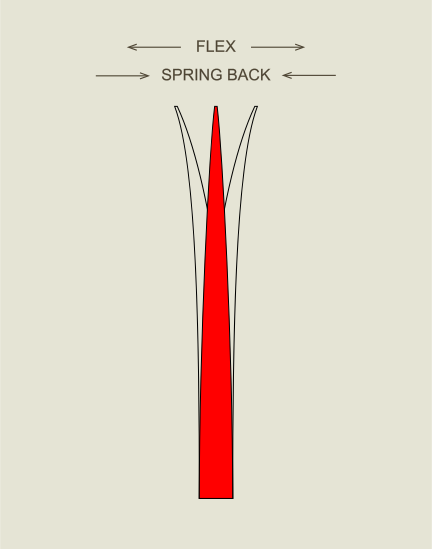 |
|
| |
FLEX Fin flex and spring back is the degree that a fin flexes or bends side to side and springs back to it's neutral centered position when on rail or turning a board. The degree that a fin flexes and springs back are determined by the materials, foil, dimensions, and thickness of the fin and the surfer's technique. A well foiled fin will flex and spring back predictably and consistently providing surfer and board optimum performance. A thicker foil will generally have a stiffer flex pattern and quicker spring back. A thinner foil will have a softer flex pattern and slower spring back. A heavy footed surfer will generate more flex when on rail or turning a board. A light footed surfer will generate less flex. Flex and spring back function to help accelerate a board when engaging the rails and out of turns. Stiffer flex and spring back generate more acceleration and speed and great control in quality surf. Softer flex will generate acceleration and speed as well and can help generate those performance features in marginal surf. Flex that is too stiff won't offer much acceleration. Flex that is too soft offers no acceleration. | |
| |
|
|
| |
FIN PLACEMENT FEATURES | |
| |
|
|
| |
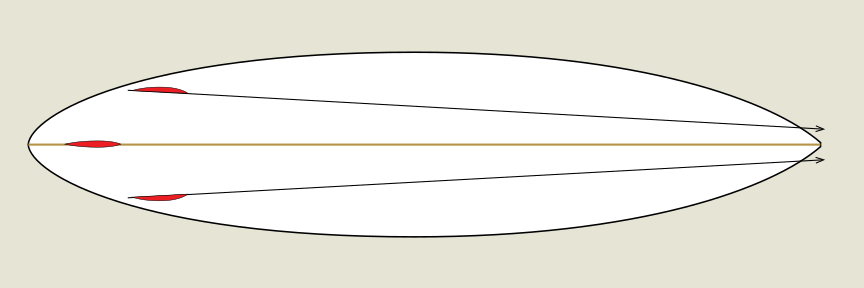 | |
| |
TOE is the angle that the rail fins are pointed towards the stringer or center of the board at the nose. Fins set more parallel to the stringer will offer longer radius turns and more projection. Fins set angled closer to the center of the board at the nose offer tighter turning radius and more maneuverability. Shapers can set the toe of fins with measurements at the leading and trailing edge of the fins relative to the stringer or center line of a board. Alternatively, toe can be set with a lengthy straight edge aligned with the position of the fin's trailing edge at its base and a position relative to the center of the nose of the board. | |
| |
|
|
| |
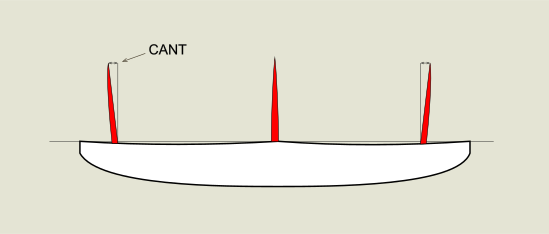 | |
| |
CANT is the degree of outward angle a rail fin is set in relation to the horizontal plane of the bottom of a board. Cant is measured in degrees. Fins set with less cant will offer more projection and less maneuverability. Conversely, fins set with more cant will offer less projection and more maneuverability. A cant of 6.5 degrees off a board's horizontal plane is common and offers a nuanced balance of projection and maneuverability. |
| |
|
| |
FIN FOILS
FOILS Surfboard fin foils are the shape and geometry of both sides of fins. Both sides of single fins and center fins in thruster configurations and the inside and outside surfaces of rail fins for twin fins, quads, thruster, and 2 + 1 configurations all have nuanced foils best suited for their design. Foils determine how water moves over the surface of fins. Foil configurations and geometry affect lift and drag and ultimately can be designed to yield particular and relevant performance features for fins. A functional and efficient fin will have different design features for different surfboard designs, surfers, and waves. Certain fin configurations and foils are ideal for small and moderate surf, marginal and clean conditions, bigger surf, or XXL surf. Some configurations and foils are universal and span several if not all designs, surfers, waves, and conditions. |
| |
|
| |
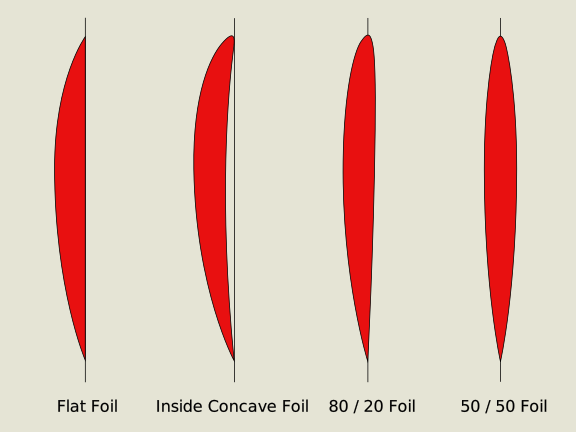 |
| |
|
| |
FIN FOIL CLASSES |
| |
|
| |
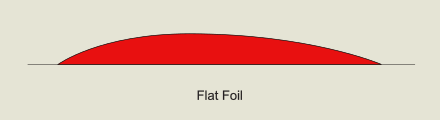 |
| |
|
| |
FLAT FOILS A flat foil features a flat inside surface and a convex outside surface. As a board moves through the water the flat inside surface is the high pressure side of the fin and the convex outside surface is the low pressure side of the fin. With the forward movement of a board through water the fins create lift providing the board with acceleration and speed. This performance feature distinctly separates boards with rail fins - twin fins, quads, and thrusters, from the neutral feeling of a single fin. The 2 + 1 fin configuration adds an element (feature) of lift and extra acceleration and speed to a single fin. A flat foil offers a balanced combination of projection, release and control across a wide spectrum of surfboards, surfers, waves, and conditions. The performance, stability, consistency, predictability, and reliability of flat foils make them the most common foil for twin fins, quads, and thrusters |
| |
|
| |
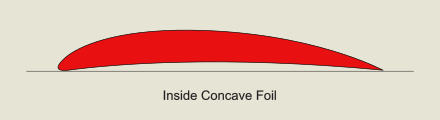 |
| |
|
| |
INSIDE FOILS An inside or concave foil features a concave inside surface and a convex outside surface. Inside foils are also know as "Vector" foils. The leading edge has a neutral asymmetrical foil. A concave surface over the same template will have more surface area than a flat foil. (Simple geometry.) The extra surface of an inside foil offers more lift. The extra lift is an asset in smaller, slower, flat faced waves at slower speeds. In better waves the extra surface area has more drag and can slow a board down particularly between turns. |
| |
|
| |
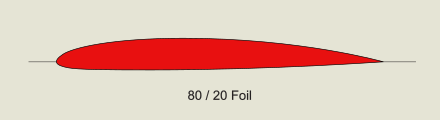 |
| |
|
| |
ASYMMETRICAL 80 / 20 FOILS An asymmetrical foil features the combined performance of a flatter high pressure inside surface and a symmetrical low pressure outside surface. This foil provides the lift and acceleration from the inside or high pressure side of the fin and the stability and the control of a convex symmetrical foil from the outside or low pressure side of the fin. The leading edge has a neutral asymmetrical foil. An 80 / 20 foil is common to trailers in quad configurations. This foil is also an intriguing option for twin fins. |
| |
|
| |
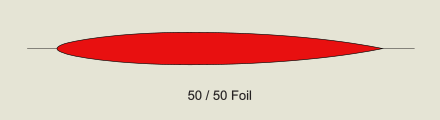 |
| |
|
| |
SYMMETRICAL 50 / 50 FOILS A symmetrical or 50 / 50 foil is used on all single fins and center fins. Both sides have a convex surface. Water flows equally on both sides creating a neutral, stable and controlled fin. A symmetrical foil is often used in quad trailers in quality or XXL waves for control and release in critical surfing. |
| |
|
| |
FIN CONSTRUCTION & MATERIALS
G10 fins are made with a high strength epoxy and fiberglass material called G10. G10 material is made by compressing multiple layers of fiberglass and epoxy resin under heat and pressure. G10 fins are stronger and lighter than solid fiberglass and can be foiled thinner. Their flex pattern has solid and quick spring back providing extra projection and excellent release through turns or going rail to rail speeding down the line. SOLID FIBERGLASS offer everything required for correct fin performance. They offer the fundamental performance features of acceleration, speed, projection, and maneuverability as well as firmly holding and releasing rail and fin. Solid fiberglass fins perform across the full spectrum of surfboard designs, surfers, and conditions. This material offers control and stability for powerful surfing in all conditions. They are built from solid fiberglass panels. Templates and foils will vary for designs and conditions. Solid fiberglass fins can have a consistent strong flex pattern and spring back with a thicker foil and a consistent softer flex and spring back with a thinner foil. The thicker stronger flex and spring back foil is well suited for and performs very well in powerful, quality, and bigger waves. The thinner softer flex and spring back foil performs well in less powerful, marginal, and smaller waves. RTM FINS or Resin Transfer Molded fins are made of fiberglass, polyester resin, and a hexcore honeycomb core. This material combination is designed to offer similar performance to solid fiberglass fins with less weight. Strategically placed fiberglass and carbon fiber reinforcements maintain a functional flex and spring back. RTM fins are the most flexible of common fin materials. The extra flex and softer spring back make an RTM fin an option in marginal conditions and moderate waves when the extra flex can add spring and acceleration to turns. |
| |
|
| |
LINKS to FIN TECHNOLOGY & FIN MANUFACTURERS
NVS G10 Fins NVS Fin Guide - Fin Technology Futures Fins Futures Fins - Finology True Ames Fins True Ames Fin Guide - Fin Technology |
| |
|
| |
< top of page > |
| |
|
| |
FIN DESIGNS, LAYOUTS & PERFORMANCE |
| |
|
| |
August 18, 2024 |
| |
|
| |
Fin configurations and fin performance vary by surfboard classes
and designs and by the fin's designs and their placement. Some fin
configurations are completely unique to some surfboard designs, yet
most will function and perform well with any design.
The primary fin configurations are single fins, 2 + 1s, twin fins, thrusters, and quads. Single fins and 2 + 1s are common to most longboard and mid length designs. Twin fins, thrusters, and quads are also employed on those designs with excellent results. However, twin fins, thrusters, and quads are most common to shortboards, semi guns, and XXL guns. Twin fins are the primary and preferred fins for Fish designs. Here is a comprehensive anatomy of fins. Contemporary and historical surfboard classes and surfboard designs and multiple fin configuration options offer surfers a vast spectrum of performance features not only from each configuration, but also by nuanced fin templates, dimensions, foils, placement, and juxtaposition to each other. Here is a brief description of various fin foils. |
| |
|
| |
FIN DESIGNS |
| |
|
| |
LONGBOARD SINGLE FINS Single Fins have been around as long as there has been fins on surfboards. They were the staple of the classic post World War II longboards. In the 1960s LB Single Fins evolved from nearly square D fins to life form Progressive fins to High Aspect flex fins. |
| |
|
| |
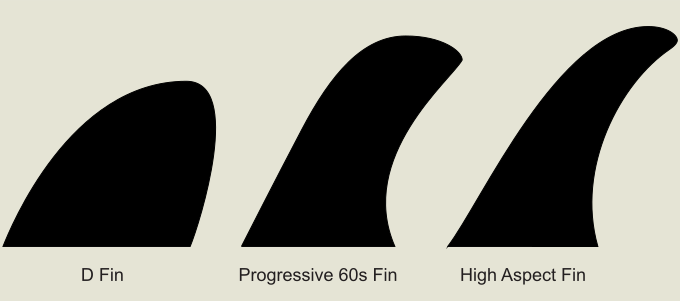 |
| |
|
| |
SHORTBOARD SINGLE FINS Single Fins were the primary fin configuration for shortboards at the beginning of the shortboard revolution in 1966 - 67. Neutral and High Aspect templates were common. Neutral fins were more pivotal. High Aspect fins had more flex and offered more acceleration, projection, and speed. |
| |
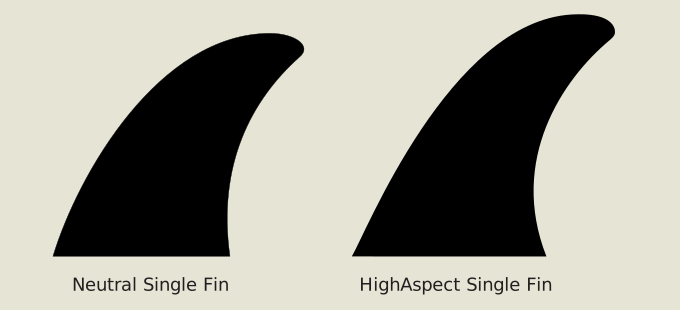 |
| |
|
| |
2 + 1 FINS 2 + 1 fins were introduced to early single fin shortboard designs to promote greater control and maneuverability. In the 1980s the 2 + 1 configuration was applied to emerging contemporary longboard and mid length designs. |
| |
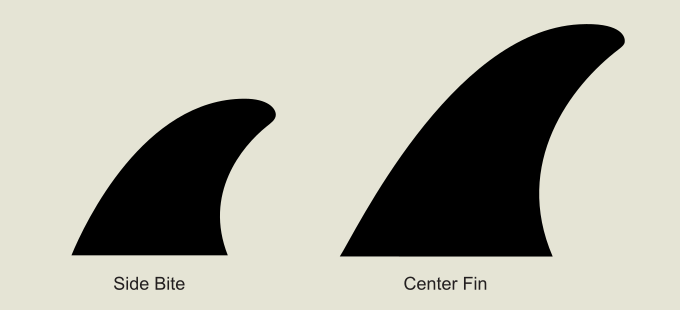 |
| |
|
| |
TWIN FINS Although Twin Fins date to Bob Simmons in the 1940s and were used quite functionally by brothers Nick and Bear Mirandon from La Jolla in the mid 1960s the configuration gained traction in the mid 1970s when surfed to great affect by Hawaiian Reno Abellira and Australian Mark Richards. Fish designs pioneered by Steve Lis and Jeff Ching featured Twin Keel Fins. |
| |
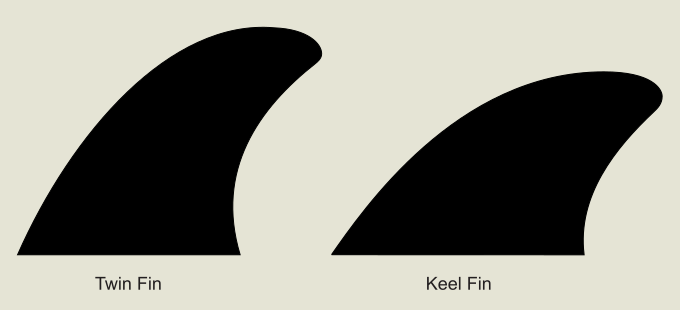 |
| |
|
| |
THRUSTERS The Thruster Fin configuration was pioneered by Australian Simon Anderson in 1981. The design offers superior control, stability, and predictability combining the acceleration, speed, and maneuverability of twin fins and single fins. The thruster configuration has been the primary fin configuration for decades. |
| |
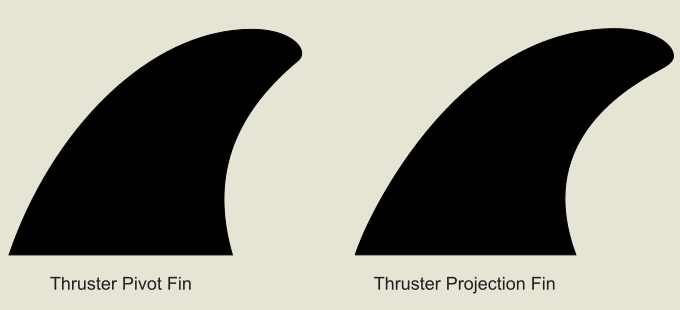 |
| |
|
| |
QUADS The Quad Fin configuration was introduced by Australian Glen Winton in 1982. The design is an adaptation and extension of the twin fin concept that reduces drag and increases acceleration and speed by eliminating the center fin. The primary quad configuration features a thruster like forward fin and a moderately smaller trailing fin. An evolving quad option, the Reverse Quad, features a larger trailing fin. This configuration is particularly efficient in heavy water and XXL conditions minimizing drag, eliminating cavitation, and maximizing control. |
| |
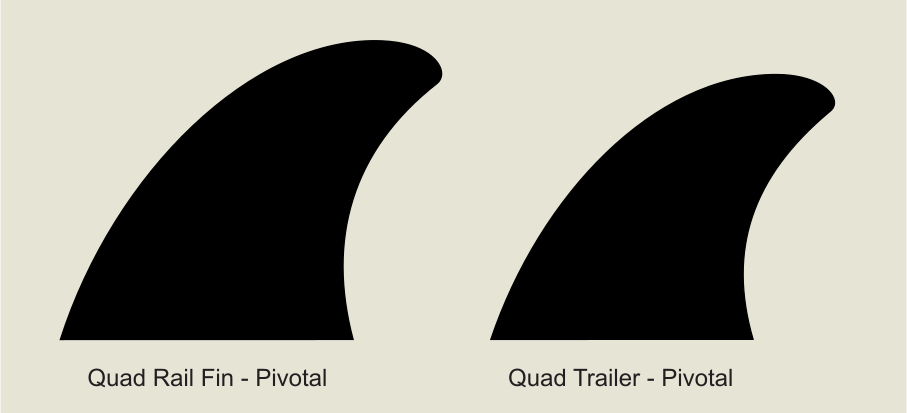 |
| |
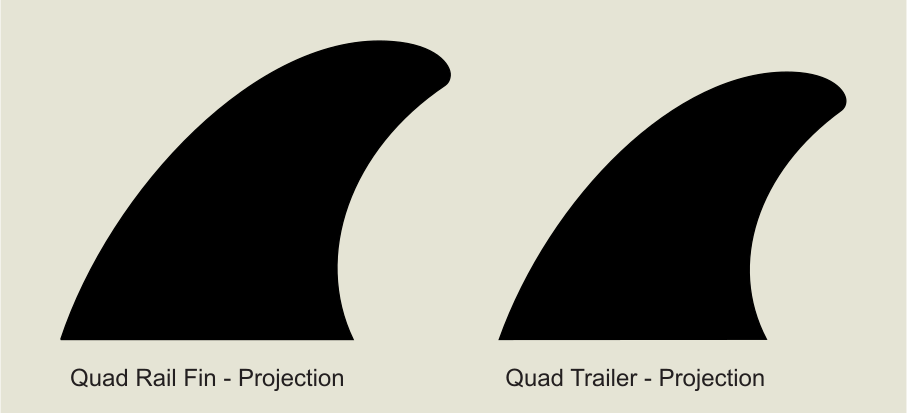 |
| |
|
| |
REVERSE QUADS An evolving quad option features a smaller forward rail fin and a larger trailing fin. Reverse quads are functional, effective, and efficient in all conditions. They particularly efficient in heavy water and XXL conditions minimizing drag, eliminating cavitation, and maximizing control. Templates may be pivotal or projection oriented, or a combination of pivotal and projection orientation. The dimensions, surface area, and foils for heavy water and XXL conditions are designed to maximize acceleration, speed, control, and predictability. Reverse quads are are a creative fin design equally functional and efficient for all waves and conditions. |
| |
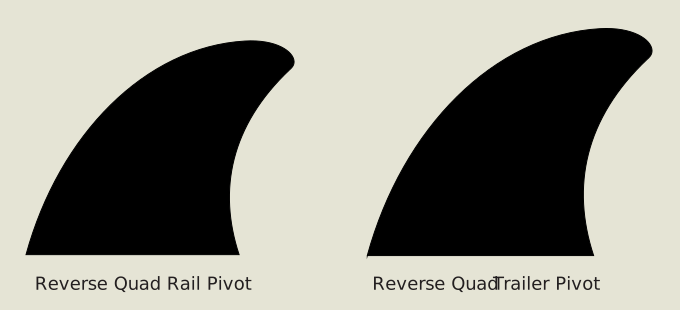 |
| |
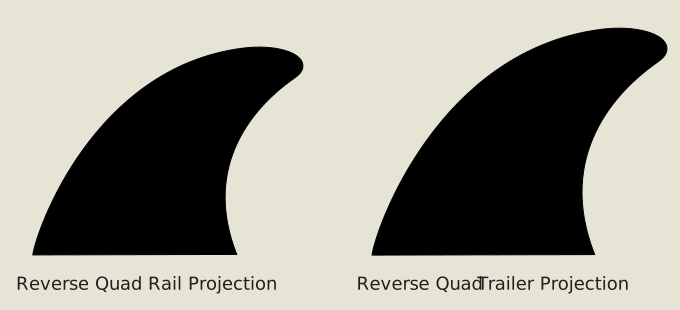 |
| |
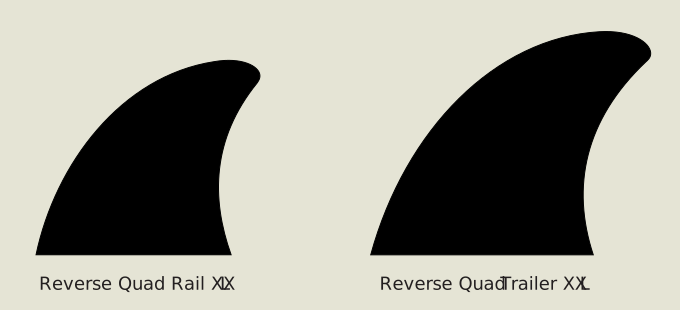 |
| |
|
| |
TWINZERS An often forgotten fin configuration is the Twinzer featuring a small fore fin referred to as a "canard" in front of a typical twin fin. The canard reduces turbulence, prevents cavitation, and adds stability and control to twin fin designs. The canards are generally 3" to 3 1/2" deep and the primary twin fins generally 5" to 5 1/2" deep. |
| |
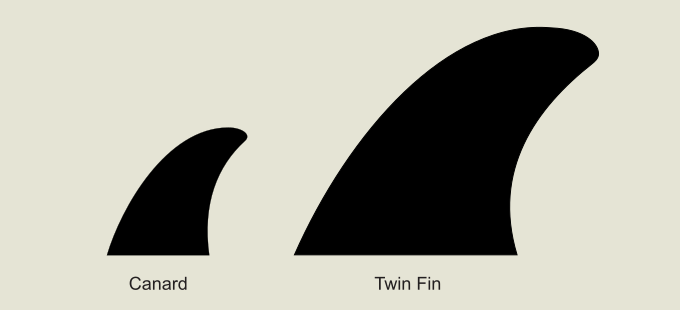 |
| |
|
| |
FIN LAYOUTS, PLACEMENT & PERFORMANCE |
| |
|
| |
LONGBOARD SINGLE FINS Single fins are pivotal by nature. The
absence of 2 + 1 side bites, twin fin, thruster, quad, or any rail
fin creates a single pivot point to turn a board from rail to rail.
Single fins create smooth arching down the line turns and are most
efficient when surfer, board, and wave are in sync with each other.
They were historically and currently the primary fin configuration
for classic LBs offering pivotal turns, stability and control in trim
and on the nose. LB single fins evolved from the D fin of the early
1950s and early 1960s featuring a nearly rectangular template to
Progressive fins designed for turns, trim, and nose riding in the
early to mid 1960s to the High Aspect Flex fins pioneered by George
Greenough in the mid 1960s. The D fins offered excellent stability
for trim and nose riding, however they were difficult to turn. The
Progressive fins offered the same stability in trim and on the nose
and introduced significant maneuverability. The High Aspect flex fins
were also equally efficient in trim and on the nose, but offered
substantially greater acceleration, projection, and maneuverability
and ultimately became the fin of choice for traditional classic
longboarding.
Single fin size and placement affect performance. D fins have equally long base and depth dimensions featuring a 9" to 10" base and are 9" to 10" deep. Without exception the trailing edge is placed very near the tail of a board. D fins best feature is stability in trim and on the nose. Progressive fins feature a moderate 7" to 8" base and a deep 9" to 10" full profile. Progressive fins are placed near the tail like D fins. They offer the same stability in trim and on the nose with greater maneuverability. High Aspect fins also feature a moderate 6" to 7" base, a deep 9" to 10" or deeper profile, and a flexible foil from base to tip. The solid base offers control in trim and on the nose and the flexible high aspect foil facilitates fluid rail to rail transitions and power and projection out of turns. High Aspect flex fins may be placed forward and aft to vary performance. Generally, further forward creates a more drawn out turn and further aft a more pivotal turn. |
| |
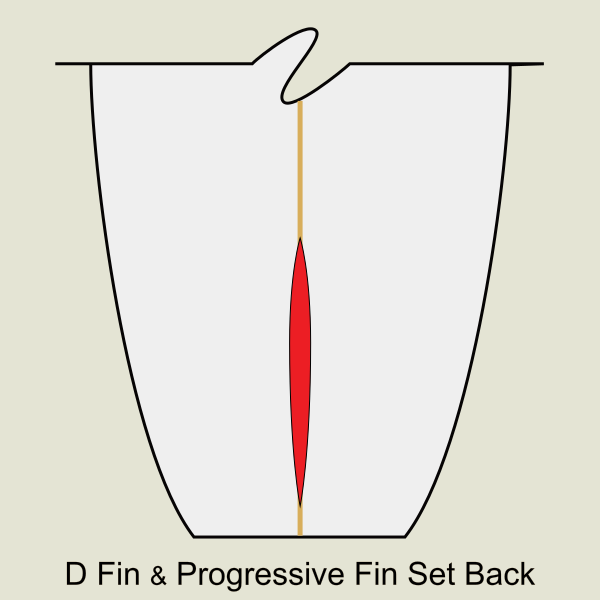
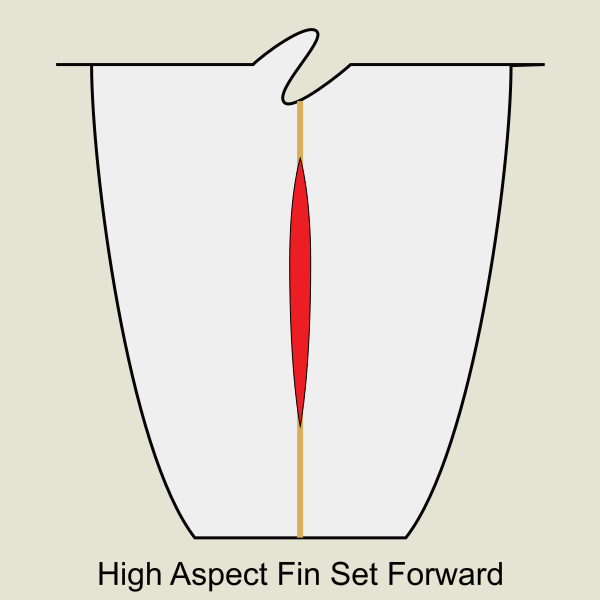 |
| |
|
| |
These images illustrate LB Single Fin placement. D fins and Progressive 60s fins are placed within an inch or two of the tail. High Aspect fins are placed approximately the length of the base or length of base plus a few inches from the tail. Placed further back High Aspect single fins will have a tighter turning radius. Placed further forward they will have more projection. |
| |
|
| |
SHORTBOARD SINGLE FINS Single Fins were also the original fin configuration for surfboards at the beginning of the shortboard revolution offering the same performance features as they did for classic longboards. Shortboard single fins featured Neutral and High Aspect templates and foils. Neutral fins were more pivotal. High Aspect fins evolved from Greenough's flex fins. They offered more acceleration, projection, and speed. Shortboard single fin templates resemble life form fins common to sea mammals and fish, such as dolphins, whales, and tuna. Common shortboard single fin dimensions are 5" base and 8" deep. Single fins remained common during the first decade of the shortboard revolution, but the evolution of surfing and surfboard design saw most surfers transition to 2 + 1s, twin fins, and ultimately thrusters and quads. |
| |
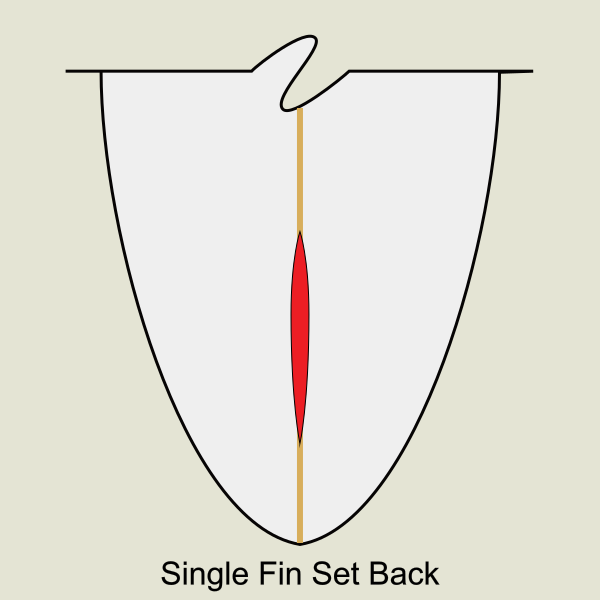
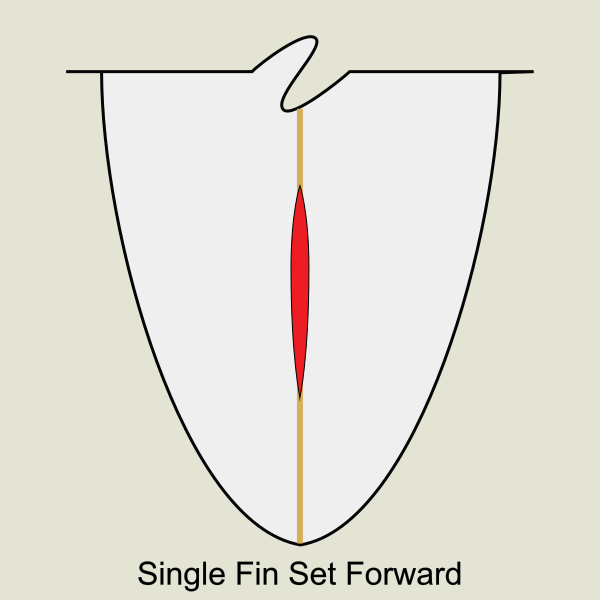 |
| |
|
| |
These images illustrate shortboard Single Fin placement. Single fins are pivotal by nature whether neutral or raked. Neutral templates are more pivotal than raked templates. Placed further back single fins will have a tighter turning radius. Placed further forward single fins will have more projection. |
| |
|
| |
2 + 1 FINS 2 + 1 fin configurations perform very much like single fins coupled with features of thrusters. The side bites offer substantial performance features. They offer more control, hold trim better in steep and critical waves, and provide greater projection and acceleration out of turns. The additional surface area of this configuration compared to a single fin allows shapers and surfers, if they chose, to use a smaller center fin as the rail bites provide or make up for the reduced size of the center fin with their surface area. This provides more acceleration and speed, better rail to rail transitions, and more maneuverability. The juxtaposition of the center fin and rail bites and the placement of the configuration also affect performance. The closer the trailing edge of the side bites to the leading edge of the center fin the more pivotal the board will turn. Separated further, the more down the line the board will turn. Additionally, the same configurations placed closer to the tail will be more pivotal and placed further forward from the tail will offer a longer arc and more projection. The combinations are nearly limitless and offer nuanced performance variations. |
| |
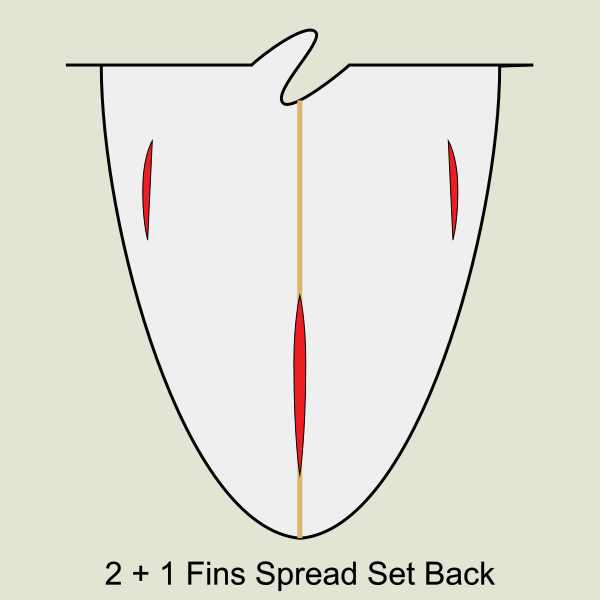
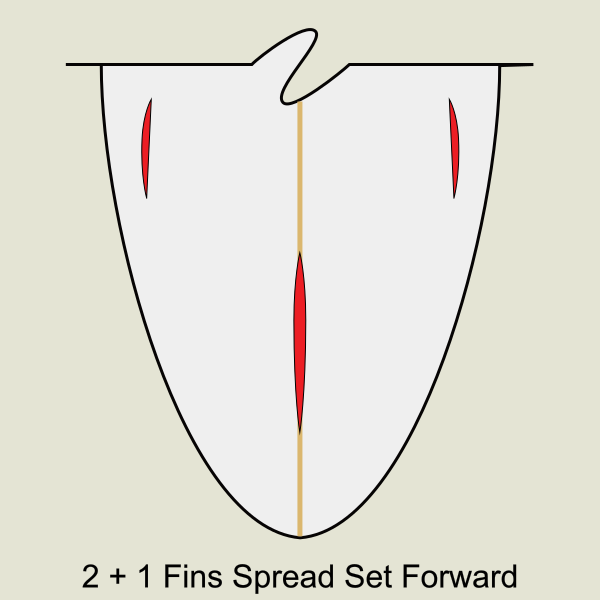 |
| |
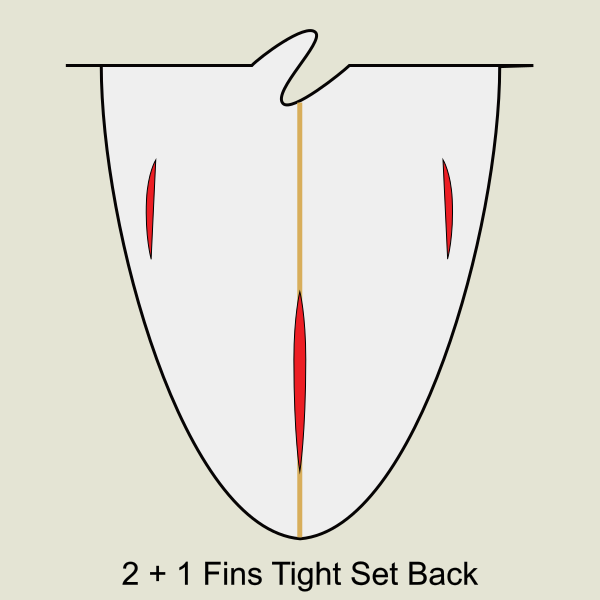
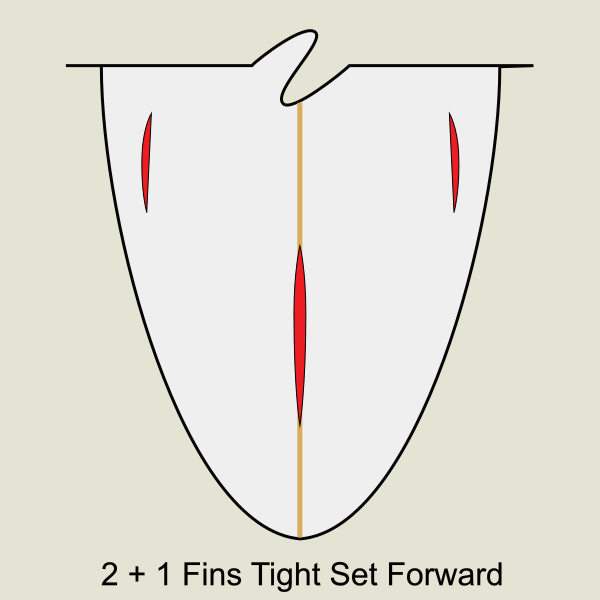 |
| |
|
| |
These images illustrate 2 + 1 fin placements. 2 + 1 fin sets can be clustered tight or spread further apart. Clustered tight they will be more pivotal. Spread further apart they will have more projection. Placed further back 2 + 1 fins will have a tighter turning radius. Placed further forward 2 + 1 fins will have more projection. |
| |
|
| |
TWIN FINS Twin fins are fast and loose. They are functional on a variety of surfboard classes and designs from shortboards to mid lengths to LBs to XXL Guns, and are uniquely suited to Fish designs. Twin fins are fast and loose because there is no center fin in their configuration reducing drag and amplifying maneuverability. Positioned near the rails, twin fins create more lift than single fins and naturally and organically transfer energy into rails. Twin fins are fast down the line, loose rail to rail, and can create a variety of tight and projected turns. Twin fin templates are similar to thruster and quad templates. Fins with less rake are pivotal by design and fins with more rake project by design. Common twin fin dimensions are larger than thrusters and quads featuring 4 5/8" to 4 7/8" bases and are 5 1/4" to 5 1/2" deep. Of note, Fish designs are a twin fin design and can feature common twin fin templates as well as keel type twin fins. Keel fins are generally 5" to 5 1/4" deep with a 7 1/4" to 7 3/4" base. Fin placement depends on the overall length and the tail width of a board. Generally, further aft will yield more pivotal turns and further forward will yield more projection out of turns. Twin fins offer excellent acceleration, projection, speed, and maneuverability. |
| |
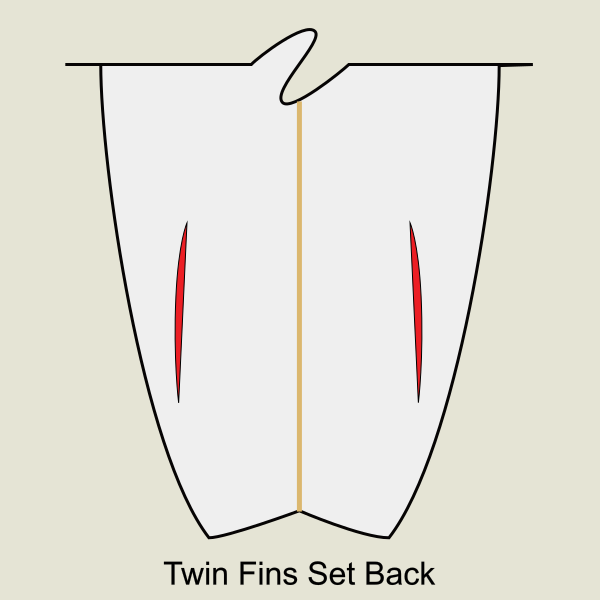
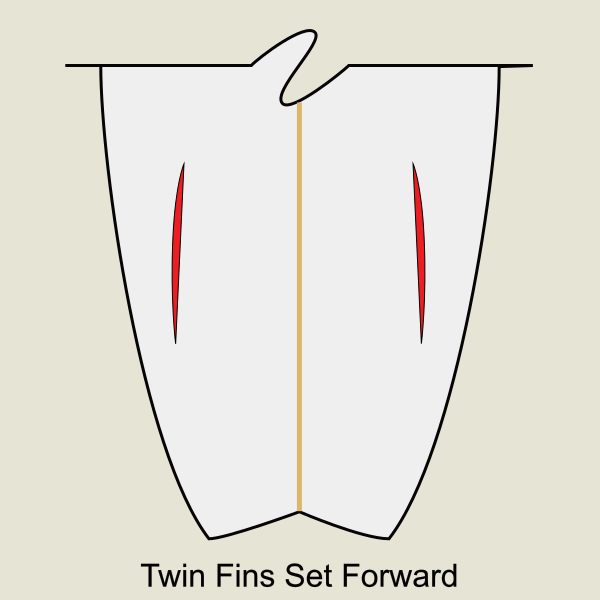 |
| |
|
| |
These images illustrate Twin Fin placement. Twin fins are fast and loose. Placed further back twin fins will have a tighter turning radius. Placed further forward twin fins will have more projection. |
| |
|
| |
THRUSTERS Thruster configurations are three equal size fins
working together to provide a board with exceptional performance
features. They offer acceleration, speed, maneuverability, control,
and stability. Twin fins were the forerunner and set the stage for
thrusters. Their powerful rail fins offered acceleration, speed, and
tight radius turns. Twin fin rails and fins combined in a manner that
performed radically different than single fins and 2 + 1s fins.
Thrusters combine the powerful arcs of twin fins with a center fin
offering greater stability, control, and predictability to a board's
performance.
Thruster fin designs vary by templates, dimensions, and foils. Templates vary primarily by surface area and rake. Fins with less rake will be more pivotal or neutral. A fin with more rake will offer more projection. Thruster fins for boards with wider and thicker tails can be deeper and have more surface area to maintain control and stability. Thruster fins for boards with narrower and thinner tails can be shallower with less surface area as less fin is required for control and stability. All fins cause drag. Drag slows any object down. Keeping fin dimensions to a minimum keeps drag in surfboard performance to a minimum. The rail fins and center fin in many thruster sets are the same size, although many thruster sets feature a slightly smaller center fin. The smaller center fin loosens the board without compromising stability and control. Common thruster fins have a 4 3/8" base and are 4 1/2" to 4 5/8" deep. Foils are primarily flat foil for rail fins and symmetrical 50/50 foil on the center fin. Another rail fin foil option is an inside foils or vector foil a nuanced concave foil on the inside surface of the rail fins. |
| |
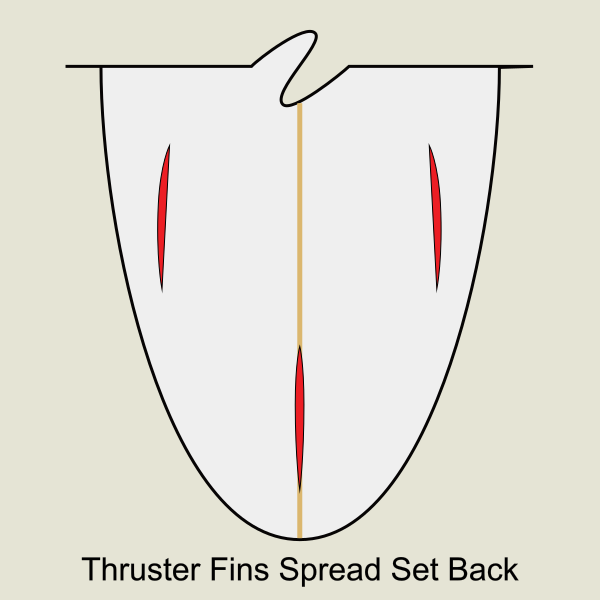
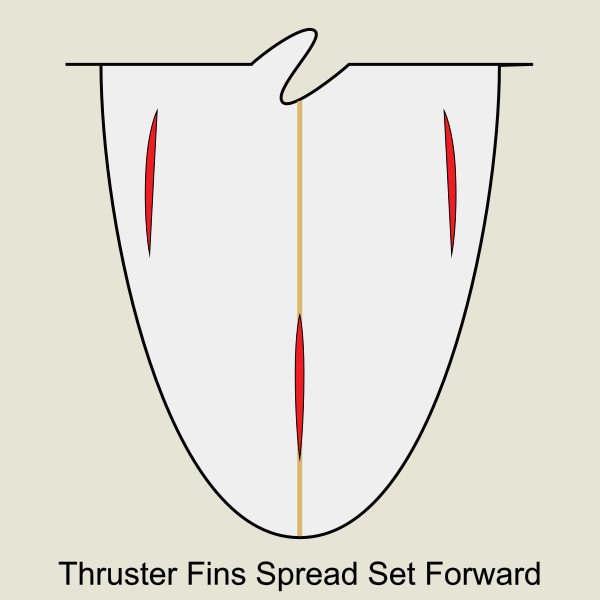 |
| |
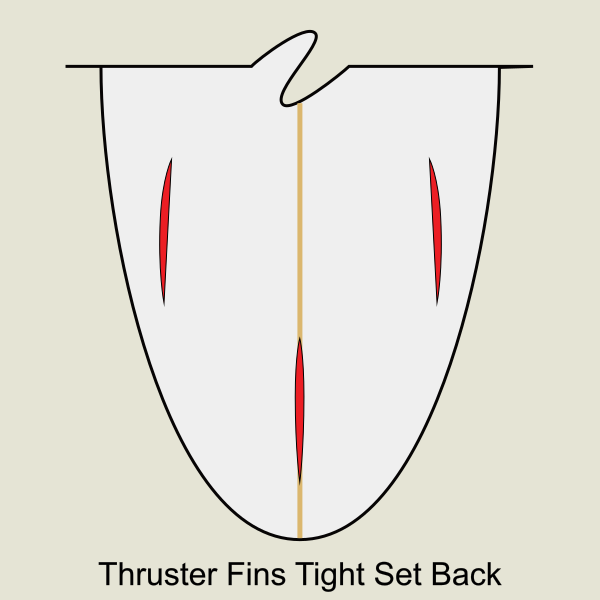
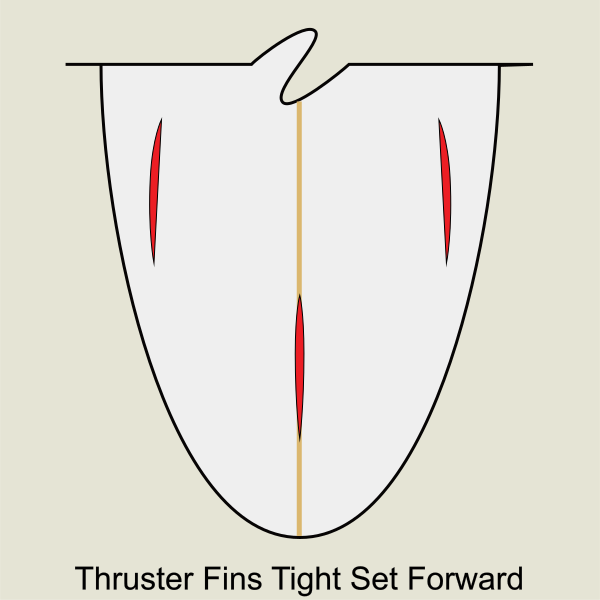 |
| |
|
| |
These images illustrate Thruster fin placements. Thrusters can be clustered tight or spread further apart. Clustered tight they will be more pivotal. Spread further apart they will have more projection. Placed further back thrusters will have a tighter turning radius. Placed further forward thrusters will have more projection. |
| |
|
| |
QUADS Quad configurations feature forward rail fins and trailing rail fins. The forward fins are nearly the same as thruster rail fins. The trailers are slightly smaller. Templates may be neutral, pivotal, or projection oriented. Common forward fins have a 4 1/2" base and are 4 1/2" to 4 5/8" deep. Common trailing fins have a 4" base and are 4" deep. Forward fin foils are primarily flat foils. Trailers may be flat sided foils for more lift, acceleration, and speed or 80/20 foils for less drag and more control and stability. Quads are very responsive and accelerate quickly with minimum effort. They excel in small fun surf, fast down the line surf, critically steep and hollow surf, and XXL surf due to their combined bases near the rail and their exceptional speed. They perform exceptionally well in critical take offs, on rail, and have speed to burn in barreling sections. |
| |
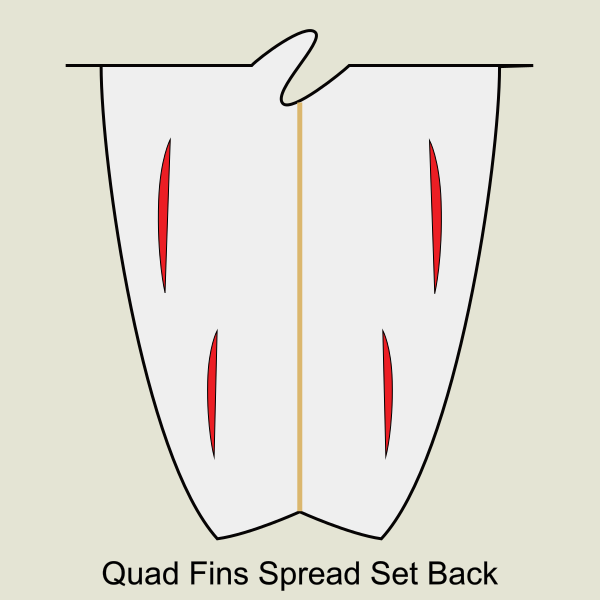
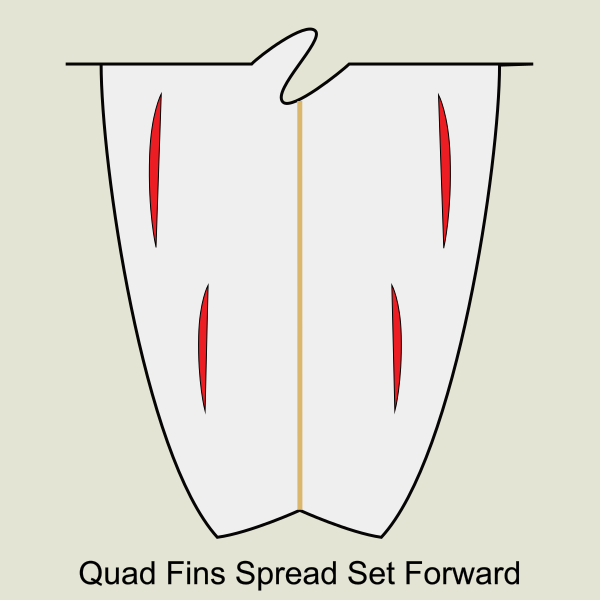 |
| |
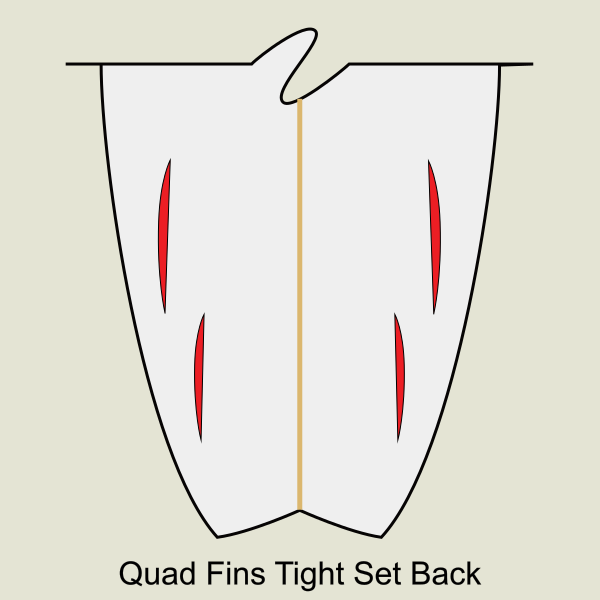
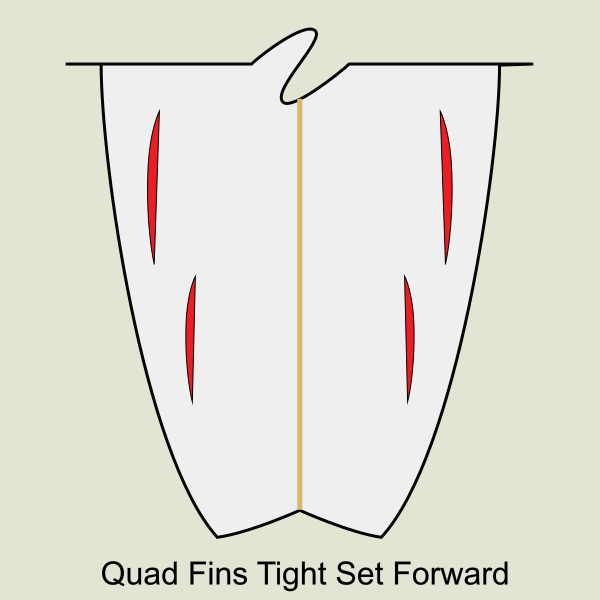 |
| |
|
| |
These images illustrate Quad fin placements. Quads can be clustered tight or spread further apart. Clustered tight they will be more pivotal as the two fins have a narrower combined base. Separated moderately the two fins have a longer combined base creating significant power, projection, acceleration, and speed. Spread further apart they will be more pivotal again as the base of two fins become separated and function independently. Independent of proximity to each other quads placed closer to the tail will have a tighter natural turning radius. Placed further forward quads will have more projection. Reverse quad fin placement considering the larger trailing fin can be further forward than traditional quad fin placement. |
| |
|
| |
REVERSE QUADS An evolving quad option features a smaller forward
rail fin and a larger trailing fin similar in function, effect, and
efficiency to Twinzers. Reverse quads are particularly efficient in
heavy water and XXL conditions minimizing drag, eliminating
cavitation, and maximizing control. Reverse quad XXL templates may be
neutral, pivotal, or projection oriented. Common forward or rail fins
for the reverse quad configuration are 4 1/8" deep and have a 4 1/8"
base. Common trailing fins have a 4 3/8" deep and are 4 3/8" base.
Forward rail fin foils for heavy water and XXL conditions are 60/40.
Trailer fins feature a symmetrical 50/50 foil. The dimensions,
surface area, and foils are designed to maximize acceleration, speed,
control, and predictability in heavy water and XXL conditions.
Reverse quads are equally functional and efficient for all around conditions offering the same performance features. Similar to the heavy water XXL fins templates for all around reverse quads may be neutral, pivotal, or projection oriented. Common forward or rail fins for the reverse quad configuration are 4 5/16" deep and have a 4 5/16" base. Common trailing fins are 4 9/16" deep and have a 4 9/16" base. Forward rail fin foils for all around conditions are flat or 80/20. Trailer fins feature a 60/40 or 80/20 foil. The dimensions, surface area, and foils are designed to generate acceleration, speed, control, and predictability in all conditions. The layout and position of reverse quad configurations vary as they do with all fin configurations. Clustered close together with the trailer close to the forward fin the fins feature a combined base of two fins increasing acceleration, speed, and projection. The tight proximity can also facilitate a pivotal turn. Spread moderately further apart creates a longer combined base maximizing acceleration, speed, and projection. Spread even further apart the fins become more independent and the natural arc of turns has a tighter radius and is more pivotal. All configurations offer more projection placed further forward and be more pivotal placed further aft. |
| |
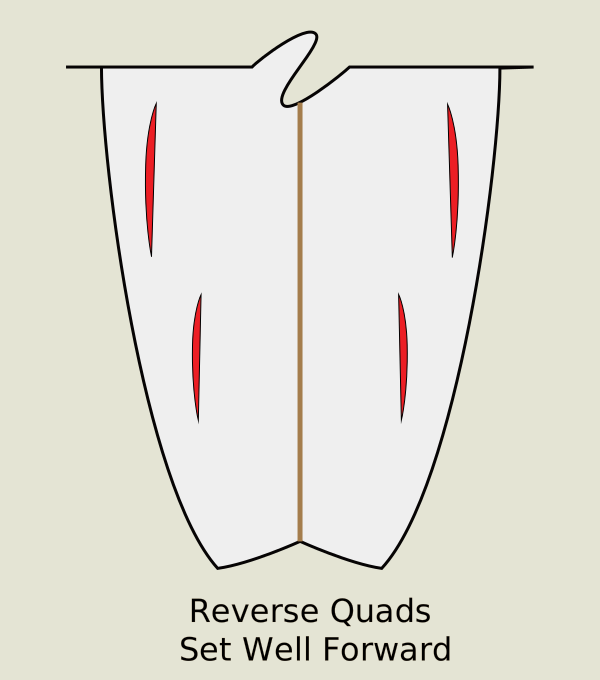
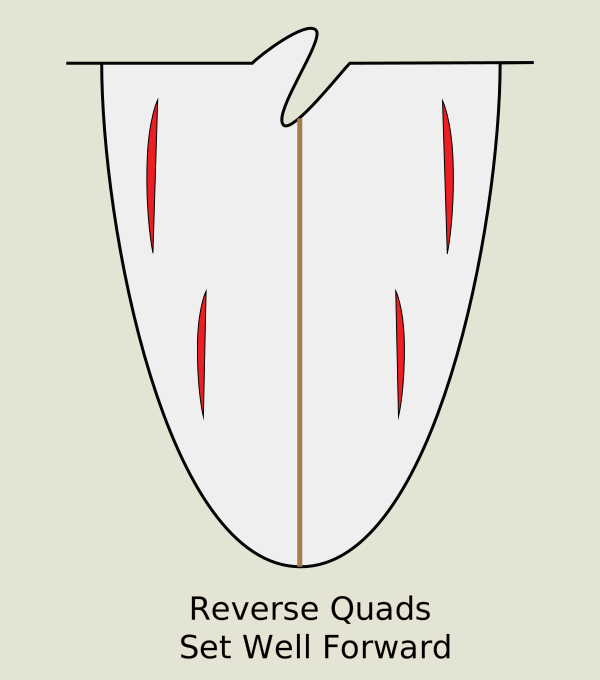 |
| |
|
| |
These images illustrate Reverse Quad fin placement. Considering the larger trailing fin reverse quad fin placement can be further forward than traditional quad fin placement. Reverse Quads just like traditional Quads can be clustered tight or spread further apart. Clustered tight they will be more pivotal as the two fins have a narrower combined base. Separated moderately the two fins have a longer combined base creating significant power, projection, acceleration, and speed. Spread further apart they will be more pivotal again as the base of two fins become separated and function independently. Independent of proximity to each other reverse quads placed closer to the tail will have a tighter natural turning radius. Placed further forward reverse quads will have more projection. |
| |
|
| |
ASYMMETRICAL QUADS Asymmetrical quads position the fins differently on the toe and heel side of a board to maximize specific performance features for toe and heel side surfing. Templates, dimensions, and foils are generally the same as quad foils designed for fundamental performance features. However, asymmetrical fin design features can vary as well matching templates, dimensions, and foils to perfomance features. |
| |
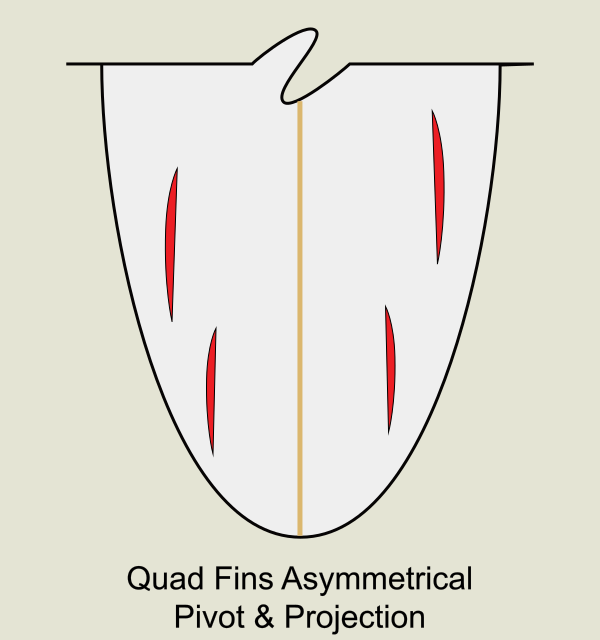
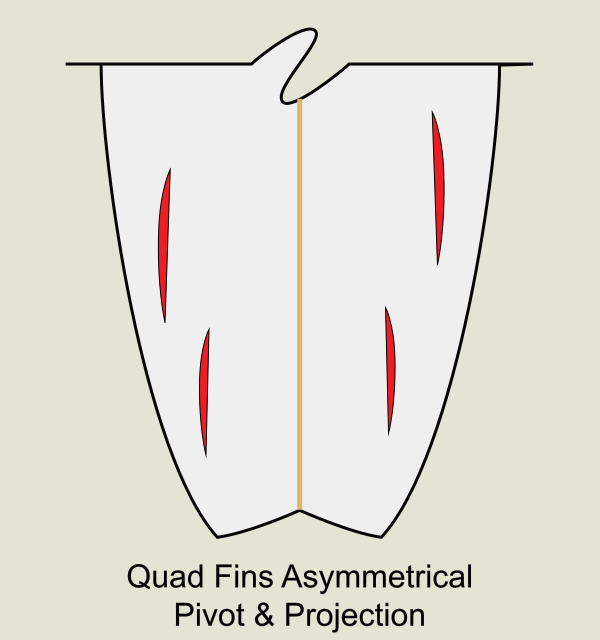 |
| |
|
| |
These images illustrate asymmetrical quad fin placements. Asymmetrical quads position the fins differently on the toe and heel side of a board to maximize performance features for toe and heel side surfing. Quads can be clustered tight or spread further apart and can be placed further forward or further aft. Clustered tight they will be more pivotal as the two fins have a narrower combined base. Separated moderately the two fins have a longer combined base creating significant power, projection, acceleration, and speed. Spread further apart they will be more pivotal again as the base of two fins become separated and function independently. Independent of proximity to each other quads placed closer to the tail will have a tighter natural turning radius. Placed further forward quads will have more projection. |
| |
|
| |
TWINZERS Twinzers feature a twin fin and a fore fin referred to as a canard. The twin fin in the twinzer configuration is positioned the same as on a pure twin fin dependent on the board's dimensions. The canard is offset towards the rail approximately 1" overlapping the twin fin by 1/4" to 1/2". The twin fin's depth may vary from 5" to 5 1/2"and the canard 3" to 3 1/2" deep. The canard reduces turbulence, prevents cavitation and adds stability and control to twin fin designs. |
| |
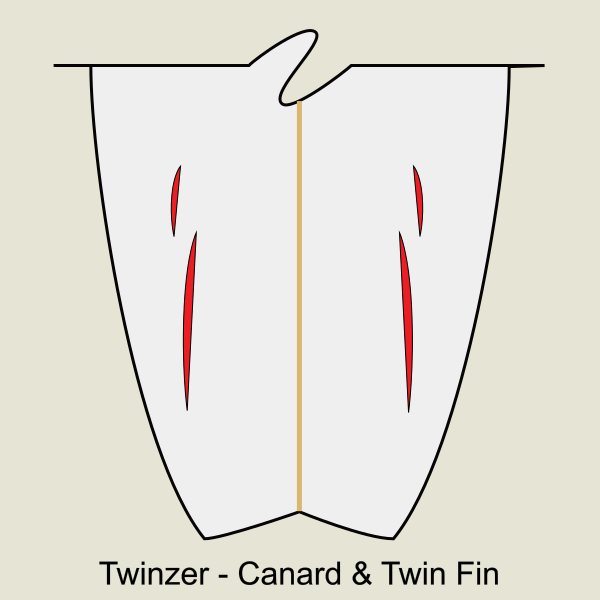 |
| |
|
| |
This image illustrates Twinzer fin placement. The twin fin is positioned as a typical twin fin, generally 1 3/4" off the rail with toe aligned a few inches off the nose. Distance from the tail is determined by the length of the board. The canard is offset about 1" and overlaps the twin fin about 1/4" to 1/2". Twinzers placed closer to the tail will have a tighter natural turning radius. Placed further forward twinzers will have more projection. |
| |
|
| |
ASYMMETRICALS Asymmetrical fin designs can feature many designs, layouts and configurations. They can feature combinations of single fins, twin fins, thrusters and quads. These images feature quads on one rail and twin or thruster or quad without a trailer on the other rail. The positioning and juxtaposition of the fins can be varied for performance features. The rail with the quads offers maximum power, projection and acceleration. The rail with twin or thruster or quad without trailer offers maximum pivotal maneuverability. Both of these rail and fin combinations offer a wide range of horizontal and vertical angles out of turns. Creative and imaginative combinations can be designed for venues, toe side and heel side turns, and surfer preferences. |
| |
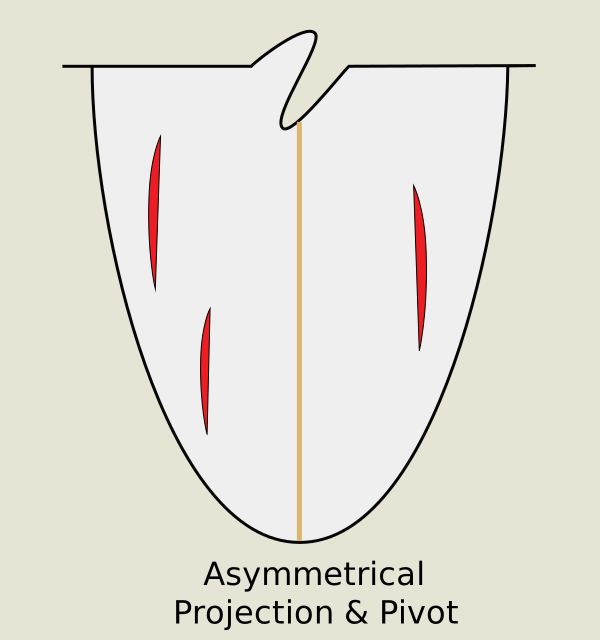
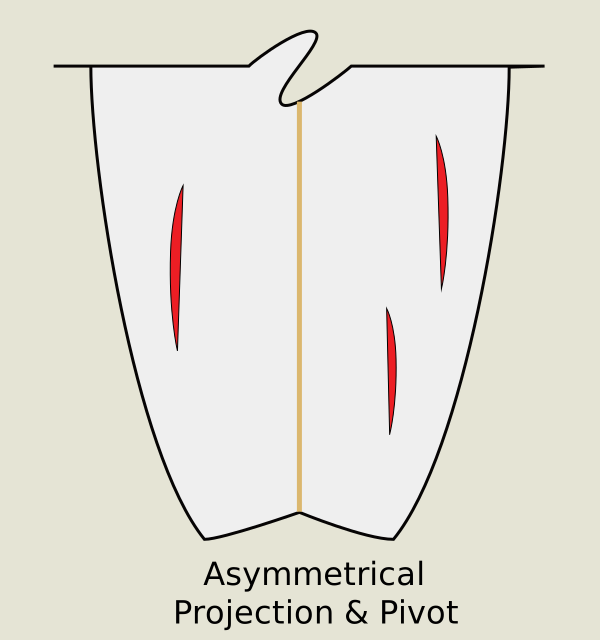 |
| |
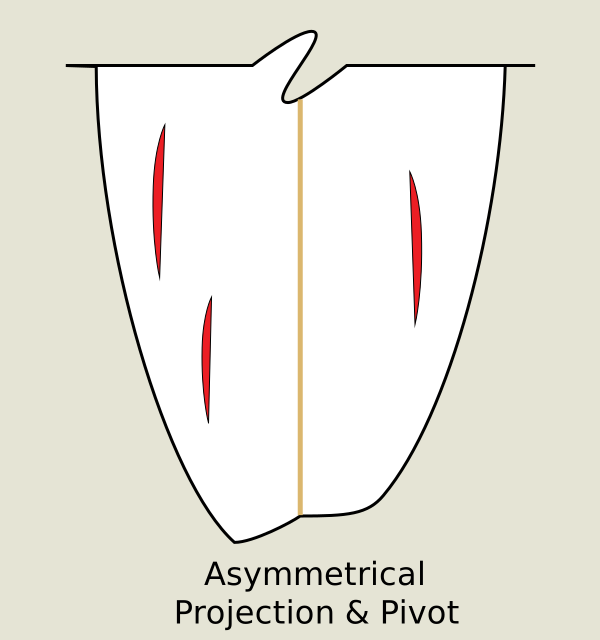 |
| |
|
| |
These images illustrate Asymmetrical fin placement. One rail features a quad layout and the other rail features a twin or thruster or quad without a trailer. The rail with the quad layout offers maximum power, projection, and acceleration. The rail with twin or thruster or quad without trailer offers maximum pivotal maneuverability. |
| |
|
| |
LINKS to FIN TECHNOLOGY & FIN MANUFACTURERS
NVS G10 Fins NVS Fin Guide - Fin Technology Futures Fins Futures Fins - Finology True Ames Fins True Ames Fin Guide - Fin Technology |
| |
|
| |
< top of page > |
| |
|
| |
CLOSE TOLERANCE SHAPING |
| |
|
| |
February 14, 2024 |
| |
|
| |
Close tolerance shaping is one of the key features of the highest
quality polyurethane core polyester skin surfboards. One of the great
features of the contemporary very light, close tolerance, molded
polyurethane surfboard blank is the higher density foam near the deck
and bottom of the blank and the lower density foam of the core. When
employed correctly this feature makes a very high strength to weight
ratio surfboard. In the 20 years from 1985 to 2005 Clark Foam's
strength to weight ratio increased dramatically in part due to a wide
variety of close tolerance blanks and an extensive rocker program
across all classes of surfboards. There's always the potential of
substandard inferior quality surfboards caused by shaping machines
machining too deep into blanks or shaping too deep into blanks with
hand tools due to using blanks that do not feature deck rockers that
mimic or approximate the surfboards deck rocker. This is referred to
as over shaping. Over shaping, particularly on the deck, compromises
the principle of close tolerance shaping and the physical properties
of the deck by shaping through the higher density skin and into the
lower density core. Over shaping polyurethane polyester surfboards by
machine or with a planer yields a surfboard with a short performance
and durability lifespan. Additionally, over shaping yields not only a
weaker surfboard with diminished physical properties, but also a
heavier board as the lower density core foam absorbs notably more
resin in the laminating process.
Over shaping is such a significant issue in polyurethane polyester surfboards. It's a problem that existed long before CNC shaping machines. As noted, the nature of molded polyurethane surfboard blanks includes higher density foam on the skin and near the surfaces of the top and bottom of a blank with decreasing density towards the core of a blank. Whether machine shaped or hand shaped poor blank selection, non aligned rockers, and inadequate stringers or improper stringer glue ups are core contributors to over shaping. It is essential that the deck rocker of a design mimics the deck rocker of a blank in a manner that maximizes the physical properties of the deck. Gordon "Grubby" Clark at Clark Foam was constantly focused on the physical properties of polyurethane foam surfboard blanks and PU / Poly surfboards. His observations coupled with critical thinking initiated the concept of close tolerance shaping. Grubby introduced multiple blank molds, foam densities, stringer options, and a robust custom rocker program. US Blanks is equally committed to close tolerance shaping. They maintain and expand an extensive variety of blanks, densities, stringers, and rockers. The maximum density of a polyurethane blank is at the skin. The density decreases in the core of the blank. The deeper the finished shape from the skin of a blank the more the physical properties of the blank or core of a board are compromised. This is particularly a problem for the deck of a board due to the constant paddling and surfing impacting the deck. An appropriate blank and correct deck rocker with corresponding deck rockers of surfboard and blank are fundamental to maximizing the physical properties of the deck of a PU / Poly surfboard. It is essential for shapers to design custom deck rockers for blanks that match the deck rockers of their designs. CLOSE TOLERANCE SHAPING - BOARD INDEXED in BLANK 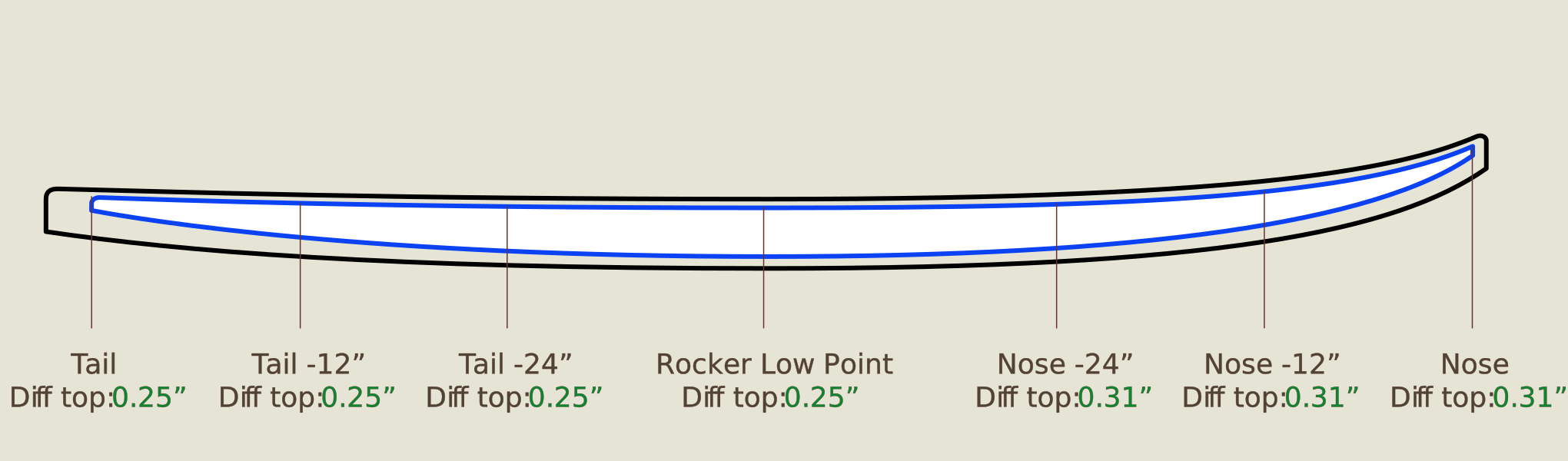
This board when aligned or "indexed" in this blank fits close to the deck of the blank from the nose to tail of the blank 0.25" from the deck from tail to wide point with maximum depth of milled deck 0.31" near the nose. The entire deck of this board is a close fit to the deck of the blank and is finished in the higher density foam near the skin of the blank maximizing the physical properties of the board's deck. Zoom view OVER SHAPING - BOARD INDEXED in BLANK 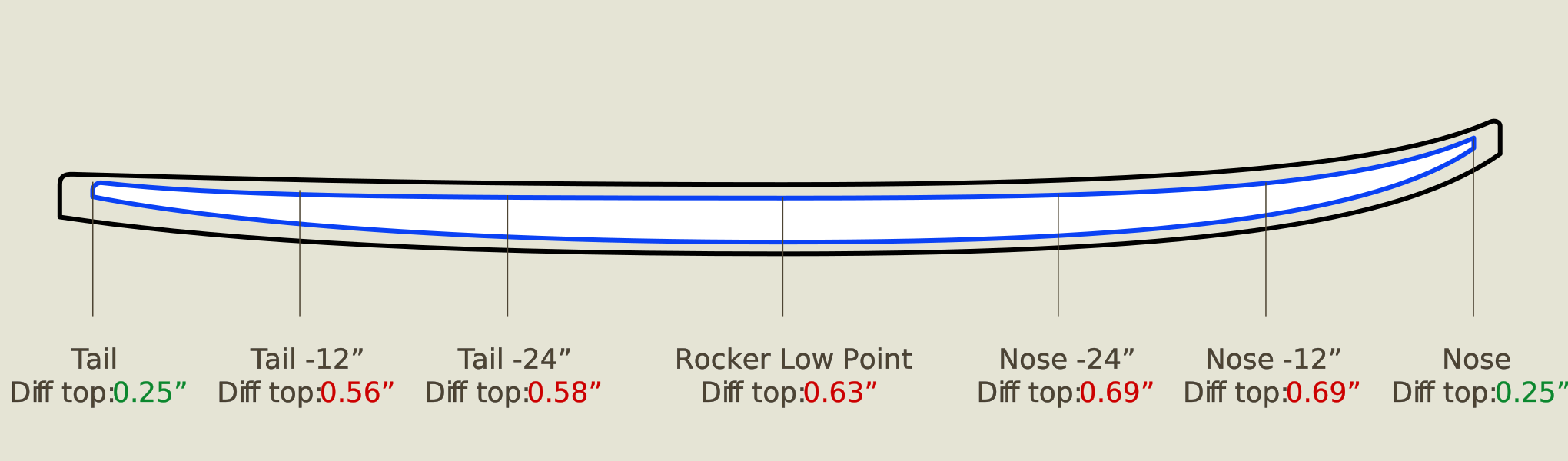
This board when aligned or "indexed" in this blank fits close to the deck of the blank in the nose and tail 0.25" from the surface of the blank. The deck of the board at the wide point is 0.63" from the surface of the blank. The blank in this critical area of the deck of the board is milled notably too deep severely compromising the physical properties of the board's deck. Zoom view Correct blank selection, correct custom deck rockers, appropriate foam densities, and stringer selection are the key features and the foundation of close tolerance shaping. Close tolerance shaping is a crucial component of high quality custom surfboards. |
| |
|
| |
< top of page > |
| |
|
| |
FLAT DECKS |
| |
|
| |
July 3, 2019 |
| |
|
| |
Flat decks are an intriguing alternative to the classic crowned
decks common to contemporary shortboards. Prior to the development of
the low volume - well rockered Glass Slippers of the early 90s, flat
decks were very common. Dick Brewer's shapes were the finest
execution of this design. Their flat decks were an essential feature
in establishing a crisp profile or foil from nose to tail.
The classic flat deck designs of the 70s and 80s featured primarily convex bottoms. The classic glass slipper featured concave bottoms. When we combine a flat deck with a concave bottom we're maximizing volume at and near the rails. This produced a relatively stiff board that didn't go rail to rail with ease. Concave bottoms contours and their performance features were here to stay so surfers and shapers gravitated to crowned decks of varying degree to facilitate rail to rail transitions which are essential and at the core of shortboard performance. This is an epic 9' 6" Dick Brewer XXL Gun. The board has a flat deck and very crisp foil. It was a reminder of a great design feature. This board was inspiration to explore flat deck designs and introduce them as a design option for our boards. 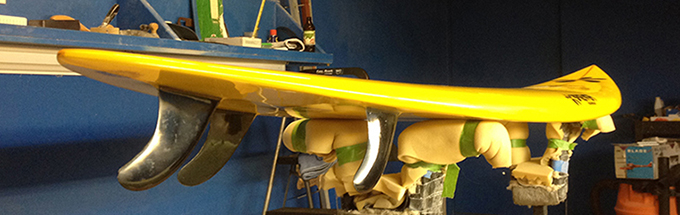 |
| |
|
| |
9' 6" x 19 1/4" x 3" 2004 Dick Brewer XXL Gun |
| |
|
| |
What do flat decks bring to our design resources? The most
obvious features is the additional volume it brings to a shape when
all other variables are held constant. The deck is simply fuller side
to side thus adding volume. See illustration - black profile is flat
deck - red profile is crown deck.
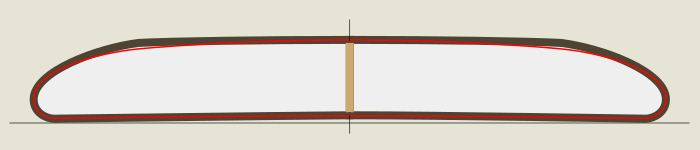
This image illustrates the extra volume in a flat deck compared to a crowned deck when their thickness is equal. The volume of the flat deck board is 32.5 Liters. The volume of the crowned deck board is 31.5 Liters. Flat decks also add an element of stability to a board. A deck with more volume towards the rail will not tip or roll side to side, or rail to rail, as easily as a classic crowned deck which is thicker at the stringer and thinner in the rails. How can we effectively integrate flat decks into contemporary designs ? That will vary by designs, venues, conditions, and surfers. When increased volume and stability are the primary design considerations simply redesigning the deck from crown to flat will yield a strong paddling, wave catching, stable, speed generating, and speed maintaining board. These performance features are an asset for many surfers and conditions - boards for larger surfers, older surfers, or surfers who are transitioning from mid range boards to short boards all of whom could benefit from more volume in their boards, boards for waves with marginal energy where extra volume will help generate and maintain speed and ultimately maneuverability, and boards for XL and XXL waves where extra volume and stability are essntial to paddling mobility, wave catching, and stability and flow in heavy water conditions. When performance is the primary design consideration, flat deck designs offer excellent and unique performance features in moderate and lower volume designs. Such flat deck boards have equal volume as crowned deck boards, but feature a thinner profile combined with equal rail volume. These design features yield a thinner board than an equal volume crowned deck board. These thinner flat deck boards are a very responsive and stable design. A flat deck board with equal volume to a crowned deck board has reduced thickness to achieve that same volume. Reducing flat deck volume to equal crown deck volume by thinning a board can yield a very well tuned high performance board. See illustration - black profile is flat deck - red profile is crown deck. 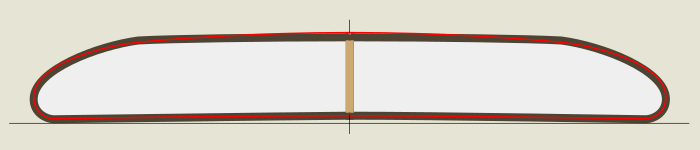
This image illustrates the reduced thickness of a flat deck required to yield equal volume as a crowned deck. The volume of both boards is 31.5 Liters. The stable nature of a flat deck design offers yet another very functional design option. Reducing the volume even further can yield a design that combines the stable feel of a flat deck with the performance we associate with a crowned deck. See illustration - black profile is flat deck - red profile is crown deck. 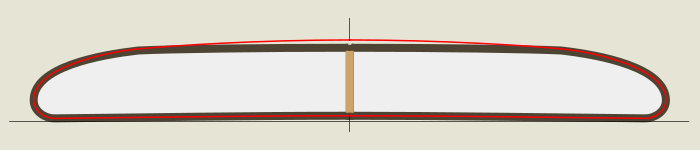
This image illustrates reducing the thickness of a flat deck board to yield the same rail volume as a crowned deck board. The volume of the flat deck board is 29.5 Liters. The volume of the crowned deck board is 31.5 Liters. The thickness of the flat deck board is 2 1/4". The thickness of the crowned deck board is 2 3/8". Flat deck designs offer unique performance features. The design is functional in all waves and conditions. They are particularly well suited for XXL waves and XXL guns. The extra volume of these designs are a great asset for the performance demands of heavy water and XXL waves and conditions. |
| |
|
| |
< top of page > |
| |
|
| |
LITERS as a DESIGN VARIABLE |
| |
|
| |
January 23, 2023 |
| |
|
| |
A liter is a unit of volume. In surfboard design liters are a
useful component that defines the volume of a board. Historically, a
surfboard's dimensions - length, width, and thickness - have been the
primary elements to describe the size of a board. Although these
primary dimensions offer considerable insight into the performance of
a surfboard they don't accurately measure the volume of a board. It's
critically important to remember that the major elements of design -
rockers, profiles and foils, outlines, rails, bottom contours, and
fins - are the primary determining factors in the performance of a
surfboard. Volume measured in liters in surfboard design offers an
additional and very useful point of reference to a design.
Prior to the use of CNC software in surfboard design, volume was quite difficult to calculate. Surfboard design software accurately calculates the volume of a board. Considered with length, width, thickness, the distribution of volume, the foil, the other primary elements of design, and the surface geometry of a board, the volume of a design measured in liters helps shapers and surfers have a clear idea of how well tuned a board is for any surfer. |
| |
|
| |
< top of page > |
| |
|
| |
MID LENGTH & EGG DESIGNS |
| |
|
| |
November 24, 2020 Updated July 26, 2026 |
| |
|
| |
OVERVIEW
The Magic Carpets of the late 60s and early 70s, that era's performance shortboards, have reemerged as today's Mid Length designs. Their performance and versatility make them one of the most popular designs in surfing. The evolution of these designs offers very user friendly surfboards for all skill levels of surfers. The same mid length board can be a high performance design and a stable and mellow cruiser depending on the surfer. Evolving mid length designs have become as unique as the demography of surfing is diverse. Mid Length designs are practical, versatile, performance capable, and user friendly. |
| |
|
| |
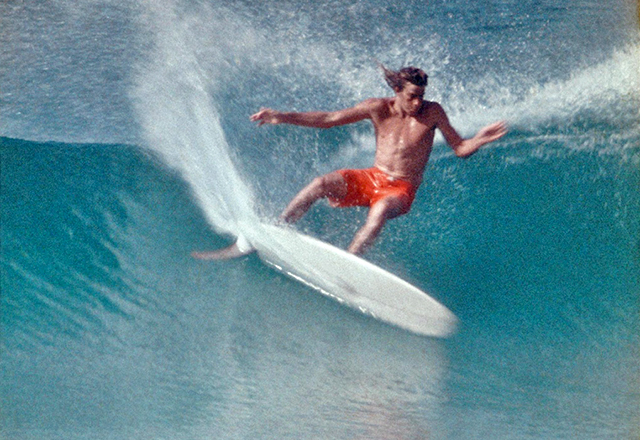 |
| |
Michael Peterson early 70s Shortboard - 2020s Mid Length |
| |
|
| |
One of the cornerstones of mid length designs are Eggs. Egg
designs owe their origin to Skip Frye, who started developing his
version of the design in the late 60s and early 70s. The design
offered surfers the opportunity to break away from the traditional
longboard style of surfing and add the joy of carving and
accelerating turns to the thrill of trim and glide. To this day, this
combination of surfing performance features offers an exceptionally
fun surfing experience.
Today's Egg is a functional and versatile design for all skill levels, perhaps the most versatile of all surfboard designs. The combination of performance features and the wide range of conditions wherein they're functional separates them from all other designs. Any surfer could reasonably have a single board quiver with a well designed custom Egg. The performance range of Egg designs varies from marginal knee high conditions to solid - well overhead surf, from onshore to side shore to offshore, from slop to perfection. The performance features of the design are a combination of carve and trim. No matter the skill level of a surfer, a mid length Egg is a design that is just super fun to ride. EGG ANATOMY Eggs are a mid length, moderate to high surface area and volume surfboard. They range from 6' 6" to 8' 0" long by 20" to 22" wide by 2 3/8" to 3 1/4" thick, depending on physical features of the surfer such as their size, fitness, age, technique, performance preferences, and surfing venues. These features are also considered in the other elements of design. Egg rockers may be very relaxed speed box or low and continuous. The bottom contours are generally convex with a tri plane entry and wide point and a panel vee from wide point to tail. A spiral vee or double concave may be incorporated into the panel vee for extra acceleration in some designs. The outlines are full and moderately wide round pin tails. The rails mimic shortboard designs, soft and neutral at the nose and wide point to a hard edge at the fins and through the tail. The primary fin configuration is 2 + 1, although thruster, quad, and twin fin arrays are perfectly acceptable. Eggs perform well with all these fin configurations with each offering unique nuanced performance features. PROGRESSIVE NATURAL CURVES EGGS Our history with Egg designs dates to the year 2000. It's a design that Rob Yuen, a true "Surf Gypsy," wanted to develop. Surfer, fisherman, drift boat guide, and arborist, Rob leaves his home in Southern Oregon every winter for an extended surf expedition to Central Baja. One of his favorite boards has been his 8' 0" Speed Egg. Over the years, Rob cross pollinated surfboard designs with his friends from San Diego who frequent the same point breaks Rob surfs. These style and glide masters have been disciples of the Skip Frye Egg School for decades. In 2000, returning from one of dozens of his expeditions, Rob had me shape him the first version of the Speed Egg design - extremely low rocker, simple round pin template, tri-plane to vee convex bottom, with a cool single fin plus side bite 2 + 1 fin configuration. Rob's original Speed Egg is a versatile surfboard that carves and planes in a very wide range of surf venues and conditions. In 2010 Rob had me shape a second generation Speed Egg. At 7' 8" his new Speed Egg is more maneuverable, offers tighter radius turns, yet maintains the glide that is key to it's performance. Rob has spent years fine tuning 2 + 1 fins for his Speed Eggs. Always the master, he recently reminded me that "style is free!" |
| |
|
| |
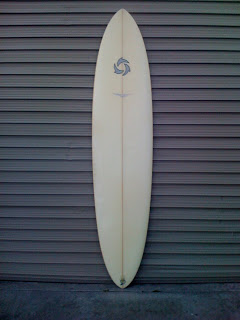 |
|
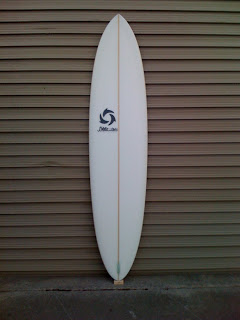 |
| |
RY's 8' 0" Original Speed Egg | |
RY's 7' 8' Speed Egg - 2010 |
| |
 |
 |
|
| |
RY NCRV Speed Egg | |
RY NCRV Speed Egg |
| |
 |
 |
|
| |
Scott Bass NCRV Speed Egg | Scott Bass NCRV Speed Egg |
| |
|
| |
The Speed Egg, Rocket Egg, and Stub Egg, our first Egg designs, and the Peregrine Egg, Pescado Egg, and Speed Egg Plus, our most recent designs in the Natural Curves Egg class, continue to evolve. The Speed Egg and Pescado Egg remain the highest volume versions of our Egg designs. They features the fullest noses, the most surface area and volume, and the most rail volume. The Rocket Egg, generally a little shorter than most Speed Eggs, features less surface area in the nose and tail creating a little more curve in the outline, a little more nose and entry rocker, and slightly lower rail profile and volume. The Speed Egg Plus is a performance oriented mid length. It features a similar outline to the Rocket Egg, similar lower rail profile, and a little more entry and tail rocker than the Rocket Egg. The Peregrine Egg is a creative and unique design incorporating shortboard and egg design features. It offers the most perfomance features of all our mid length egg designs. We consider it the Formula 1 of mid length designs. |
| |
|
| |
 |
| |
|
| |
 |
| |
|
| |
Mid Length Quiver - Peregrine Eggs, Speed Egg Plus & Speed Egg |
| |
|
| |
The performance spectrum of these mid length egg designs ranges from trim and glide to carve, acceleration and projection. The Speed Egg and the Pescado Egg on one end of the spectrum maximize the trim and glide features and the Peregrine Egg on the other end maximizes carve, acceleration, and projection. All of our egg designs balance trim and glide with carve, acceleration, and projection. And all of these designs exceed expectations and are practical, versatile, performance capable, and user friendly. |
| |
|
| |
 |
| |
|
| |
Speed Egg, Speed Egg Plus & Peregrine Eggs |
| |
|
| |
LINKS
Surfboard Classes and Descriptions | Mid Lengths and Eggs The Speed Egg The Speed Egg Plus The Pescado Egg The Peregrine Egg The Rocket Egg The Stub Egg |
| |
|
| |
< top of page > |
| |
|
| |
THE MINI GUN & THE PLANING HULL | |
| |
|
|
| |
ORIGINS of the SHORTBOARD REVOLUTION | |
| |
|
|
| |
June 3, 2022 | |
| |
|
| |
One of the many Golden Eras of surfing and surf culture and one
of only a few quantum changes in surfing, surfboard design and surf
culture was the Shortboard Revolution. This was not a change in style
- but a notable change in technique, maneuvers, where in waves
maneuvers were performed, and surfing increasingly more critical
waves. These were the initial stages in the evolution of the modern,
contemporary high performance shortboard, and every other
contemporary design class. Longboard maneuvers and performance were
well into progressing from stylish turn, trim, nose ride, and stall
to performance oriented maneuvers of the same variety. Consider the
classic styles of David Nuuhiwa, Mike Hynson, Skip Frye, and Billy
Hamilton and compare them to the performance styles of Nat Young,
Wayne Lynch, Bob McTavish, and Phil and Jim Irons. One of the most
notable moments and examples of high performance longboard surfing
was Nat Young's surfing at the 1966 World Championships at Ocean
Beach in San Diego. His combination of carving turns and sublime nose
riding - particularly the carving turns - set the stage for the
modern shortboard to emerge over the next few years. The major
performance difference between traditional longboarding and
performance longboarding was breaking up the long straight lines of
trim, like a bird soaring and gliding on the updraft of a wave or an
ocean swell, into a series of seamless and flowing turns combined
with trim and nose riding, like a fish or sea mammal accelerating in
and around those same waves and open ocean swells. The logical
direction and first step for surfboard design to best facilitate this
emerging performance oriented surfing was to shorten boards, soon
followed by evolving rockers, profiles, outlines, bottom contours and
rails. Surfing and surf culture found itself at the doorstep of the
shortboard revolution.
An emerging generation of surfers and shapers were energetically influenced by the most innovative and creative surfer shaper designers of that era, particularly Dick Brewer, Mike Diffenderfer, George Greenough, and Bob McTavish. This iconic group of surfer shapers with their open minds and their passion for evolutionary surfing and surfboard design created two primary and distinct design threads, the Mini Gun and the Planing Hull. Brewer and Diff's designs were classic early Mini Guns. McTavish and Greenough's designs were classic early planing Hulls. The historical significance of this era of evolutionary surfing and surfboard design is remarkable. The Shortboard Revolution changed surfing, surfboards, and surf culture forever. |
| |
|
| |
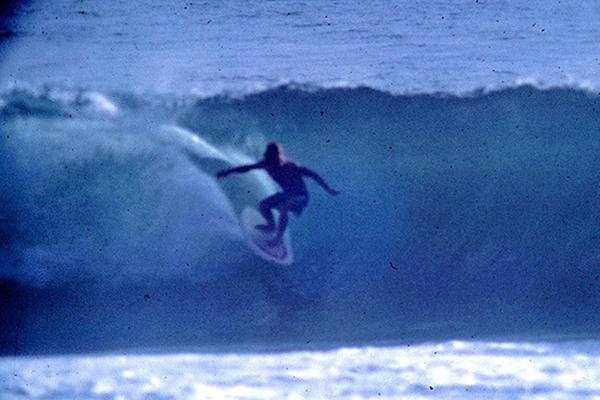 |
| |
|
| |
Surfing a Mini Gun - Oaxaca 1973 |
| |
|
| |
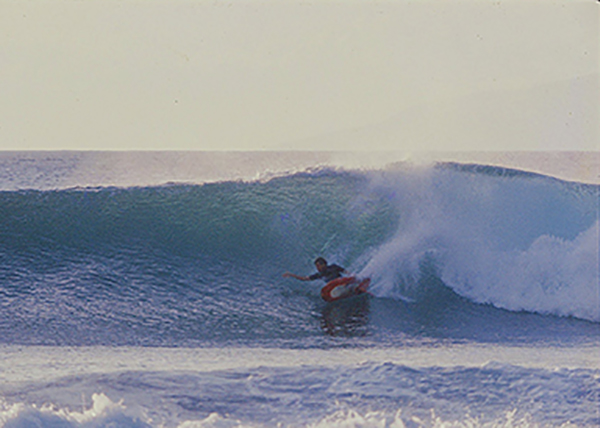 |
| |
|
| |
Surfing a Planing Hull - Honolua Bay 1967 |
| |
|
| |
Understanding these two designs and their history, The Mini Gun
and The Planing Hull are defined and best described by their design
features, surface geometry, and their performance.
MINI GUN DESIGN FEATURES ROCKER - Notable rocker in the entry, flatter rocker mid board, and moderate tail rocker. Mini Gun rocker was the origin of Speed Box rocker. PROFILE - Foiled with thinner nose and tail. OUTLINE - Curves with pulled in nose and tail. BOTTOM CONTOURS - Tri plane entry and mid board, occasionally featuring shallow concave in the center plane of the tri plane mid board to rolled panel vee through the fins and tail. RAILS - Low down rails from nose to tail with hard machined edge in the tail. |
| |
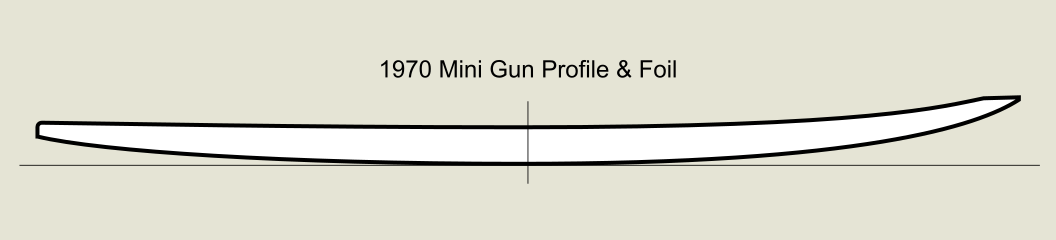
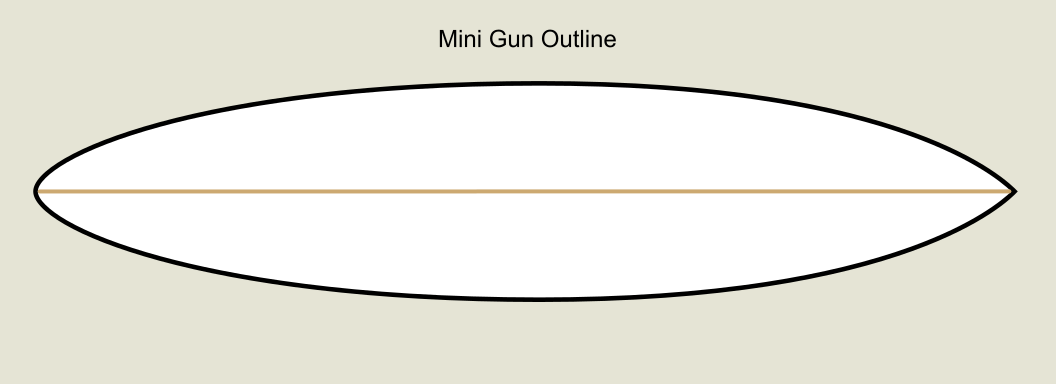
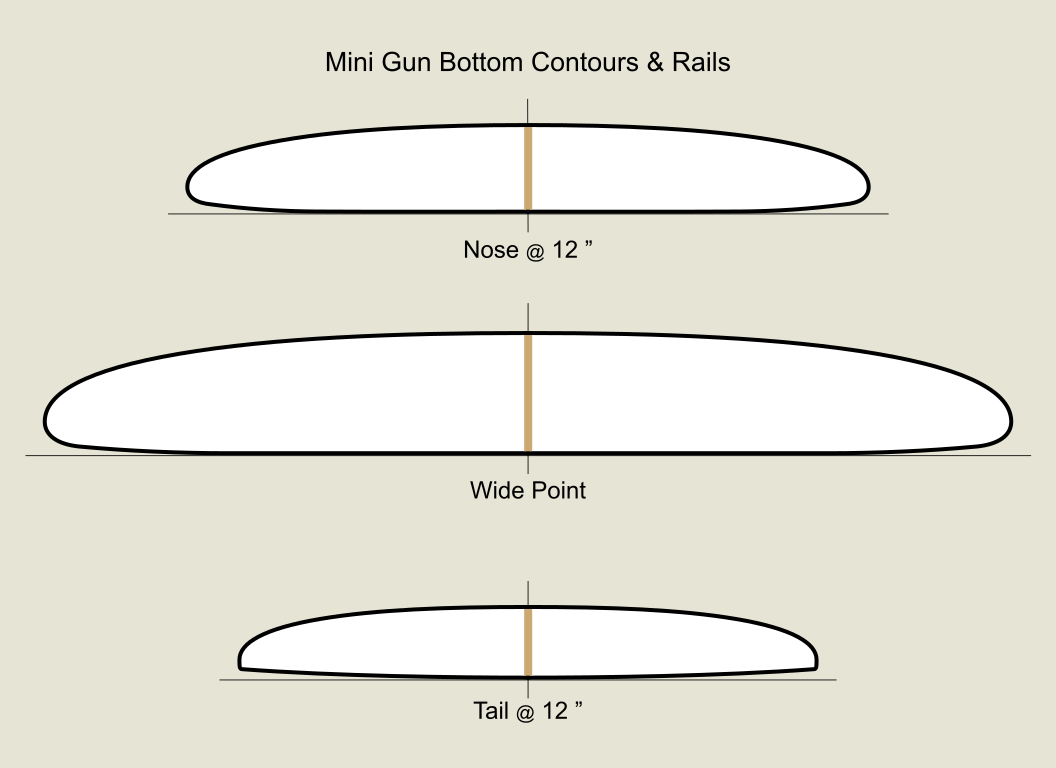 |
| |
|
| |
PLANING HULL DESIGN FEATURES
ROCKER - Low entry rocker and nearly flat rocker from mid board to tail. PROFILE - Foiled "S" deck profile with full nose and thinner tail. OUTLINE - Parallel with full nose and tail. BOTTOM CONTOURS - Rolled entry to tri plane mid board with shallow concave in the center plane to single concave in the tail. RAILS - Neutral nose and mid board to low in tail with hard edge in the tail. |
| |
|
| |
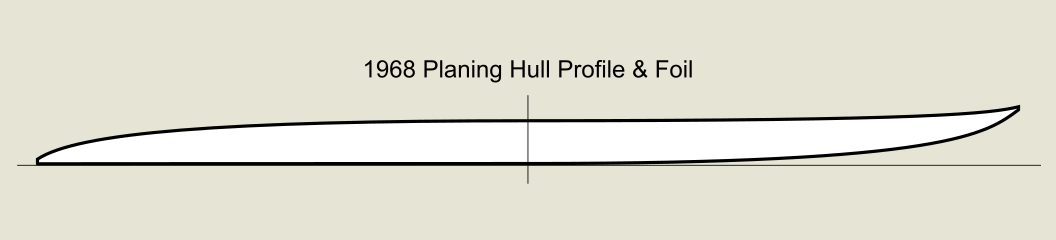
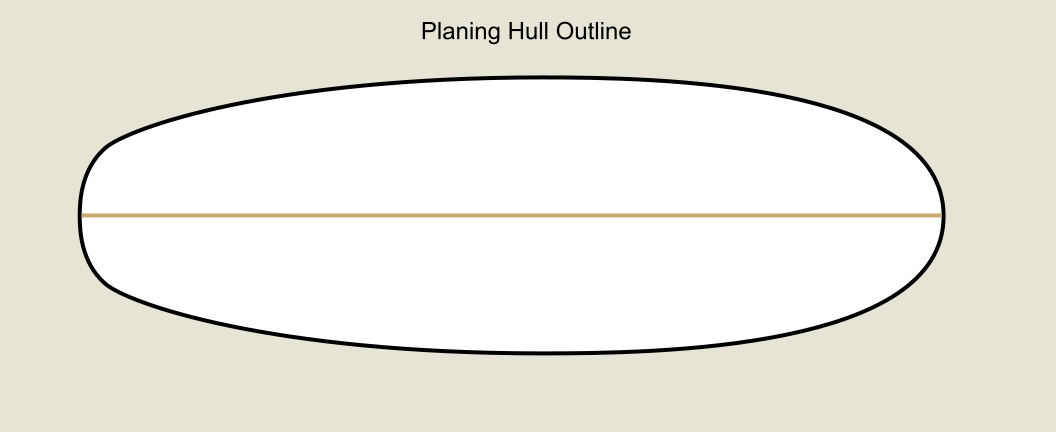
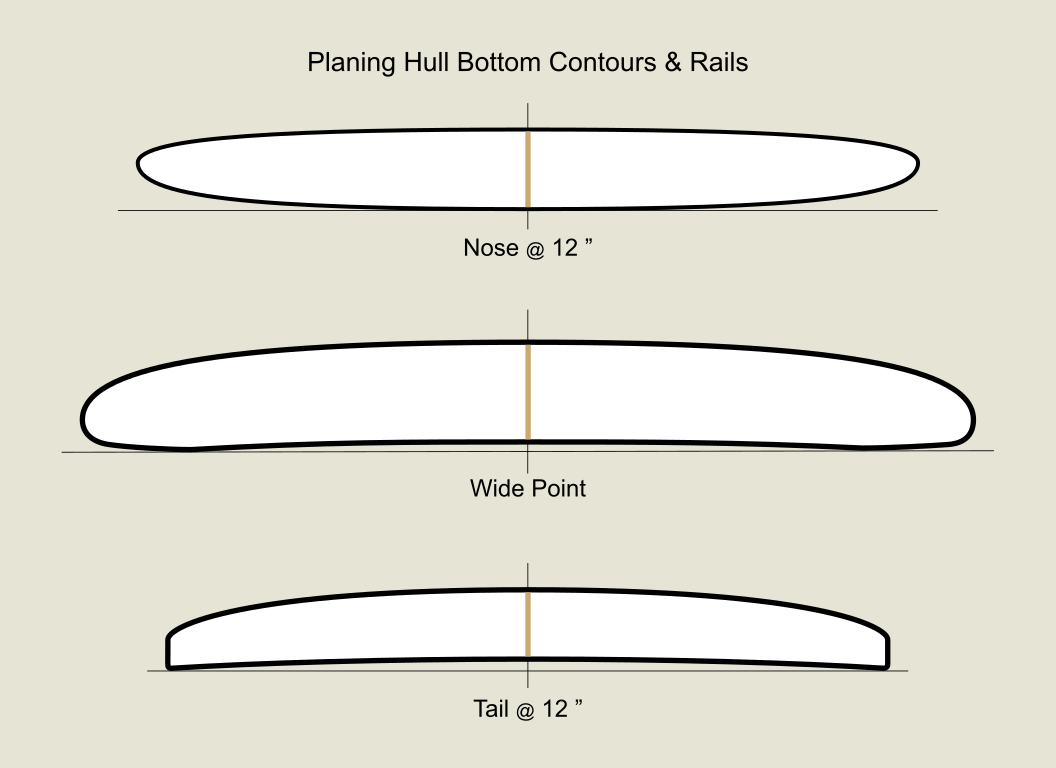 |
| |
|
| |
THE DESIGNS' PERFORMANCE
MINI GUN PERFORMANCE Carving turns and speedy trim, curved rocker and outlines fit exceptionally well in the critical part of a wave tapping into the power source of waves thus offering excellent acceleration and speed. Curved outlines promote release and offer multiple arcs and options for turns. Bottom contours create lift, reduce drag, and promote smooth rail to rail transitions. Low down rails generate and sustain speed. Hard edge in the tail releases water. |
| |
|
| |
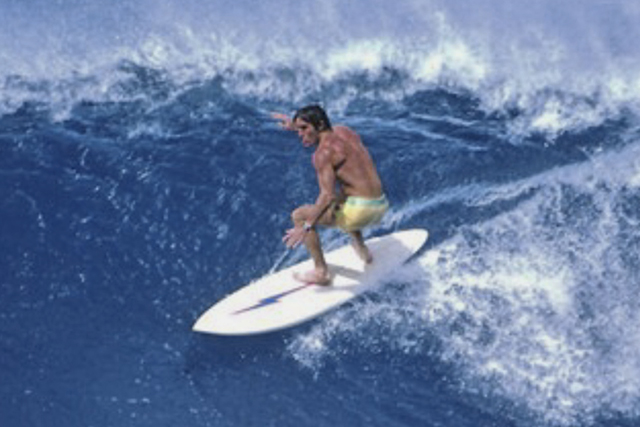 |
| |
|
| |
Surfing a Mini Gun |
| |
|
| |
PLANING HULL PERFORMANCE Carving turns and trim, straighter rocker fits moderately in the critical part of a wave taping into the power of waves offering moderate acceleration. Parallel outlines limit the arcs of turns. Bottom contours drag at low speed in marginal waves, but create lift and reduce drag in higher quality point and reef break waves. Soft and neutral rails provide good control, but struggle to develop and sustain speed. Hard edge in the tail releases water and helps the design achieve planning speed. |
| |
|
| |
|
| |
|
| |
Surfing a Planing Hull |
| |
|
| |
SUMMARY
Historically, neither design took a break from relevance in surfing and surf culture. However, due to their superior performance across the whole spectrum of surfers, surf venues, and surf conditions the Mini Gun has been at the core of surfboard design since the late 60s. The design elements of the Mini Gun are fundamental to every contemporary surfboard design. Planing Hulls never disappeared from surfing and surf culture. However, with the superior and efficient performance of the Mini Gun and the shortboards that evolved from those original late 60s designs, the Planing Hull never captured the universal acceptance of surfers. Nonetheless, Planing Hull designs have been a constant in surfing and surf culture. In the current era of abundant alternative approaches to surfing and surfboard designs the Planing Hull has continued to evolve and has expanded it's following considerably. |
| |
|
| |
LINKS
1966 World Contest, Ocean Beach, San Diego 1966 World Contest Video |
| |
|
| |
< top of page > |
| |
|
| POLYURETHANE & EPS CORES & BLANKS | |
| |
|
| |
March 28, 2023 |
| |
|
|
POLYURETHANE FOAM & BLANK HISTORY
In the 1930s Central and South American balsa wood became a popular material for shaped blanks or the core of surfboards. The end of World War II opened up new possibilities in surfboard construction, technology, and ultimately design. New materials became available through advances in technology during the war. Wartime chemistry and imaginative surfboard shapers and manufacturers pioneered surfing's progression into polyurethane foam shaped blank cores. Balsa wood remained the primary material for the shaped core or blank of surfboards through the late '50s and remained relevant while shapers and board builders experimented with polyurethane foam. Shapers invested a significant amount of time creating balsa blanks milling and gluing balsa planks into a suitable blank for shaping surfboards. Polyurethanes trace their origins back to 1937, when a German chemist, Friedrich Otto Bayer, developed the earliest prototype of Polyurethane fibres known as Perlon U. By the end of World War II a wide variety of polyurethanes were being manufactured including polyurethane foam. In 1955 Dana Point surfer and board builder Whitey Harrison successfully made a polyurethane foam blank in his barn. In 1957, a resin salesman provided Hobie Alter a sample of polyurethane foam, a synthetic material developed during World War II introducing polyurethane foam to the commercial surfboard industry. Polyurethane foam was a material that allowed shapers to create a lighter, easy to shape, readily available, cheaper material for the core of surfboards. Unlike EPS foam which was extremely difficult to shape, polyurethane foam could be shaped with common hand and electric wood working tools such as electric planers, block planes, sand paper on sanding blocks, shaping screens, and other tools. And most importantly it bonded with polyester resin to form a high strength to weight ratio composite. Hobie Alter received credit in 1958 for introducing and promoting polyurethane foam boards to surfboard manufacturing and surfing. However, a full year before Hobie and Gordon Clark started developing their molded polyurethane surfboard blanks another Southern California shaper, Dave Sweet had already created a rideable polyurethane foam surfboard. When Hobie Alter and Grubby Clark were developing their version of a polyurethane foam blank in 1957 they were unaware that Dave Sweet had already created a polyurethane foam blank and had shaped, glassed, and surfed the first polyurethane foam surfboards. Later all three agreed that they separately developed the polyurethane foam surfboard blank. Hobie Alter got credit for introducing polyurethane foam to the surfboard shaping and manufacturing industry and Dave Sweet was overlooked as the original pioneer of the polyurethane core surfboard. The Smithsonian Museum has a Dave Sweet board in their collection, acknowledging that he was the first to make a polyurethane foam surfboard blank and surfboard. He is correctly remembered as the father of the foam surfboard. In 1961, Hobie Alter and Gordon Clark agreed to split their interests with Hobie focusing on shaping and manufacturing surfboards and Grubby, as he was known, focusing on further developing polyurethane foam and molds to create polyurethane foam blanks. In just a few years, Clark Foam was dominating the market with exceptional surfboard blanks. At its peak, Clark Foam produced an estimated 90% of blanks sold in America and 60% of those sold worldwide. On December 5th 2005 the surfboard industry changed forever overnight when Grubby Clark shut down Clark Foam. The abrupt closing of Clark Foam shocked the surfboard shaping and manufacturing industry. Shapers and board builders scrambled for new suppliers of polyurethane foam. Just a year later, two former Clark executives, Kim Thress and Jeff Holtby launched US Blanks, a company that today is the gold standard of the market. As abruptly as Clark Foam shut down, US Blanks designed dozens of molds of various sizes for shortboards, fish, eggs, XXL guns, longboards, and SUPs. They offered their polyurethane foam blanks in a variety densities from ultra light to extremely high density and a wide variety of wood and foam stringers. And just like Clark Foam, US Blanks offered custom rockers for diverse designs and most importantly for close tolerance shaping as polyurethane foam blanks are denser on their skin than deeper into their cores. US Blanks manufactures a water blown, TDI Polyurethane foam. Today polyurethane foam is still the most widely used core for surfboard production. US Blanks offered excellent polyurethane foam blanks filling the void left by the closure of Clark Foam and they also offer molded and block cut high quality super fused EPS foam blanks in multiple densities with the same custom stringers and rocker features of their polyurethane foam blanks. During the immediate short term absence of the high quality polyurethane foam blanks and their reliable distribution shapers and board builders turned to alternative, new, and innovative blanks and materials. This set the stage for the relevance and growth of Epoxy surfboards. |
|
EPS FOAM & BLANK HISTORY
Expanded Polystyrene or EPS Foam is a versatile plastic polymer that dates to the 19th century. Commercial manufacturing of EPS dates to the 1930's. Scientists from BASF and Dow Chemical introduced "Styrofoam" to the US market for multiple applications including marine products. In the fall of 1950 two young Mission Beach Life Guards, John Blankenship and Bill McKusick built the first all EPS foam, fiberglass, and resin surfboard. They sealed the EPS foam core with white glue, with marginal success, to prevent the polyester resin they used from desolving the EPS core. Weighing less than ten pounds their bords created quite a sensation among surfers at Windansea in La Jolla. They were aware that Bob Simmons had created a sandwich construction board with an EPS foam core earlier that year. Simmons' EPS foam core was sealed from the resin with a thin balsa wood veneer. In the summer of 1951 Don Okey heard of the use of epoxy resin in the aircraft industry. He obtained experimental epoxy resins from the Shell Oil Company and several catalysts and monomers from other manufacturers. With these he formulated an epoxy resin and proceeded to make the first EPS foam surfboard glassed with epoxy resin. Commercially, EPS foam blanks have been used in surfboard construction since the 1970's. Prior to 2005 EPS foam blanks and Epoxy construction technology had a minor role in custom and high performance surfboard shaping and manufacturing. Production boards and a few forward and progressive thinking custom shapers being the exception. The closure of Clark Foam and the rapidly increasing use of CNC shaping ushered in a new era for EPS foam blanks and Epoxy composite technology. Alternative blanks and shaped blank cores for custom surfboards were sought after by shapers and manufacturers world wide. EPS foam gained popularity with advancements in their technology that made shaping and working with EPS foam easier. This demand for premium quality and easily shaped blanks led to significant improvements in EPS foam particularly cell fusion. The proliferation of shaping machines and design software solved considerable technical problems shaping EPS blanks. And improvements in the properties of Epoxy resins, their clarity and ease of use, made epoxy resins practical for manufacturing custom boards. These factors made Epoxy technology and boards an integral part of the custom and high performance surfboard industry. |
| |
|
| |
< top of page > |
| |
|
| POLYURETHANE POLYESTER & EPS EPOXY SURFBOARDS | |
| |
|
| |
March 30, 2023 |
| |
|
|
PU / PE CONSTRUCTION TECHNOLOGY
Poly surfboards are a composite of a polyurethane foam core or shaped blank and a fiberglass fabric and polyester resin skin. Poly boards are reinforced with a stringer - a sandwich beam in physics - that runs vertically down the center of the board, an element that keeps the deck and bottom skins from collapsing on each other. Stringers in Poly boards generally made of wood, high density PU foam, or a composite of materials. Poly boards feature a low density core and relatively strong thin glass skin with soft flex and spring back. Polyurethane foam is a closed cell foam. Poly boards are known for their perfromance across the whole spectrum of waves and conditions. |
|
EPS / EPOXY CONSTRUCTION TECHNOLOGY
Epoxy surfboards are a composite of an EPS or Expanded Polystyrene core or shaped blank and a fiberglass fabric and epoxy resin skin. Epoxy boards are also reinforced with a stringer - a sandwich beam in physics - that runs vertically down the center of the board, an element that keeps the deck and bottom skins from collapsing on each other. Stringers in Epoxy boards may be made of wood, PVC, or a composite of materials. EPS / Epoxy boards are a board with a low density core and strong thin glass skin with stiff flex and spring back. EPS foam is an open cell beaded foam. Epoxy boards are known for their durability and for their performance in small and marginal waves and conditions. |
|
POLYURETHANE / POLYESTER SURFBOARD PERFROMANCE
Polyurethane foam surfboard blanks have been the primary core or shaped blank of surfboards since 1958 when Hobie Alter, the leading board maker of the era declared, "We're not making balsa boards anymore. It's foam or nothing." With the best shapers, board builders, and surfers behind him polyurethane foam surfboards became the primary surfboard construction technology and remains so this day. The performance of the polyurethane foam, fiberglass fabric, polyester resin surfboard was notably different and progressive compared to the balsa wood core surfboard with the same fiberglass and resin skin. Polyurethane foam sandwich boards were lighter and particularly flexible compared to balsa boards. These physical properties of poly surfboards offered quickness to turns and trim adjustments and introduced the hot dog performance era of surfing, a quick and flashy maneuver oriented style of surfing. The ease of shaping polyurethane blanks compared to shaping balsa blanks allowed shapers to progress design features. Improved rockers, foils, and rails allowed surfers to be more and more creative with their techniques and styles. Thanks to polyurethane foam blanks this was truly a golden era in surfboard design and surfing. |
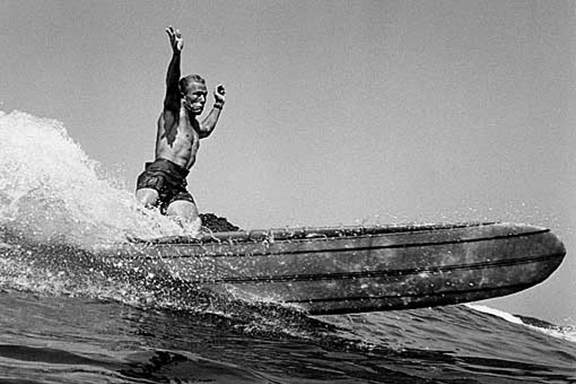
Dewey Weber Ripping |
| The shortboard revolution in the late 60s was another golden era made possible by polyurethane foam. The pioneers of this epic era of transformation in surfing and design created dramatically shorter, lighter, and more flexible boards that fit in the most critical and powerful sections of waves. The physical properties of polyurethane foam were essential to this progressive and evolutionary style of surfing. Acceleration, projection, speed, and maneuverability became the foundation of progressive performance surfing. Constant improvements of polyurethane foam blanks featuring design specific molds, multiple foam densities, various types and widths of stringers, and custom rockers made shaping progressive shortboards a much easier task. |
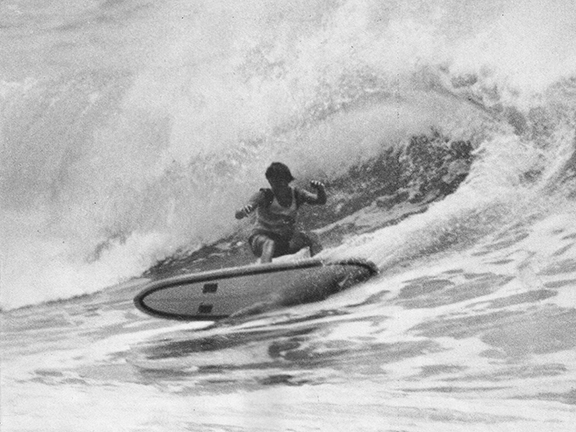
Wayne Lynch Evolutionary Shortboard |
| Today polyurethane foam core - polyester skin surfboards remain the primary surfboard construction technology for the surfboard manufacturing industry. Their performance is an essential element progressing surfing and surfboard design. Their light weight and moderate flex and spring back create great performance. A well designed polyurethane core surfboard offers acceleration, projection, speed, maneuverability, and great control. All are essential performance features. Polyurethane core surfboards are responsive and have a great feel under foot. They are known for their consistency, predictability, and control across the whole spectrum of waves and conditions. |
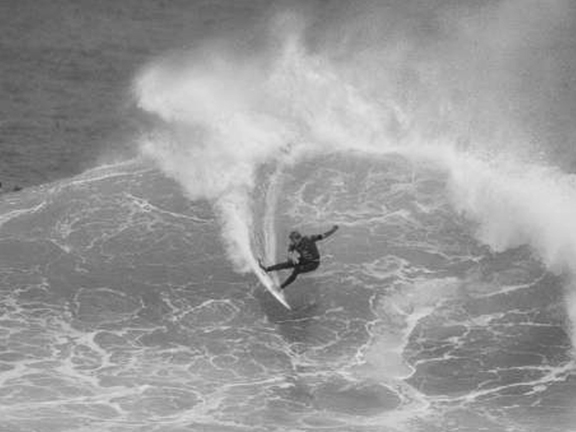
John John Florence Contemporary Rail Surfing |
|
US Blanks manufactures water blown Toluene Dilsocyanate (TDI)
based polyester polyurethane foam blanks. They believe this process
provides the best physical properties of a blank required for a
quality surfboard. The resulting blanks feature maximum strength to
weight ratio and a solid flex pattern yielding the best performance
qualities for a shaped blank. The quality, stability, and consistency
of TDI polyurethane blanks make them the preferred choice of the
majority of shapers and board builders. US Blanks continues to fine
tune their formulations to supply shapers with design specific molds,
foam densities, and stringers that maximize strength to weight ratio,
flex, and ease of shaping.
Polyurethane blanks are manufactured in multiple densities. US Blanks offers several design specific densities. Orange or Competition weight for ultra light shortboards, Red and Yellow CT or performance weight for versatile shortboards, light step ups and semi guns, Blue or stock weight for mid lengths, eggs, XXL guns, and light longboards, Green or cruiser weight for most long boards and heavier XXL guns, Classic weight for old school or traditional long boards, and Tow in weight for tow boards. Shapers will recommend and use any of these foam densities for their designs based on the performance requirements of their shapes and preferences of the surfers riding their shapes. The primary density of a polyurethane blank is a constant. The density of a finished shaped blank varies by how deep the shape is relative to the skin of the blank. The density of skin and core varies from mold compaction and skin to core ratio. The skin of polyurethane blanks is moderately denser than the core of a blank. To maximize the physical properties specifically the strength of the deck of surfboards shapers employ a technique known as close tolerance shaping. The idea is to have the deck of a shaped blank as close as possible to the skin or deck of the blank. When the deck rocker of master plugs is a close match to the deck rocker of a shaper's design rocker adjustments or custom rockers are not required to maximize the strength of a surfboard's deck. When natural deck rocker of a blank is not a close match custom rockers are employed to create a blank that matches the shaped blank's deck rocker to maximize physical strength of a board's deck. Stringer selection is an important and major factor for custom rockers. A stringer must be wide enough to hold the rocker adjustment of a blank. Significant rocker adjustments from the natural rocker of a design specific mold require a wider stringer to maintain the adjustments. Moderate or minimum rocker adjustments will hold with thinner stringers. The width of stringers is also a significant design factor. Shaped blanks with wider stringers will have a stiffer flex and spring back feature. Narrower stringers will have a more flexible flex and spring back feature. Perfromance requirements of different designs determine appropriate stringer width. Polyurethane foam is stable and consistent. Polyurethane core surfboards offer consistent, predictable, and controlled performance. Their performance and feel make them the preferred construction option for surfers, shapers, and board builders. The variety of blank densities, rockers, and stringers coordinated with glassing schedules allows shapers and board builders to design and create boards that maximize performance for any design or style of surfing in virtually any waves and conditions. |
|
EPS / EPOXY SURFBOARD PERFROMANCE
Prior to 2005 and the closure of Clark Foam, Epoxy construction technology had a minor role in custom and high performance surfboard shaping and manufacturing. Production boards and a few forward and progressive thinking custom shapers being the exception. The abrupt closure of Clark Foam changed that and opened the door to Epoxy surfboards. Alternative blanks and shaped blank cores for custom surfboards were sought after by shapers and surfboard manufacturers. The demand for quality and easy to shape blanks led to significant improvements in EPS foam particularly cell fusion. The proliferation of CNC shaping machines and design software solved technical problems shaping EPS blanks. And improvements in the properties of Epoxy resins, their clarity and ease of use, made epoxy resins practical for manufacturing custom boards. These factors made Epoxy technology and boards an integral part of the custom and high performance surfboard industry. Epoxy surfboards is a somewhat vague description and doesn't completely describe Epoxy construction technology. To be specific an Epoxy surfboard is a composite of EPS foam, fiberglass fabric, and epoxy resin. EPS foam is a an ultra light low density foam and a useful blank option for light weight responsive boards in small waves and underpowered conditions. Light, buoyant, responsive, and sensitive EPS foam core boards are great for progressive performance surfing in such waves and conditions. They are buoyant, sit high on the water, and thus have less drag in waves of marginal power. These features create acceleration, speed, and maneuverability and makes them an excellent option for small and marginal wave boards. Epoxy surfboards are a popular and relevant construction technology option for several designs and functions. They are light, buoyant, and durable. They perform well for experienced surfers in small and marginal waves that lack power and energy. And they are quite durable and functional for entry level and novice surfers. With the same glassing schedule - the types of fiberglass fabrics, fabric weights, and how many layers of fabrics are used glassing the top and bottom of a board - Epoxy boards will be lighter, stronger and more durable than Poly construction. Variations in the weight and weave of fiberglass fabrics and their schedule can render either construction technology lighter or heavier and stronger or weaker. Epoxy composite boards tend to be springy and lively in small waves and marginal conditions due to their light weight, firm flex pattern and low density EPS foam cores. This springy and lively feel can be less predictable and consistent underfoot, and can create a disengaged feeling in waves with more power and energy and in choppy or bumpy conditions. Epoxy boards are generally surfed in and excel in small and marginal waves due to their buoyancy and lively nature. An Epoxy composite has a firm flex pattern allowing the boards to flex and spring back when weighting and unweighting through turns and maneuvers. Generally, if you ride the same design with different construction technologies you will find Epoxy boards will amplify performance in small, marginally powered waves and clean conditions and be unpredictable and disengaged in heavy water, bigger waves, and choppy or bumpy conditions. Poly boards will maximize performance with their consistent and predictable performance features in waves with more energy and power and in diverse conditions. |
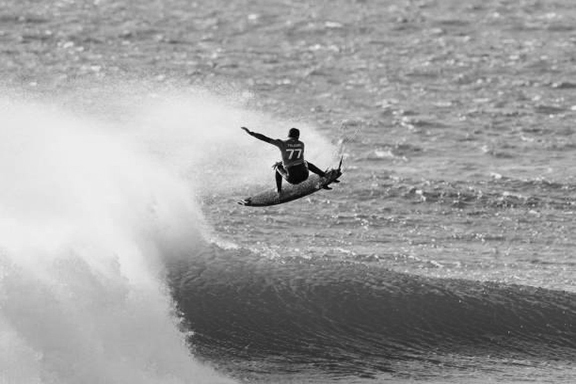
Felipe Toledo Progressive Small Wave Surfing |
| The downside of Epoxy boards due to their lightweight and buoyant nature is their lack of predictability, consistency, and control in heavy water and larger surf and choppy, windy, and rip tide affected conditions. In these conditions they tend to chatter and bounce around and it's difficult to control the rails and ultimately control the board. It can be difficult to control a rail through maneuvers and consequently a board can feel disengaged from a wave and the water. |
| |
|
|
SUMMARY
Poly boards sit well in the water and are engaged in waves. They are predictable and consistent and easy to control through turns and maneuvers. Poly boards accelerate, project, and sustain speed. They maintain these perfromance features, are universally functional, and excel across the entire spectrum of wave sizes and conditions. Poly boards have a great feel underfoot. Epoxy boards sit high on the water. They are light and buoyant. Epoxy boards are quick to accelerate, gain speed, and perform maneuvers in underpowered waves. They excel in small waves, in marginally powered waves, and in clean conditions. Epoxy boards are very durable. Ultimately, the choice between Poly boards and Epoxy boards depends on a surfer's personal preferences, their skill level, and the conditions they surf. As waves and conditions vary the choice of construction technology and manufacturing schedules can vary. A surfer may prefer Poly boards in many waves and conditions and Epoxy boards in other waves and conditions. |
| |
|
| |
< top of page > |
| |
|
| |
THE PURSUIT of PERFECTION |
| |
|
| |
February 9, 2024 |
| |
|
| |
FRICTIONLESS FOILS & MAGIC SURFBOARDS
The ultimate goal of all surfboard designs is a board that paddles and catches waves well, accelerates on demand, carries speed, is maneuverable, controlable, and predictable in its perfromance. Every surfboard has a power core in the profile and foil created by the bottom and deck rockers with a speed box or area of reduced rocker in the bottom. A frictionless surfboard has no friction or drag in front of the power core and speed box and no friction or drag with complete release behind the power core and speed box. These designs are magic surfboards. |
| |
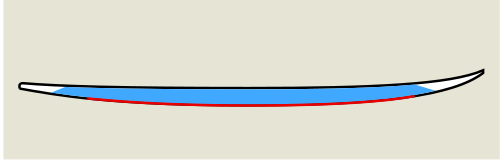
|
| |
The Power Core and Speed Box correspond to the medium blue area in the foil and red line along the bottom rocker. |
| |
Friction is a force that can act on objects and decrease their
velocity or speed and ultimately their efficiency. Specifically,
friction involves two surfaces that are in contact with one another
and in motion relative to each other such as the surface of a
surfboard and the face of a wave. The absence or reduction of
friction is an ideal component of surfboard design. In the macro
universe of surfing and surfboards a frictionless surfboard can be
achieved through the pursuit of perfection.
WHAT is PERFECTION ? Perfection is flawless. It is free from all flaws and defects. Perfection is a state of excellence. It is the highest degree of proficiency, skill, execution, and excellence of any thing or activity. By any standard perfection is the highest degree of quality in any endeavor. It is the extreme degree of excellence. When something is perfect it is as good as it could possibly be. Contemporary psychology generally considers perfection impossible to achieve. And it considers the pursuit of perfection a risk factor and a source of many psychological issues. No doubt this can be true when someone falls short of their goals. On the other hand we often refer to many things as perfect - a perfect wave, a perfect score, a perfect fit, a perfect day, or a perfect game in baseball. There are so many things we consider perfect. A magic surfboard is a perfect surfboard ! The pursuit of perfection in surfboard design is well worth the effort and ultimately produces continuous improvements in surfboard design and performance. WHAT is the PURSUIT of PERFCTION ? The pursuit of perfection is the process of perfecting something. Perfection is a state of quality of something being flawless. It is a continuous process of improving something until it is without flaws or defects. To perfect something such as a skill, a system, an entity, or for instance a surfboard involves making it as good as it could possibly be. Greek Philosopher Aristotle in Metaphysics described perfection as that which is complete - contains all its requisite parts, that which is so good that nothing of its kind could be better. Perfection is something that has attained its purpose. Green Bay Packer Head Coach from 1959 to 1968 Vince Lombardi famously said to his players, "Gentlemen, we are going to relentlessly chase perfection. Knowing full well we will not catch it because nothing is perfect. But we are going to relentlessly chase it. Because in the process we will catch excellence. I'm not even remotely interested in being just good." PERFECTION is a PROCESS Perfection is an ongoing, ever adapting process. In this ongoing process improvement comes through learning, innovation, and repetition. The pursuit of perfection seeks to understand and perfect the process. The Zen of Perfection is a rigorous discipline. It requires humility and an acceptance that change is integral to success. Ironically, perfection is often achieved not when there is nothing more to do or add, but when there is nothing left to do or take away. Perfection can only be achieved in a timeless and welcome environment. The pursuit of perfection struggles in a limited time frame and a resistant or hostile environment. Perfection becomes more elusive when the working environment is cluttered with friction and drag. What are the benefits of relentless pursuit of perfection ? Perfection, the process and the result, are about performance and quality. Performance and quality originate from the pursuit of perfection. ELIMINATING WASTED EFFORT When lean, timeless, and environmentally welcome techniques are applied throughout a process, friction and resistance are notably and functionally reduced. Eliminating inefficient tasks creates excellent work flow. The creative process in a welcome environment reduces needless effort, makes efficient use of time, and reduces or entirely eliminates mistakes and errors while offering results or outcomes that are ever more excellent. FRICTIONLESS SURFBOARD FOILS A perfectly foiled surfboard is as close to frictionless as possible and offers maximum lift and minimum drag. A surfboard with a perfect foil engages waves, accelerates, maintains speed, turns on any radius on any wave in its design class and perfromance range, and extends perfromance well beyond expectations. A magic surfboard is not only a perfectly foiled design for its own design class and performance range it extends performance well beyond its intended and expected performance range. The pursuit of perfection in surfboard design includes significant emphasis on extending frictionless and controlled performance throughout a board's design class performance range, and extends performance beyond the board's expected range of perfromance. A perfect surfboard foil for any design class will paddle and enter waves as if on a yellow brick road. A frictionless surfboard design will accelerate, maintain speed, turn on any radius, and engage waves in any and every wave with control, consistency, and predictability. Within any design class the design concepts, appropriate dimensions, and foiling the geometry of the surfaces as near to or as frictionless as possible creates such perfromance. A perfectly foiled surfboard ultimately provides maximum lift and minimum drag. POWER CORE & SPEED BOX The Power Core is created in the foil of a surfboard. It is the segment of the foil that harnesses and applies the energy of a wave. The Speed Box is in the rocker. It is is the segment of the bottom rocker with the least curve. When the Power Core and Speed Box are synchronized, balanced, and functioning with each other and when there is no friction or force fore or aft of this area of the foil and rocker you have a magic surfboard. |
| |
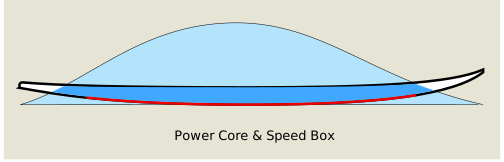 |
| |
The Power Core and Speed Box correspond to the medium blue area in the foil and red line along the bottom rocker. This is the same image as the one above with the light blue area illustrating the distribution of volume and surface area in a contemporary shortboard and how that corresponds to the power core and speed box. |
| |
The power core of a surfboard is where a board gathers, masses,
and distributes a wave's energy and power and releases that energy
and power into acceleration, speed, maneuverability, and control. The
rocker and foil, outline, and rails absorb, distribute, and release
energy from waves. The Zen of board, wave, and surfer pursue
perfection through the power core and speed box of a board. This
fundamental and primary concept applies to all classes of surfboard
design.
The combination of the core mass and the geometry - design elements and features - create the power core of surfboard. This core mass and its geometry absorb, amplify, and distribute a waves energy, speed, and power providing surfers the opportunity to ride waves. The power core is a broad concept in surfboard design. It is fundamental to all surfboard design classes, surfers, and waves. Design classes, surfers, and waves are more diverse than ever, yet all pursue perfection and excellence. |
| |
|
| |
< top of page > |
| |
|